Davos 2026 — Theatre, Ultimatums and Trump’s Council of Peace
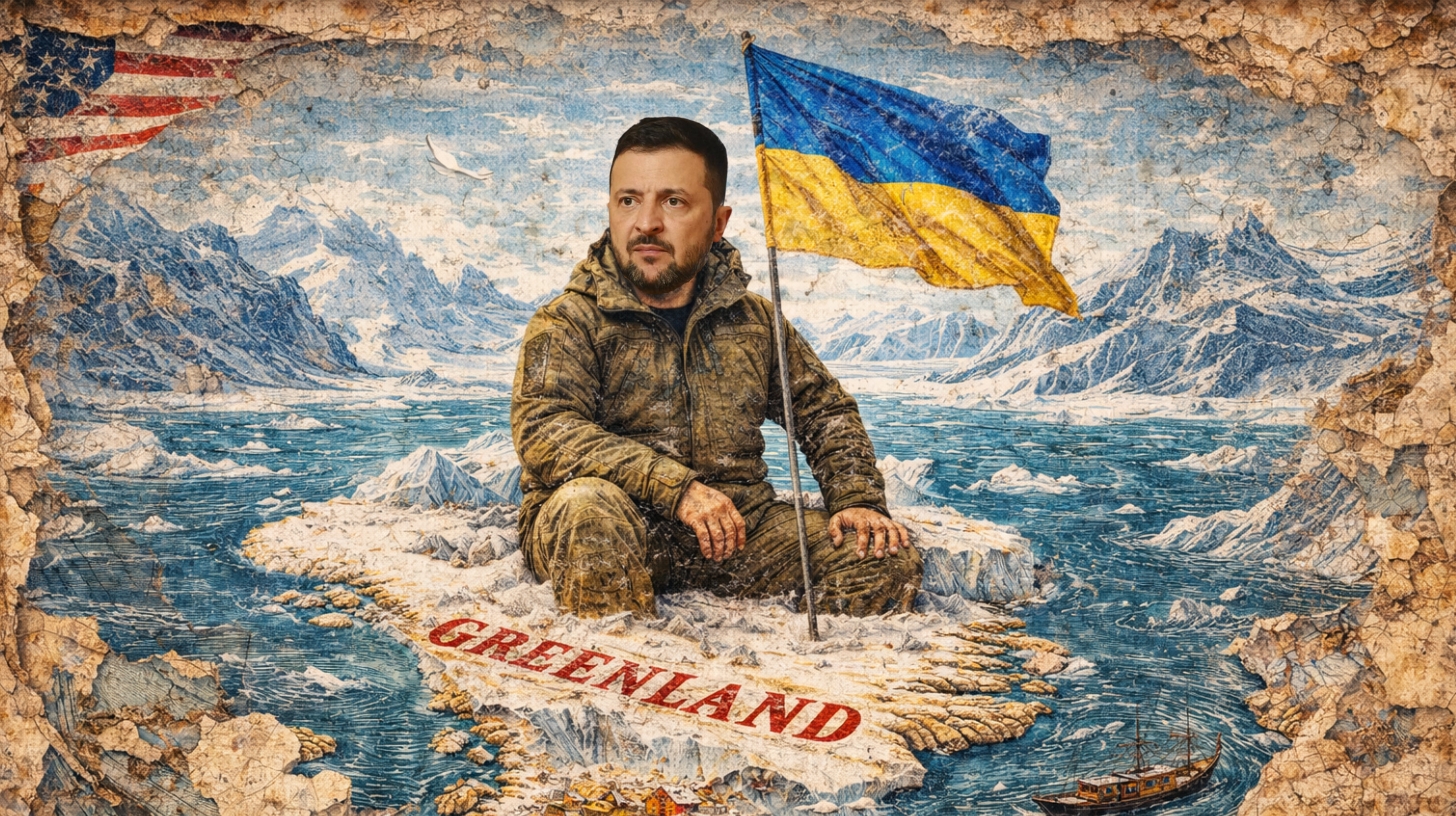
The Week That Shaped the World — 16 - 23 January 2026
Davos on Stage — Power Rehearses, Europe Watches
This week, Davos did what it does best: it mistook performance for governance and called it dialogue.
Under the familiar banners of cooperation and reform, the forum became something else entirely — a rehearsal space for a world where power no longer bothers to hide behind procedure.
From Donald Trump’s increasingly blunt vision of global management, to Europe’s uncomfortable role as both audience and financier, the signals were remarkably consistent. Institutions were questioned, alliances recalibrated, markets jolted — and all of it unfolded not through treaties or votes, but through tone, timing and theatre.
Energy contracts snapped. Gold surged. Credit rules were rewritten. Technology promised revolutions while oil quietly set the boundaries of reality.
What links these stories is not chaos, but direction. Davos revealed a system drifting away from consensus and towards control — improvised, transactional, and unapologetically unequal. The language of cooperation remains. The substance is changing fast.
This digest traces that shift — not as spectacle, but as structure.
“When the stage gets louder, it is usually because the script is being rewritten.”
1. Davos 2026 — Theatre, Ultimatums and Trump’s Council of Peace
The World Economic Forum opened this year under the banner of “dialogue”, but Davos 2026 wasted little time in abandoning the language of moderation. By the second day, the forum had shifted from polite panel discussions to something closer to a geopolitical audition — and Donald Trump made sure he was centre stage.
Trump’s appearance delivered a double shock to Europe. First came the threat: punitive tariffs of up to 200 per cent against France unless President Emmanuel Macron publicly supported Trump’s proposed “Council of Peace” — a new global structure designed, in Trump’s words, to replace a “failed and obsolete” United Nations. Dialogue, it seemed, now came with a price list.
The second blow landed harder. Trump openly suggested that Vladimir Putin and Alexander Lukashenko should be represented in this new council. Europe may call them dictators; Trump prefers a more flexible taxonomy.
He decides who is legitimate — and who is useful.
The absence of Volodymyr Zelensky at the forum’s opening was briefly explained away by Kyiv as an energy emergency. That explanation dissolved the moment Trump hinted he was open to a meeting. Zelensky arrived swiftly.
Events then accelerated. On 21 January, Trump reaffirmed his intentions regarding Greenland, while holding a tense private meeting with Zelensky. Trump demanded a “fast peace”. Zelensky demanded guarantees.
Neither side appeared convinced by the other.
The following day, Zelensky took the Davos stage — and delivered a performance that delighted the room.
He castigated European indecision, openly praising Trump’s bluntness as the kind of leadership Europe lacked. The applause was generous. Davos appreciates clarity, especially when it comes with moral urgency.
What made the speech more revealing, however, was its timing. Just a day earlier, on 20 January, Ukraine’s defence establishment had publicly articulated a strategic objective: the capacity to eliminate up to 50,000 Russian troops per month, provided Western funding and weapons flows continued. In Davos, that figure was not presented as a technical calculation, but as a moral argument — proof of resolve, and a rebuke to hesitant sponsors.
The implication was unmistakable. This was not the rhetoric of a leadership preparing for compromise. It was the rhetoric of endurance — and of escalation underwritten by others.
Trump did not linger. He left Davos without offering Kyiv firm commitments, making clear that territorial concessions remained central to any deal. European gestures — including the seizure of a Russian vessel in the Mediterranean — looked theatrical by comparison.
From our editorial perspective, Davos 2026 felt less like a summit and more like a dress rehearsal. Trump played the reformer. Zelensky played the warrior. Europe applauded — and paid admission.
Behind the scenes, the real question lingered: was this about peace at all, or about who controls the script?
“When war plans receive standing ovations, peace has already left the room.”
2. Trump’s Council of Peace — Dismantling the Old Order, One Institution at a Time
Donald Trump has never shown much patience for inherited architecture — especially when it was designed without him in mind. In Davos, that instinct hardened into policy. The American president has now moved decisively from rhetorical irritation with global institutions to something far more concrete: the systematic dismantling of the post-war framework of international governance.
At the centre of this effort stands Trump’s proposed alternative to the United Nations — a newly conceived “Council of Peace”. The premise is disarmingly simple. The UN, Trump argues, has become bloated, paralysed and selectively moral. Too many resolutions. Too many vetoes. Too little obedience.
The Council of Peace, by contrast, promises efficiency — and loyalty.
According to diplomatic briefings circulating in Davos corridors, invitations to join the new structure have already been dispatched. Participation, however, is not symbolic. It comes with a reported entry fee of $1 billion, a figure that functions less as funding and more as filtration. This is not a forum for the hesitant, nor for the poor.
Among the first leaders said to have responded was Alexander Lukashenko, who reportedly confirmed his readiness to participate. Europe may see a pariah. Trump appears to see predictability.
Moscow’s reaction, however, was more nuanced — and far more revealing. Vladimir Putin offered no direct acceptance or rejection. Instead, he praised Trump’s initiative as “timely and interesting”, a phrase well rehearsed in diplomatic theatres. But it was his aside on the membership fee that caught attention. If such a contribution were required, Putin suggested, the funds could easily be drawn from Russia’s frozen assets currently held in the United States.
It was a response that achieved several objectives at once. It acknowledged Trump’s authority without submitting to it. It reframed the financial demand as Washington’s own money. And it reminded everyone in the room that frozen assets, much like frozen conflicts, have a habit of returning to the agenda when least convenient.
From a British perspective, the exchange was quietly theatrical. Trump offers a new world order with a price tag. Lukashenko accepts. Putin applauds — and sends the bill back.
The deeper shift is unmistakable. Influence is no longer mediated through treaties, norms or institutional continuity. It is personalised. Monetised. Negotiated directly with the architect himself.
The Council of Peace does not seek universality. It seeks alignment. And in doing so, it exposes an uncomfortable truth for Europe: the old system is not being reformed. It is being bypassed.
Whether this produces order or merely accelerates fragmentation remains to be seen. But one thing is already clear — the age of pretending that global governance is neutral is coming to an end.
“When institutions start charging admission, order becomes a luxury product — not a common good.”
3. Kyiv in the Dark — Winter, Infrastructure and the Arithmetic of Attrition
Winter has returned to Kyiv not as a season, but as a weapon.
According to statements from Ukrainian municipal authorities and the national energy operator, Russian strikes over the past week have once again targeted power and heating infrastructure in and around Kyiv. As a result, an estimated 6,000 residential buildings were left without electricity and, in many cases, without central heating.
These figures, cited by local officials, remain subject to revision as emergency repairs continue — but the pattern itself is no longer in dispute.
Temperatures in the capital have fallen well below freezing. Mobile boiler units have been deployed to hospitals and critical facilities, while emergency shelters and “points of invincibility” provide limited relief for civilians. Yet for large parts of the city, daily life has again been reduced to a calculation of hours: how long the power stays on, how quickly apartments cool, how much strain the grid can absorb before the next outage.
From a military standpoint, the logic is familiar. Strikes on energy infrastructure are not designed to capture territory or break defensive lines. They are designed to exhaust. To stretch repair crews. To force governments into constant crisis management. And, crucially, to shift the burden of war onto civilians without crossing thresholds that would trigger immediate external escalation.
From a British perspective, this is the quiet, grinding phase of the conflict — far removed from the dramatic language of counteroffensives and red lines. There are no breakthroughs here. Only pressure, applied repeatedly, at the coldest possible moment.
Ukrainian officials insist the energy system remains resilient, noting that rapid repairs have prevented a total collapse similar to earlier phases of the war. That assessment appears broadly supported by independent monitoring groups. The grid bends, but does not break. Yet resilience should not be confused with immunity.
The strategic message is blunt. As long as the war continues, winter will remain part of the battlefield. Not decisive, not spectacular — but relentless.
And in a conflict now entering its fourth year, attrition does not need to be dramatic to be effective.
“Wars are not only fought at the front — they are also fought in kitchens, stairwells, and darkened flats.”
4. Gaza as a Business Plan — When War Is Rebranded as Real Estate
At the World Economic Forum in Davos on 22 January, the language around the Middle East shifted — not towards peace, but towards property.
Speaking on the sidelines of the forum, figures close to Gaza Strip — most prominently Donald Trump’s son-in-law, Jared Kushner — outlined what was described not as a ceasefire framework, but as a redevelopment vision.
Gaza, it was suggested, could become “the finest real estate on the Mediterranean” once the war is declared over.
The framing matters. This was not a diplomatic roadmap presented through formal channels. It was a pitch — polished, investor-friendly, and deliberately stripped of historical and humanitarian weight. Conflict was treated as a temporary zoning issue. Destruction as a clearing phase.
According to statements attributed to the American side, Gaza would fall under the supervision of a proposed new international structure — the so-called “Peace Council”. Funding, it was implied, could come from substantial entry contributions by participating states. The objective, at least rhetorically, would be demilitarisation, reconstruction and long-term external administration.
Crucially, there has been no independent confirmation of any formal agreement by Hamas to surrender power or dismantle its military infrastructure. Claims circulating in Davos about a handover to technocratic governance remain unverified and, at this stage, aspirational. What exists is not a deal, but a narrative.
From a British perspective, this is where the project begins to resemble a business case rather than a peace process. War is declared “finished” by announcement. Governance is outsourced. Sovereignty becomes a technical detail. And legitimacy is assumed to follow capital.
The moral hazard is obvious. If reconstruction is framed as opportunity, then destruction quietly becomes pre-investment. The incentive structure shifts in uncomfortable ways.
Gaza has long been a symbol of political failure. Recasting it as a development asset may sound bold in Davos halls. On the ground, it risks confirming the region’s darkest suspicion: that power no longer negotiates peace — it acquires it.
“When war is discussed like property, the human cost is written off as sunk investment.”
5. Venezuela and the “Donroe Doctrine” — When Regime Change Is Rebranded as Management
If Davos needed a centrepiece, Venezuela provided it.
The dramatic seizure of President Nicolás Maduro on 3 January in Caracas did not merely shock Latin America — it rewired the tone of the entire forum. Operation “Absolute Resolve”, as Washington branded it, became the unspoken backdrop to Donald Trump’s unusually aggressive posture in Davos.
Maduro is now held in the United States, where he has formally pleaded not guilty. That much is procedural.
What followed, however, moved well beyond procedure and into theatre.
In Davos, Donald Trump did not speak about Venezuela as a sovereign state undergoing transition. He spoke about it as a malfunctioning asset. “Venezuela will now make money,” he declared — a phrase that landed less like diplomacy and more like a boardroom announcement.
Online, pro-Trump circles circulated graphics presenting him as the country’s “acting president”. These were unofficial, theatrical — but revealing. Power, in this framing, no longer requires institutional transfer. It requires performance and control.
The real audience was not Caracas. It was the oil executives flown into Davos.
Trump openly invited major energy players to return to Venezuela, promising broad access to its reserves in exchange for political loyalty. Sanctions, it was implied, would be reinterpreted. Contracts would follow obedience. This arrangement was proudly described as the “Donroe Doctrine” — a fusion of Trump’s name and the Monroe Doctrine’s logic of hemispheric ownership.
From a British editorial standpoint, the symbolism is striking. The Monroe Doctrine once justified influence.
The Donroe Doctrine appears to justify administration.
Our reading is cautious but sceptical. What is being presented as decisive leadership resembles something closer to outsourced governance. Oil becomes the stabilising mechanism. Legitimacy is deferred. Law is replaced by logistics.
Venezuela, long treated as a failed state, is now recast as a revenue stream. Whether this produces stability or merely a new form of dependency remains unanswered.
What is clear is this: Davos did not witness the end of Venezuelan chaos. It witnessed its rebranding.
“Empires no longer conquer territories — they acquire balance sheets.”
6. Tech Dreams and Oil Reality — Davos Discovers What Actually Runs the World
Davos likes to pretend it lives in the future. This year, reality arrived early — and without an invitation.
The most discussed corporate announcement did not come from a government, but from Silicon Valley.
OpenAI confirmed revenues approaching $20 billion and hinted at the launch of its first proprietary AI device in 2026. In Davos corridors, this was quickly framed as the beginning of the end for the smartphone era. A familiar ritual followed: glowing forecasts, breathless panels, and the comforting illusion that technology alone rewrites economic gravity.
From a British perspective, the excitement felt premature.
AI is undoubtedly transforming workflows, markets and expectations. But Davos has a habit of mistaking revenue growth for systemic revolution. Smartphones did not disappear when the cloud arrived. They adapted. So will AI. Gadgets change interfaces. Power changes rules.
And the rules, this week, were written not in code but in oil.
As Donald Trump spoke openly about “full control” over Venezuelan and Iranian energy flows through his proposed “Peace Council”, oil markets reacted instantly. Prices softened. Volatility eased. Traders did not wait for treaties or institutions. They priced rhetoric. In Davos, sovereignty was discussed as governance. Markets heard supply.
The message was blunt: no matter how advanced the algorithms, energy still dictates tempo.
Meanwhile, in Beijing, caution replaced spectacle. China kept its key interest rates unchanged, signalling defensive discipline rather than confidence. The objective was clear — stabilise the yuan amid the noise spilling out of Davos. When Western leaders speak in absolutes, emerging economies respond in increments.
This contrast matters. While Davos applauds disruption, China prioritises continuity. While Silicon Valley sells futures, Beijing protects present control. And while AI executives pitch a post-phone world, oil quietly reminds everyone which commodity still sets inflation, transport and geopolitics.
The week exposed an uncomfortable truth Davos rarely enjoys confronting: technology reshapes margins; resources reshape order.
AI may change how we work. Oil still decides who listens.
“Davos loves the future — until the price of oil reminds it who pays for it.”
7. Gold Breaks Away, Wall Street Blinks — Markets Choose Fear Over Faith
Wednesday, 21 January, delivered a moment of uncomfortable clarity for global markets. When uncertainty stops whispering, it buys gold.
The metal surged past a historic threshold, breaking above $4,800 per ounce — not on the back of inflation data or supply shocks, but on something far less quantifiable: political trust evaporating in real time. Investors were not hedging against prices. They were hedging against policy.
From a British perspective, this matters more than the number itself. Gold does not rally like this because of optimism. It rallies when markets conclude that rules are becoming optional.
Donald Trump’s confirmation of sweeping tariffs — framed as economic patriotism — landed on trading floors as something else entirely: a tariff shock with no visible guardrails. The scale mattered. The tone mattered more.
This was not negotiation language. It was assertion.
Equities responded accordingly.
Wall Street suffered its worst session since October, with major indices sliding sharply as investors recalibrated risk. Technology stocks, long cushioned by optimism and liquidity, were hit hardest. Trade wars are many things, but they are rarely good for margins.
Crypto markets, often sold as an alternative to systemic instability, did not offer sanctuary. Bitcoin fell sharply below $88,000, not because of regulation or hacking scandals, but for a simpler reason: cash suddenly looked safer. Ahead of Trump’s Davos appearance, investors reduced exposure. When rhetoric becomes unpredictable, liquidity regains its appeal.
The sequence was telling. First gold surged. Then crypto retreated. Then equities stumbled. This is not a crisis pattern. It is a caution pattern.
From London, the reading is clear. Markets are not pricing collapse. They are pricing volatility with intent.
Trump’s economic worldview is not misunderstood — it is understood all too well. Tariffs, once tools, are now signals. And signals move capital faster than fundamentals ever could.
What Davos often forgets is that markets do not wait for outcomes. They trade probabilities. And this week, the probability of friction rose sharply.
Gold’s breakout is not a vote of confidence in the future. It is an insurance premium against its management.
Wall Street did not panic. It paused. And pauses, in this climate, speak louder than rallies.
“When politics becomes performance, markets stop clapping and start counting exits.”
8. The 10% Law — Cheap Credit, Expensive Consequences
On 20 January 2026, marking the anniversary of his return to the White House, Donald Trump delivered a gift to American voters — and a shock to American finance.
With a single executive order, Trump imposed a hard 10% cap on credit card interest rates, transforming what had long been a market-driven instrument into a matter of federal legality. Any rate above the threshold is now classified not as aggressive pricing, but as a violation of the law.
The message was unmistakable. In an economy increasingly defined by household debt, Trump chose sides — publicly, dramatically, and without apology.
Markets reacted instantly. Shares of major banks and payment giants slid between 4% and 6%, with names such as Visa, Mastercard, and JPMorgan Chase absorbing the blow. For institutions built on consumer lending margins, the policy was not reform — it was revenue amputation.
From a British perspective, the move feels both radical and deeply familiar. Governments have long promised to discipline finance in the name of fairness. They rarely do it with a hammer.
Supporters hail the measure as the dawn of an “era of affordable credit” — relief for households trapped by compounding interest and opaque fees. Critics warn of inflationary pressure, tighter credit approval, and a shadow shift of risk into less regulated corners of the system. Both arguments are valid. Neither is the point.
The real significance lies elsewhere.
Trump has not discovered a new economic theory. He has discovered a political one. By placing himself visibly against banks — and visibly alongside consumers — he has turned monetary policy into electoral theatre. Cheap credit becomes not a macroeconomic tool, but a loyalty programme.
Whether the policy proves sustainable is almost secondary. Banks will adapt. They always do. Fees will migrate. Credit access will be reshaped. Complexity will return under a different name.
What cannot be reversed so easily is the precedent: that interest rates, once the quiet domain of markets and regulators, are now fair game for executive populism.
In Davos, this was described as “intervention”. On Wall Street, it was called “disruption”. Among voters, it may simply be called justice.
But from London, it looks like something else entirely — a reminder that when politics takes control of pricing, the bill rarely arrives immediately.
“When credit becomes a campaign promise, someone always pays — just not during the election.”
9. Stretching the Future — and Snapping the Smartphone Myth
On 18 January, a team of researchers at Drexel University presented what Davos immediately labelled a “breakthrough moment”. A fully functional prototype of stretchable OLED displays — capable of being bent, pulled and twisted thousands of times without losing brightness or clarity.
Technically, the achievement is impressive. The screens do not merely flex; they endure. Layers stretch and recover without pixel degradation, opening possibilities that rigid glass has always excluded. In laboratories, this is genuine progress.
In Davos, however, progress rarely arrives alone. It comes wrapped in prophecy.
Within hours, panels were confidently predicting the “end of the smartphone as we know it”. Smart clothing, health-monitoring patches displaying live biometric data directly on skin, wearable interfaces dissolving screens into fabric and flesh — the narrative wrote itself. According to the more enthusiastic forecasts, the smartphone has two or three years left before it becomes a relic.
From a British perspective, this sounds familiar.
Every decade produces a technology that is supposed to kill the smartphone. None have. Not because the ideas were poor, but because the device is not merely hardware. It is an ecosystem. Payments, identity, communication, work, leisure — all condensed into an object people trust, recognise and upgrade without thinking. Killing that requires more than flexible pixels.
That said, dismissing this development would be a mistake.
Stretchable OLEDs are not about replacement; they are about migration. Interfaces will leak out of phones and into other surfaces. Clothing that monitors vitals in real time. Medical patches that display diagnostics without external devices. Industrial safety wear that communicates status visually, instantly. These are not gimmicks. They are incremental shifts with real commercial gravity.
What Davos gets wrong is timing and dominance. Technologies rarely overthrow incumbents overnight. They erode them quietly, sideways, by absorbing specific functions until the original object feels heavier than necessary.
Smartphones will not disappear in three years. But they may stop being the centre of gravity.
From London, the more interesting question is not whether screens will stretch — but whether users will. Adoption depends not on what technology can do, but on what people are willing to wear, trust and live with.
Flexible electronics may reshape interfaces. Whether they reshape behaviour is another matter entirely.
“Every generation announces the death of the smartphone — and then checks the news on it.”
10. The Power Line Snaps — China Quietly Steps Back from Russia
On 22 January, as Davos debated dialogue and cooperation under crystal chandeliers, China made a decision that spoke far louder than any panel discussion. Beijing officially terminated its long-term electricity supply agreement with Russia, a contract originally scheduled to run until 2037.
The reason offered was impeccably technical: “non-market pricing.”
The timing, however, was anything but.
From a British perspective, this was not an energy dispute. It was a signal.
The so-called energy bridge between Russia and China had long been presented as evidence of a durable eastern alignment — a pragmatic partnership immune to Western pressure. Electricity, unlike oil or gas, was meant to be the quiet backbone of that relationship: predictable, regional, insulated from sanctions theatre.
That illusion has now fractured.
Beijing’s move comes at a moment when global governance itself is being publicly re-imagined. Donald Trump’s push for a new “Peace Council” — and the emerging architecture of secondary sanctions surrounding it — has altered risk calculations across capitals that prefer discretion to defiance. China, above all, understands the cost of being seen on the wrong side of an evolving system.
Officially, the contract failed to meet market conditions. Unofficially, the calculation appears more strategic. Electricity imports are visible. Traceable. Politically legible. Unlike commodities that can be re-routed, re-labelled or blended, power lines tell a straightforward story about dependence.
From London, the reading is cautious but clear. This is not a rupture between Beijing and Moscow. It is a recalibration. China is not abandoning Russia; it is adjusting proximity. Distance, in this context, is a form of insurance.
What makes the episode striking is its silence. No press conferences. No diplomatic drama. No accusations.
Just a contract quietly torn up — in the middle of Davos, while the world was busy listening to speeches about cooperation.
Energy relationships rarely collapse over price alone. They collapse when price becomes an excuse.
For Russia, the loss is manageable. For China, the message is precise. Alignment, in 2026, is no longer ideological. It is conditional, transactional, and subject to global optics.
Power lines may carry electrons — but they also carry political meaning. And this week, Beijing chose to disconnect.
“When alliances become liabilities, pragmatism learns how to unplug quietly.”