The Trump Peace Blueprint and the Quiet Redesign of Europe
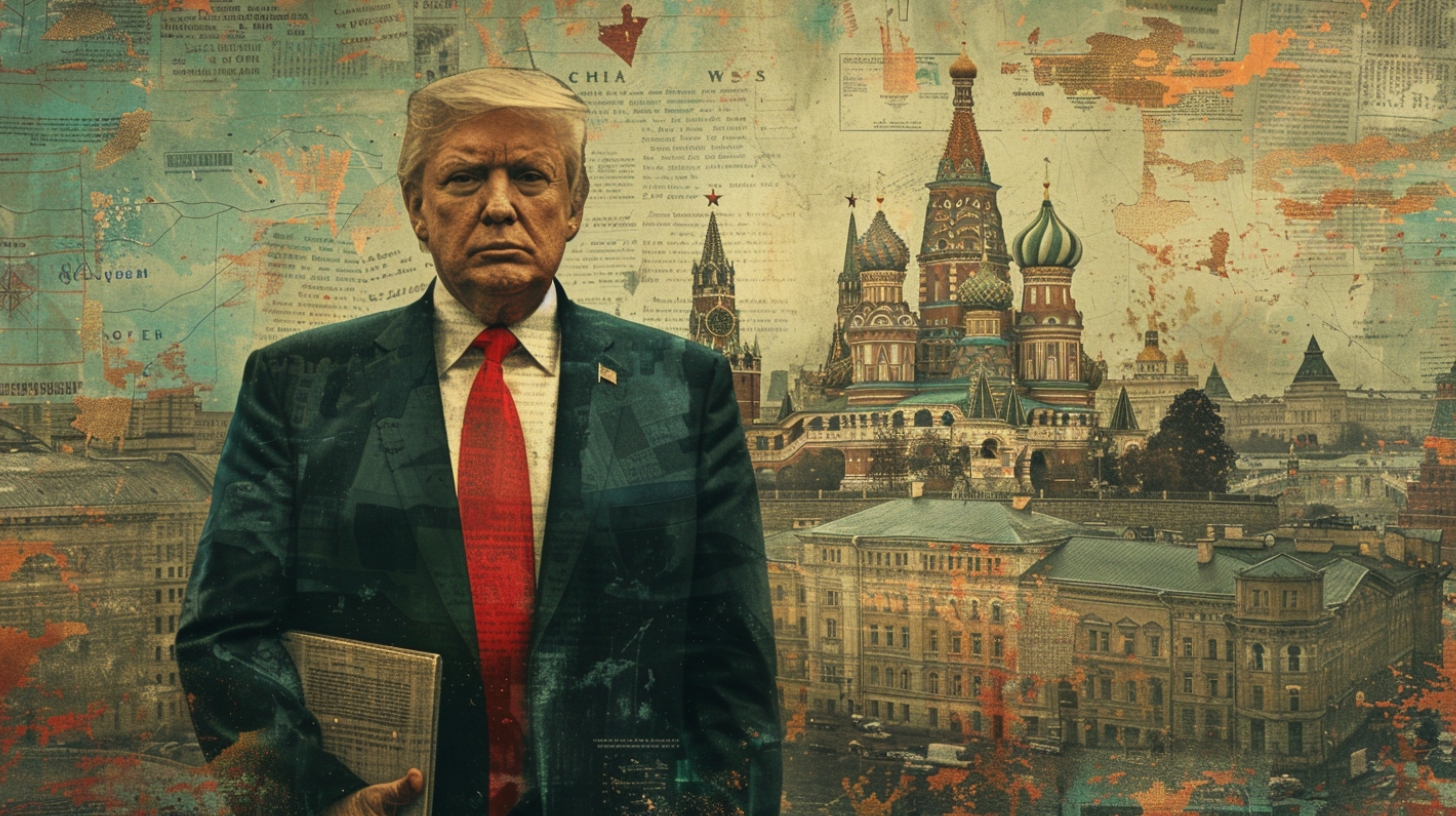
The Week That Shaped the World — 5 - 12 December 2025
The Trump Peace Blueprint and Other Major Stories of the Week
Some weeks ask questions. This one brought a blueprint — quietly, almost politely — and laid it across the table for everyone to stare at. Washington’s proposed peace framework, whispered into Europe rather than announced to it, set the tone for seven days in which the news felt less like a stream of events and more like a slow redraw of the world’s political map.
In this digest we follow that shift — from the tight corridors of American diplomacy to the ruins of Gaza, where a “ceasefire” means little more than a softer edge to tragedy; from France’s promise of fresh artillery for Lithuania to the subtler economic overtures that hint at Russia’s potential reintegration into the global marketplace.
Even Moscow’s foreign minister found time to accuse the West of seeking a pause merely to reload — a familiar tune played at a moment when the room is unusually quiet.
And beyond the politics, the financial world continued its own choreography. India cut rates with enviable confidence. Switzerland held steady with enviable calm. Oil forecasts twitched, corporate giants reported, and the global economy — as ever — waited for the Federal Reserve to clear its throat before deciding what to feel next.
Ten stories. One uneasy theme: the world is moving again, just not always in the direction anyone expected.
“When great powers redraw the map, they rarely warn the people living on it.”
1. The Trump Peace Blueprint and the Quiet Redesign of Europe
Some weeks announce themselves with noise; this one arrived like a folded blueprint slipped under the door. A “peace plan” from Washington — never formally unveiled yet already rearranging the furniture of Europe’s security order — dominated the political weather. Everyone pretended it was just another proposal. It wasn’t.
Officially, the document is an American design: a pragmatic pathway to end a war that has drained patience, pockets and diplomatic oxygen. Yet the deeper you read between its lines, the more the geometry shifts. Certain clauses sit a little too comfortably within Moscow’s long-standing vision of a “reasonable settlement”. Certain benefits fall into alignment with almost suspicious elegance. We won’t claim hidden authorship — that would be melodrama — but let’s say this: some blueprints feel drafted with a second pair of hands hovering just off the page.
Europe, predictably, tried to look involved. Statements were issued, brows furrowed, capitals spoke of “principles” and “unity”. But the truth is simpler and less flattering. Europe wasn’t shaping the plan; Europe was being briefed about it. From the corridor. At a polite distance. It’s hard to be an architect when you’re not even inside the building.
The real axis ran Washington–Moscow–Kyiv, with the latter under unmistakable pressure to accept the deal’s harder edges. And while commentators argued about territorial clauses and economic incentives, the more interesting story sat beneath the surface: the United States is no longer trying to preserve Europe’s old security architecture.
It is drafting a new one — on its terms, to its measurements, with Russia included whether anyone likes it or not.
The week didn’t feel dramatic. It felt decisive. Europe isn’t reshaping the future; the future is being reshaped around Europe.
“The most unsettling thing about a new world architecture is not who builds it — but who discovers they were never on the invitation list.”
2. Gaza’s ‘Ceasefire’ and the War That Never Went Away
By 5 December, the word “ceasefire” in Gaza sounded less like a diplomatic term and more like a bad joke told too often. On paper, the guns should have fallen silent weeks ago. In reality, artillery fire, drone strikes and the steady grind of urban warfare continued, while aid convoys tried to squeeze through bureaucratic bottlenecks and cratered roads. The war moved into that cruel phase, familiar to anyone who has watched the region long enough: less visible on front pages, more lethal for those who can’t leave.
Humanitarian agencies talk about famine conditions, collapsed hospitals, displaced families shuffling from one temporary refuge to another as winter creeps in. Children sleep under plastic sheets while adults argue on television about “frameworks” and “monitoring mechanisms”. The numbers are numbing: tens of thousands dead, whole neighbourhoods erased, 90% of the population uprooted. Statistics now stand in for people whose names we will never learn.
Diplomatic choreography continued, of course. New initiatives, old phrases, recycled formats: “sustainable ceasefire”, “security guarantees”, “post-conflict governance”. Everyone is in favour of stability; no one wants to pay the political price of getting there. For Washington, Gaza has become both a moral headache and a bargaining chip in a larger game. For regional actors, it is a mirror they would rather not look into.
The most honest description of the situation came not from a podium but from a field worker: this is not “post-conflict”, it is “conflict with paperwork”. The killing slowed down just enough for the world to pretend it had done something. On the ground, life did not restart. It merely… continued.
“When politicians say ‘ceasefire’, they mean the cameras can switch off. The people under the falling shells rarely share that feeling.”
3. Caesar for Lithuania: Artillery as a Substitute for Strategy
On 10 December, France confirmed that it would supply Lithuania with additional CAESAR self-propelled howitzers — sleek, wheeled artillery pieces designed to move fast, shoot far and reassure nervous allies. Officially, the deal strengthens NATO’s eastern flank. Unofficially, it strengthens the sense that Europe’s response to strategic uncertainty is to buy more metal and hope for the best.
For Lithuania, the logic is simple and painfully rational: geography never cared about speeches. Wedged against Russia and Belarus, Vilnius wants range, mobility and the ability to answer any threat with heavy steel. CAESAR provides all three. By the end of the programme Lithuania will be one of the largest foreign operators of the system, a serious artillery player by regional standards. For a small state, that matters.
Paris, meanwhile, gets to project reliability, sell high-end kit and remind everyone that French industry still knows how to build things that go bang in a very sophisticated way. It is good business wrapped in the language of solidarity. A tried and tested European formula.
But strip away the communiqués and a quieter truth emerges. Artillery does not solve the question of what Europe actually wants its security order to be. It fills gaps. It deters. It wins procurement headlines. It does not answer the underlying problem: strategy outsourced to Washington, risk outsourced to frontline states.
Lithuania will sleep a little easier knowing more CAESARs are on the way. France will add another line to its export list. NATO will talk of “enhanced posture”. Yet the uncomfortable feeling lingers that Europe is once again treating symptoms with hardware, while the disease — a lack of coherent strategic will — remains stubbornly untouched.
“Guns can extend your reach, but not your imagination. Europe keeps buying the former because the latter is still on back order.”
4. Washington’s Economic Offer: Bringing Russia Back In, on American Terms
If the Trump peace blueprint sketches the political outline of a new order, the Wall Street Journal story of 11 December coloured in the economic detail. According to the report, Washington has circulated proposals to European capitals that would, in effect, bring Russia back into the global economy — provided it accepts a deal on Ukraine that the White House can sell as “peace”.
The contours are striking. American companies would be encouraged to invest in Russian strategic sectors, from energy to minerals, in exchange for Moscow’s cooperation on a settlement. Frozen Russian sovereign assets — hundreds of billions in limbo — could be partially mobilised to fund reconstruction projects in Ukraine. Energy flows from Russia to Europe would resume under a new, heavily supervised framework. It is less punishment, more controlled reintegration.
For Europe, the offer is awkward. Official rhetoric still speaks of isolation, accountability and principled firmness.
The reality is more prosaic: high energy costs, fragile industry, restless voters and the creeping awareness that a continent built on cheap Russian gas and American security guarantees cannot indefinitely afford to lose both.
The US, ever practical, seems to have decided that if Russia cannot be wished away, it must be managed — preferably through American capital and oversight.
Kyiv, understandably, looks at this architecture with a different eye. Investments and corridors sound impressive in PowerPoint, less so when the price involves territorial ambiguity and long-term dependence on those who “brokered” your future. The clash between moral language and transactional design is becoming harder to hide.
In the end, it is a familiar pattern: when ideals collide with interests, someone starts drawing pipelines and spreadsheets.
“Great powers rarely forgive each other. They simply find new ways to make money together — and call it peace.”
5. Lavrov’s ‘Pause Theory’: A War of Words about a War of Attrition
On 11 December, Sergei Lavrov did what he does best: turned a diplomatic forum into a carefully staged monologue. According to the Russian foreign minister, the West’s sudden enthusiasm for a ceasefire is not about peace at all. It is, he suggested, about “a break” — a tactical pause to rearm Ukraine before pushing the conflict further.
It is a neat narrative. In Moscow’s telling, nothing the West does is sincere; every humanitarian gesture hides a military calculation. Calls for negotiations are just camouflage for a longer war, waged by proxies with Western weapons and Eastern lives. The script is familiar, but that does not make it ineffective. At home, it reinforces the idea of Russia standing alone against a cynical, predatory bloc. Abroad, it muddies the waters just enough to keep some audiences uncomfortable with Western moral certainty.
Of course, Western officials counter that argument with one of their own: Russia, they say, wants a ceasefire only when it suits its front lines, its logistics and its domestic calendar. Everyone accuses everyone else of instrumentalising the word “peace”. Everyone is at least partially right.
What makes Lavrov’s line worth noting this week is not its originality, but its timing. As rumours swirl about American peace formulas and economic reintegration, Moscow is laying the groundwork to delegitimise any Western initiative it doesn’t control — even while quietly probing what might be on offer. Public indignation, private curiosity. Another familiar pattern.
The tragedy is that for people under fire, the motives matter less than the shells. Whether a ceasefire is a pause to reload or a step to stop the killing is a question for conferences. On the ground, a pause is still a pause.
“Diplomats argue about the sincerity of ceasefires. Civilians tend to prefer the insincere ones to no ceasefire at all.”
6. India’s Rate Cut: A ‘Goldilocks’ Gamble in a Restless World
On 5 December, while the West obsessed over wars and summits, the Reserve Bank of India quietly adjusted the dial on one of the world’s most important emerging economies. The RBI cut its key repo rate by 25 basis points to 5.25%, talking of a “goldilocks” balance between growth and inflation. In the language of central bankers, that is practically a drum solo.
India has been flirting with an enviable position: growth strong enough to attract capital, inflation not quite high enough to scare it away. The rate cut was widely expected, but still significant. It signals confidence that price pressures are manageable and that the priority, for now, is keeping momentum in credit, investment and domestic demand. In a sluggish global environment, being one of the few credible growth stories comes with responsibilities.
Markets took the move in stride. Bond yields nudged, the rupee did its usual cautious shuffle, analysts updated their graphs and declared the decision “broadly in line with expectations” — the highest compliment and the deepest insult in financial commentary. Underneath the clichés, something real is happening: India is trying to lock in its role as the world’s alternative engine, just as China slows and the West argues with itself.
There are risks, of course. Cut too far, too fast, and inflation could resurface. Move too slowly, and the opportunity slips. But compared with the monetary contortions in Europe and the US over the past decade, India’s problem is almost luxurious: how to manage success without choking it.
While others debate recession probabilities to the second decimal place, New Delhi is quietly asking a different question: how long can we stay in this sweet spot?
“In a noisy world, real power sometimes belongs to the country whose central bank can still cut rates without apologising.”
7. Switzerland Holds at Zero: Stability as a Quiet Luxury
On 11 December, the Swiss National Bank did something profoundly unfashionable: nothing. The SNB left its policy rate unchanged at 0%, confirmed it would still tinker in the foreign-exchange market if needed, and presented new inflation forecasts that fit comfortably in the “not great, not terrible” category. In a year of monetary drama elsewhere, Switzerland once again opted for the fine art of being slightly boring.
Beneath the calm surface lies a familiar logic. The franc remains strong, inflation is under control, and growth, while hardly spectacular, is not collapsing. With many peers only just escaping painful bouts of price spikes, Switzerland finds itself in the rare position of not having to over-compensate for past mistakes. The reward for decades of monetary conservatism, fiscal discipline and a national fondness for caution is this: the luxury of inaction.
Currency traders still watch the SNB like hawks, of course. Any hint of intervention, any change in tone can shift flows. But the message this time was straightforward: no sudden moves, no experiments, no desire to join the global fashion for heroic policy swings. In a sense, the SNB is offering investors the same product Switzerland has sold for over a century — predictability, wrapped in understatement.
For the rest of Europe, struggling with debt overhangs and political volatility, the contrast is quietly uncomfortable. Where others are forced to perform, Switzerland can merely… maintain. That does not make it invulnerable, but it does make it different.
In a week dominated by talk of new world architectures, there is something almost subversive about a central bank whose main contribution is to leave the scaffolding exactly where it is.
“Some countries dream of changing the system. Switzerland’s trick is simpler: design a system you never urgently need to change.”
8. The IEA’s Oil Revision: A Small Number, a Big Signal
Also on 11 December, the International Energy Agency adjusted one of those numbers that look minor on paper and matter enormously in practice. The IEA trimmed its forecast for global oil supply growth in 2025 by 100,000 barrels per day, now expecting an increase of 3 million b/d to around 106.2 million. For a casual reader, that is the kind of detail that makes eyes glaze over. For energy markets, it is a nudge with consequences.
The revision reflects a blend of factors: sanctions pressure on Russia and Venezuela, ongoing uncertainties in OPEC+ production, and a slightly cooler view on how quickly new barrels can realistically come online.
At the same time, demand expectations have edged higher on the back of a softer dollar and marginally better macro data. Less supply growth plus firmer demand is not a dramatic recipe, but it tends to point in one direction for prices.
Oil traders, being who they are, immediately folded the update into a much larger narrative: What does this mean for inflation? For central banks? For election politics in import-dependent countries? A few tens of thousands of barrels here or there become proxies for much bigger fears.
The broader story is that we are still living in an energy world where small shifts in forecasted balance can unsettle a system supposedly awash with crude. Geopolitics, infrastructure bottlenecks and under-investment in refining capacity all conspire to keep markets on edge.
The IEA is not predicting crisis, merely a slightly tighter-than-expected future. But in economies already allergic to price spikes, “slightly tighter” is all it may take.
“In oil markets, a hundred thousand barrels on a spreadsheet can be the difference between ‘manageable’ and ‘minister on television explaining why fuel is expensive again’.”
9. Broadcom, Costco and the Two Faces of the Global Economy
Towards the end of the week, investor attention turned to two corporate barometers that rarely share a sentence but often share a message: Broadcom and Costco. One sits at the heart of the semiconductor and AI hardware rush; the other sells bulk groceries, garden furniture and the comforting illusion of value in a world of shrinkflation. Together, they tell a story about how the global economy is really coping.
For Broadcom, earnings season is now less about beating forecasts and more about convincing markets that the AI boom is not just marketing froth. Orders for high-end chips, networking gear and custom silicon have turned companies like this into proxies for the entire “future”. Any hint of slowing demand is pored over as evidence that the great AI super-cycle might be shorter, messier or more cyclical than advertised.
Costco, by contrast, is the sort of business that thrives on the mundane. Its numbers speak to something far less glamorous: the health of middle-class consumption, the trade-off between price and quality, the quiet desperation of households trying to stretch pay packets without feeling poor. When shoppers downgrade brands but upgrade membership cards, economists take note.
This week’s focus on both names underlined a simple truth: we are living through an economy with a split personality. One side is fuelled by data centres, chips and grand narratives about productivity revolutions. The other runs on discounted chicken, petrol and the hope that wages will catch up eventually.
You can ignore either story for a quarter or two. You cannot ignore them both for long.
“Markets obsess over the companies building the future, but it’s the ones filling trolleys today that decide whether voters will ever forgive the present.”
10. Waiting for the Fed: A Global Economy in Holding Pattern
By 9 December, you could feel it in every market note and television panel: the world was once again killing time before a Federal Reserve meeting. Officially, the upcoming decision is just one among many. Unofficially, it is the event around which bond yields, equity valuations and a surprising number of political speeches quietly orbit.
The script is familiar. Traders debate the odds of future rate cuts with the precision of people guessing the weather from tea leaves. Analysts produce charts showing inflation gently drifting towards target while growth tip-toes along a thin line marked “soft landing”. Politicians talk about cost-of-living pressures and “supporting families” as if the Fed chair were an unseen member of their cabinet.
What makes this round interesting is not the decision itself — few expect a sudden lurch — but the guidance.
Every syllable about “data dependency”, “financial conditions” and “labour market normalisation” will be read as a signal of how long the current plateau in US rates might last. For emerging markets, that means clarity on capital flows. For Europe and Japan, it means another reference point in their own, more awkward, policy debates.
There is something faintly absurd about the whole ritual. A global system with dozens of central banks, trillions in GDP and wildly different domestic conditions still arranges its emotional calendar around a single meeting in Washington. Yet here we are.
The irony is that the Fed itself would quite like to be less important. A calm, predictable backdrop suits its technocratic instincts. But after years of crisis, stimulus and inflation scares, everyone is still listening for footsteps in the corridor.
“Empires used to move armies; now they move basis points. The anxiety on the faces has stayed exactly the same.”