Putin ready to fight war with Europe
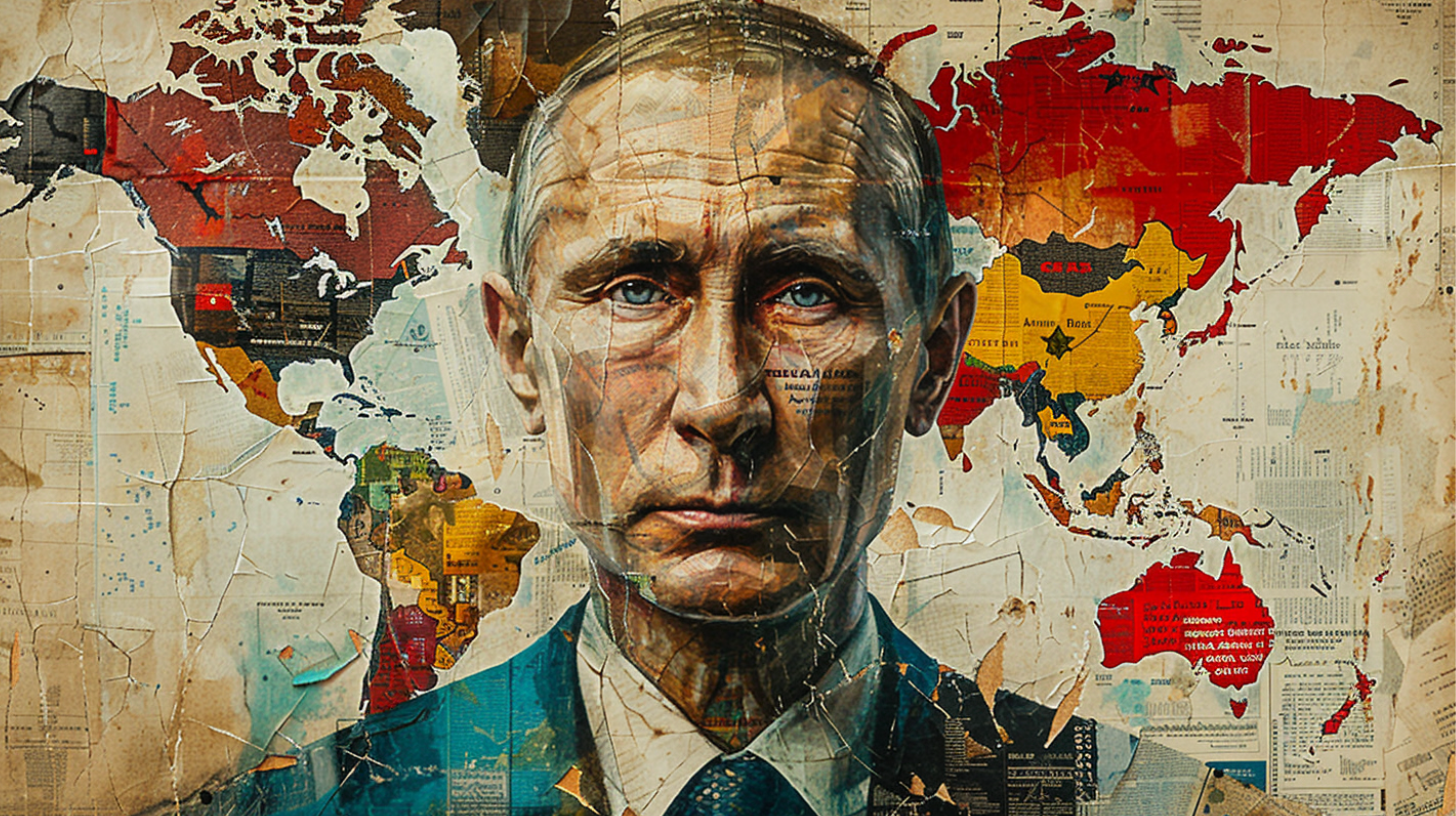
The Week That Shaped the World — 28 November - 5 December2025
Putin Says He Is Ready for War with Europe – and Other Major Stories of the Week
Some weeks arrive quietly and then leave the room in a very different state. This one didn’t bother with subtlety.
Putin’s declaration that Russia is “ready for war with Europe” set the tone — sharp, deliberate, and impossible to ignore — and everything that followed felt like a world adjusting its posture.
Diplomats talked of peace with the expression of people reading from a script they no longer believe in. Markets twitched. Washington whispered about interest rates. London tried to look confident presenting a budget that convinced no one entirely. Even Big Tech found itself back under Brussels’ microscope, which is becoming its own sort of tradition.
It wasn’t a dramatic week; it was a consequential one — the kind where the ground shifts a little underfoot, and you realise it only afterward.
“History rarely shouts its turning points. It just lowers its voice and waits to see who was paying attention.”
1. Putin ready to fight war with Europe
You expect strong words from Moscow now and then, but every so often Putin drops a line that makes Europe sit up a little straighter. This week it was: “We are not planning to go to war with European countries. But if Europe wants to and starts it, we are ready right now.”
Delivered calmly, almost politely — which, frankly, made it land even harder.
And while that soundbite was echoing across Brussels, Trump’s envoys were in Moscow trying to stitch together yet another “peace plan” for Ukraine. Five hours of talks. Five hours of polite smiles, hard pauses, and the familiar dance of proposals being labelled “possible”, “unacceptable”, or “we will consider it”. Nothing actually shifted. Nothing ever does.
Europe, meanwhile, did what Europe does best: argued with itself. This time about how to use frozen Russian assets without accidentally committing political suicide. Tens of billions are sitting in Euroclear, looking very tempting, and everyone wants the money — just not the responsibility. Moscow, unsurprisingly, has already called the whole idea theft dressed up as policy.
But the real point of the week wasn’t the negotiation, the assets, or even the legal acrobatics. It was tone.
Russia speaks like a country perfectly comfortable with the prospect of a much bigger conflict. Europe speaks like a continent praying it won’t have to find out what that actually means. And the United States — distracted, divided, overstretched — now feels more like a commentator than a participant.
So yes, Putin said he’s “ready right now”. And no, it wasn’t a threat in the Hollywood sense. It was something colder: a reminder that Russia has already built its war economy, tested its doctrine in Ukraine, and made peace with the idea of escalation.
Europe hasn’t.
“The loudest warnings are the ones spoken quietly.”
2. Putin in India: The Quiet Summit Before the Storm
I spent half the morning staring at the photos from New Delhi — the handshakes, the garlands, the predictable choreography — and something about it felt… off. Maybe it was the timing. Maybe it was the look on Modi’s face, that polite expression he wears when he’s saying one thing and thinking something entirely different. India does that a lot. It’s practically a diplomatic art form there.
Officially, this was just the “23rd annual summit”, which sounds boring enough. Trade, energy, the usual defence talk — the sort of topics civil servants can discuss even in their sleep. But the atmosphere around this visit had a different texture. Hard to explain. Like everyone involved knew the script had changed, but no one wanted to be the first to admit it.
And then there’s Putin. He arrives days after telling Europe he’s “ready” if things escalate — as casually as someone mentioning they might repaint the kitchen. And suddenly he’s in India, smiling in front of cameras while the West tries very hard to pretend this isn’t significant. It was significant. Even the weather in Delhi looked like it understood that.
India, for its part, doesn’t rush to reassure anyone. Why would it? They buy Russian oil on Monday, sign deals with the Americans on Tuesday, and by Wednesday they’re negotiating with half of Asia. It’s not neutrality. It’s confidence — the kind the West keeps trying to mimic but can’t quite pull off anymore.
Our read, for what it’s worth: this didn’t feel like an annual catch-up. It felt like two major players quietly checking their positions before the wider world shifts again. BRICS isn’t just a club now; it’s starting to look like an alternative room where decisions are made while everyone else argues in the hallway.
India didn’t “side” with anyone this week.
It just reminded the rest of us that it doesn’t play by other people’s narratives — only its own.
“Most turning points aren’t loud. They just look ordinary until you look again.”
3. America’s “Blackout Week”: Protest, Anger, and a Country Too Tired to Pretend
I’ve been trying to make sense of this “economic blackout” thing — a whole week of not buying anything — and honestly, the more I think about it, the stranger it feels. Not bad-strange. Just… American-strange. Only the U.S. could turn not spending money into a political statement. And somehow still make it loud.
People kept posting photos of empty shopping carts, receipts with “$0.00”, screenshots of abandoned checkout pages. A kind of quiet protest, except nothing in America stays quiet for long. Even silence there comes with commentary. And hashtags.
What surprised me wasn’t the boycott itself — plenty of people ignore Black Friday out of principle or just lack of interest — but the mood behind it. A sort of… tired anger. The kind that doesn’t shout because shouting is too much effort. You could feel it in the way politicians rushed to pretend the protest didn’t matter while clearly worrying that it did.
And somewhere in the middle of this, Washington decided to close the sky over Venezuela. As if to say, “Look, we’re still decisive.” Except it looked more like an athlete flexing a muscle after an injury — not strength, but the memory of it. A gesture to reassure themselves rather than anyone else.
I don’t think the blackout hurt the economy. Not really. What it hurt was the narrative that America is too busy, too wealthy, too distracted to organise anything resembling dissent. Turns out people can organise just fine when they’re annoyed enough.
Anyway.
What stays with me is the feeling that the U.S. is trying to walk in two directions at once: act like the global referee while tripping over its own shoelaces at home. Hard to lead the world when half the country thinks the other half is the problem.
“Sometimes a protest doesn’t change the world. It just shows you who’s no longer convinced by it.”
4. Britain’s Budget Leak Scandal: A Government That Keeps Dropping Its Own Secrets
I don’t know when exactly Budget leaks became part of British political weather — somewhere between the third reshuffle and whoever was Prime Minister that month — but here we are again. Another leak. Another round of “deep concern”. Honestly, I’ve heard that phrase so many times it’s starting to lose its vowels.
This one wasn’t even dramatic. Bits of the Budget drifting around ahead of schedule, like someone forgot to close a window and the papers just… wandered off. Markets twitched (they always do), a few MPs tried to look outraged in front of cameras, and the Treasury gave that tight-lipped “we’re looking into it” line that convinces absolutely no one. Not even themselves, I suspect.
What struck me — and I’m not sure why, maybe I hadn’t slept enough — was how jumpy Westminster felt. The kind of jumpiness you see in offices where everyone assumes someone else is leaking something, but no one wants to ask because it might actually be true. You could hear it in people’s voices. Or maybe that was just the air conditioning.
And look, I’m not shouting “corruption!” here. It’s more… porousness. Like the whole machinery is slightly water-damaged. Things slip out. Stories blur. One minister denies knowing anything, another denies knowing the first minister, and suddenly the Budget — the actual financial backbone of the country — feels like it was held together with a bulldog clip.
Our view? Hard to trust a government with your money when it can’t keep track of its own paperwork for twenty-four hours. It’s not the leak itself, really. It’s the shrug that follows.
Anyway. Maybe it’s nothing.
Or maybe a country eventually starts to resemble the way it's managed — a bit scattered, a bit tired, a bit… leaky.
“Some governments leak stories. Some leak confidence.”
5. Britain’s Transgender Debate Slips Quietly Into a New Phase
It says something about the national mood when a story that once dominated every headline now arrives with barely a ripple. Girlguiding and the Women’s Institute announced they will no longer accept transgender women and girls — a decision anchored, they say, in a recent court ruling. In another year, this would have triggered the familiar storm. Not this week.
What struck me wasn’t the decision itself, but the quiet around it. A kind of collective exhale — not approval, not outrage, something in between. The country feels as if it has reached a point where difficult conversations no longer explode; they simply sink. People read the headline, blink once, move on. Not because they don’t care. Because they’re running out of emotional credit to spend on cultural battles that never resolve.
There’s also the sense — subtle, but present — that institutions are drifting back toward more traditional boundaries. Not out of ideology, but out of fatigue. Complexity exhausts bureaucracies. Ambiguity terrifies them. And after years of being told to modernise faster than their internal structures could handle, some organisations seem to be retreating to the only terrain they recognise.
This isn’t a moral verdict. It’s an observation: the public appears tired. Not angry, not triumphant — tired. And tired societies often default to the familiar. Not because the familiar is better, but because it is easier to explain, easier to defend, easier to manage when the political weather is turning unpredictable again.
Our editorial view is simple enough: this decision marks neither progress nor regression. It marks a pause — the moment a country sits down, rubs its temples, and realises it cannot carry every cultural debate at full volume forever.
“A nation’s direction is sometimes revealed not in its arguments, but in the silence that follows them.”
6. The AI Market Slows Down, and People Pretend They Expected It
It’s difficult to say when exactly the mood shifted, but you could feel something thinning in the air long before the numbers admitted it. Nvidia stepped back first — not dramatically, more like someone who suddenly realised they’ve been walking a little too fast. Micron followed, then a few others quietly adjusted their posture, as if hoping nobody had been watching the last two years too closely.
What happened? Nothing spectacular. No scandal, no sudden collapse. Just the market remembering that hype is not the same as demand. And for a moment — a brief one — the tone of the commentary changed. All those loud, confident claims about “limitless adoption curves” softened into language that sounded more cautious, almost embarrassed. The kind of tone people use when a promise has aged faster than expected.
I kept noticing how analysts tried to hold the story together. They spoke about “normalisation”, “healthy consolidation”, all those comfortable words that hide the obvious: not every company needs — or knows how to use — the mountain of hardware they’ve been buying. Many adopted AI because they were afraid not to. And now they are looking at their bills, their energy consumption, their overheating racks, wondering how exactly they convinced themselves this would be effortless.
And underneath all the noise there is the one fact everyone avoids phrasing too directly: the infrastructure simply isn’t ready for the ambitions projected onto it. Data centres running at the edge of their tolerance. Power grids stretched in ways that were never planned. Firms struggling not with AI itself, but with basic integration. None of this is dramatic, but all of it matters.
Does it mean the AI boom is ending? No. Not even close. But it does mean the narrative around it is becoming less theatrical, more grounded. A small correction in tone — that’s often how real transitions begin.
There is something almost honest in this week’s dip. As if the market finally exhaled after holding its breath for too long and realised nobody actually benefits from pretending everything moves in one direction forever.
“If a revolution can’t tolerate a pause, it wasn’t a revolution — just advertising.”
7. The Fed Hasn’t Spoken Yet, but the Markets Are Already Whispering
Some weeks you barely need an official announcement to see which way the financial weather is turning. This was one of those weeks. The dollar weakened — not dramatically, more like someone letting go of a breath they’ve been holding for far longer than they admit — and suddenly everyone began speaking about the Federal Reserve as if the decision for 2026 had already been delivered by courier.
It hasn’t, of course. But that didn’t stop the speculation machine from warming up. The moment Kevin Hassett’s name surfaced as a potential successor to Jerome Powell, markets quietly adjusted their expectations. Hassett is seen as someone who might favour a gentler monetary path, the sort of approach that gives investors a reason to imagine easier days ahead — even if those days exist only in the forecasts they keep revising.
What interested me wasn’t the gossip about appointments — Washington thrives on gossip; it’s the one export that never declines — but how quickly traders rewrote their internal narratives. Only a few months ago, the conversation was about keeping rates high “for as long as it takes”. Now everyone nods along to the idea of an accelerated cut, as if the entire architecture of inflation just got tired and decided to behave.
And the truth, which some analysts phrase in elaborate language to make it sound less obvious, is not complicated: the U.S. economy can tolerate higher rates, but the politics around it cannot. The longer uncertainty drags on, the harder it becomes for the markets to maintain their confident posture. You can see it in the small details — cautious wording, hedged predictions, the sort of tone professionals adopt when they want to sound informed while admitting very little.
Does this mean the Fed will actually cut sooner? Maybe. Or maybe this is just the financial world doing what it always does when it feels cornered — inventing a softer version of reality and hoping reality gets the hint.
But one thing feels clear enough: confidence is drifting, slowly, in that direction where “what if” starts to sound more convincing than “not yet”.
“Markets don’t wait for decisions. They rehearse them until they feel inevitable.”
8. Britain Unveils a Budget, the Markets Pretend Not to Flinch
Budgets in Britain have a curious habit of arriving with the same energy as an unexpected visitor — polite on the surface, slightly unsettling underneath. Rachel Reeves delivered hers with confidence, the sort of confidence Chancellors practise in front of mirrors. And for a brief moment, the markets behaved. Gilts stabilised. The pound didn’t wobble off its chair. Traders even managed a professional nod, which is practically enthusiasm in their world.
But anyone who has watched these cycles long enough knows the silence after a budget often tells more than the speech itself. There was a pause — small, but you could feel it — where investors tried to decide if they believed what they had just applauded. And the reaction that followed wasn’t fear or excitement, but something closer to cautious bookkeeping: a quiet recalibration of numbers, expectations, and whatever remains of optimism this late in the year.
The interesting part wasn’t the stabilisation; markets stabilise the way British weather clears up — grudgingly, and usually for reasons nobody fully understands. It was the way analysts shifted tone within hours. One moment they were calling the budget “disciplined”, the next they were mumbling about “structural concerns”, as if the speech had rearranged itself when they weren’t looking.
To be fair, the budget wasn’t reckless. It wasn’t transformative either. It sat in that middle space Britain increasingly occupies: trying to reassure the world that everything is under control while quietly hoping the world doesn’t ask too many follow-up questions. Investors know this. They price it in. You can hear it in their language — firm but never fully convinced.
What this means for the coming months is anyone’s guess. Stability is a relative term in the UK these days. But if the market reaction said anything at all, it was simply this: no sudden movements, please. Let’s pretend we all agree on what happens next.
“Confidence in Britain rarely rises or falls — it hovers, like a commuter waiting for a train that’s delayed but not cancelled.”
9. Wall Street Smiles, but Only with the Corners of Its Mouth
You could almost hear the financial press exhale with relief when the week wrapped up in green. S&P 500 up, Nasdaq cheerful, Dow Jones pretending to be the adult in the room — all of them neatly lifted by a combination of strong Black Friday numbers and corporate reports that looked, at first glance, like they’d been polished for a holiday window display.
But the thing about market optimism is that it rarely arrives without a footnote. And last week’s rally had several. Yes, consumer spending was strong — Americans will fight inflation, uncertainty, even basic arithmetic before they surrender a shopping weekend — but the enthusiasm felt a little too rehearsed. As if everyone agreed to behave bullishly for the sake of the photographs.
What stood out wasn’t the rise itself. Markets rise all the time for reasons nobody can fully explain, even in hindsight. It was the way commentators suddenly shifted into celebratory mode, the sort that usually comes after months of preparation, not two days of decent retail numbers. One analyst even called it a “renewed confidence in economic resilience”, which is the kind of phrase people use when they’ve already written the headline and are desperately hunting for justification.
Corporations did their part, of course. Earnings looked healthy, margins looked respectable, and anything that didn’t look quite as nice was quietly nudged off the table. Investors took the hint. They always do when the charts point upward, even if only slightly.
But beneath the cheerfulness there was that familiar hesitation — the knowledge that one good shopping weekend doesn’t rewrite the year. It doesn’t erase interest rate concerns. It doesn’t solve supply issues. It doesn’t magically give the global economy a personality transplant. All it does is offer a break from the gloom, a brief holiday card from the markets before reality resumes its usual correspondence.
Still, a win is a win. Even if nobody entirely believes in it.
“Markets love good news. They just hate admitting how short-lived it usually is.”
10. EU Launches Antitrust Probe Into Meta’s AI Access Rules
There are few constants in European life: train strikes, sudden rain, and Brussels deciding that Meta needs to be reminded who’s in charge. This week was no exception. The European Commission opened a fresh antitrust probe into how Meta handles access for AI developers on WhatsApp — or, more accurately, how it doesn’t.
On paper, it's a technical issue: third-party developers, data pathways, competitive fairness, all wrapped in the usual regulatory language that sounds intentionally sleep-inducing. But behind it sits the familiar suspicion that Meta’s default strategy is to innovate first and explain itself only when a formal complaint lands on the desk of someone with an EU badge.
The interesting part wasn’t the investigation itself — these inquiries arrive with the regularity of seasonal flu — but the way the markets reacted. Not with panic, not with denial, but with that resigned shrug investors reserve for companies that chronically cannot help themselves. Meta’s history with regulators could fill several shelves, most of them labelled “lessons unlearned”.
And this case touches a sensitive nerve: AI access. Europe has spent the last year declaring that it will not allow a handful of U.S. tech giants to define the future of artificial intelligence behind closed doors. Meta, meanwhile, has been walking that very line with the enthusiasm of a child testing how close they can get to a puddle before falling in. The Commission, inevitably, got the mop ready.
Will this investigation change the company’s behaviour? Probably not. Meta has long perfected the art of promising compliance while quietly adjusting the definition of the word. But what it will do is prolong a conversation the tech world hoped Brussels would eventually tire of — the one about whether AI development should be freewheeling or closely supervised.
Judging by this week, Brussels’ patience remains very much intact.
“Big tech loves to push boundaries. Regulators love to push back — usually harder.”