AI Energy War: Why the US is Eyeing Zaporizhzhia NPP
The Week That Shaped the World — 12 - 19 December 2025
AI Energy War: Why the US is Eyeing Zaporizhzhia NPP and Other Major Stories of the Week
This week, the global landscape took a sharp turn with the revelation of the US’s growing focus on energy control to fuel its AI ambitions. At the heart of the discussions lies Zaporizhzhia NPP, now seen as a crucial asset in the future of AI infrastructure. The implications of energy shortages for AI development have never been more urgent, and the race to secure vital resources is intensifying.
In this digest, we break down the biggest stories of the week, from Ukraine’s dramatic shift in military strategy to the latest developments in quantum computing and global energy. As the intersection of technology, energy, and geopolitics takes centre stage, the future of power is rapidly becoming the future of global influence.
"When the future of energy is up for grabs, it’s not just about controlling the media—it’s about controlling the power."
1. AI Energy War: Why the US is Eyeing Zaporizhzhia NPP
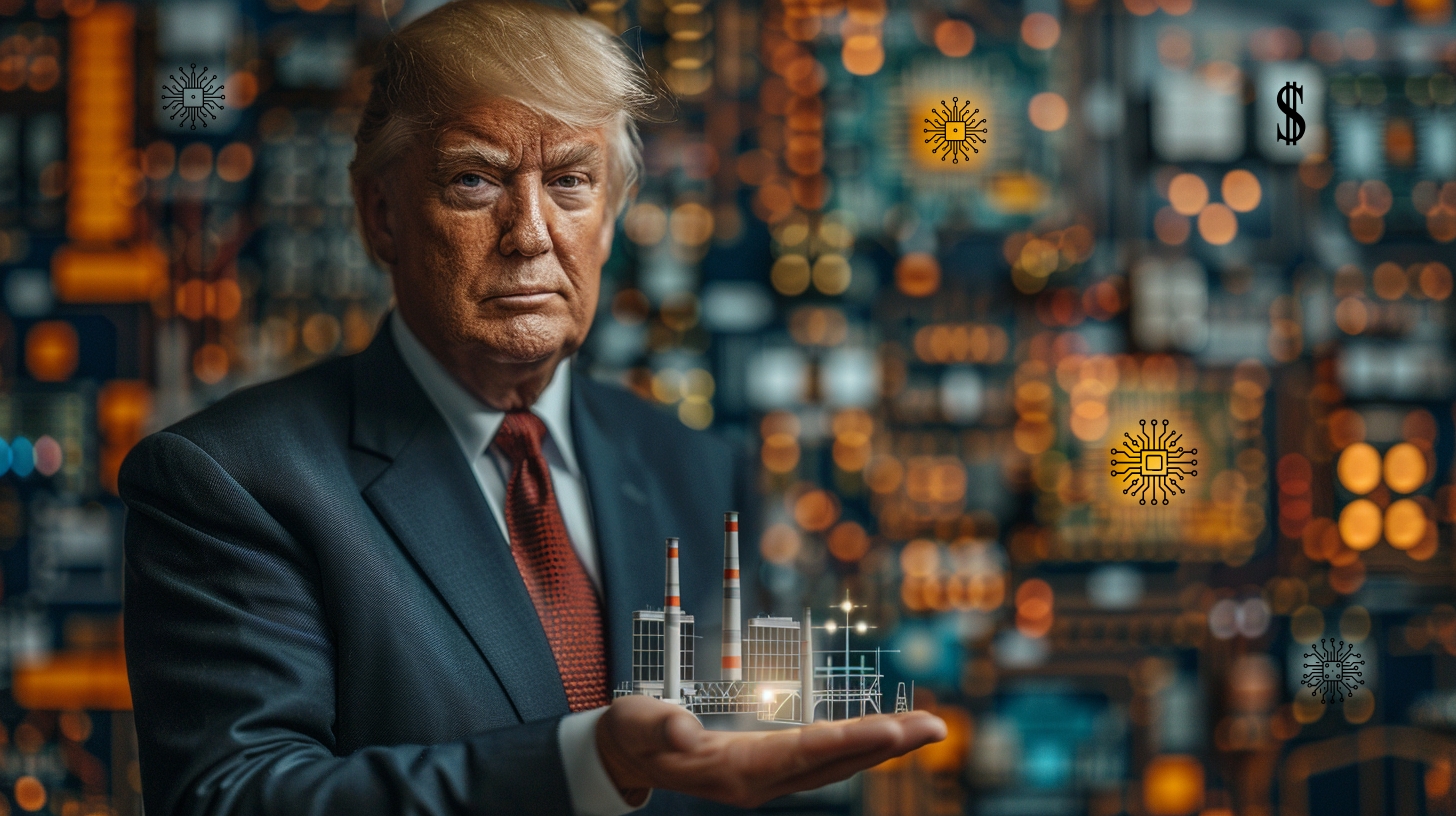
On December 15th, Nvidia held a closed-door summit discussing an issue that is rapidly becoming one of the most pressing for AI infrastructure worldwide: an energy shortfall. Analysts forecast a severe power deficit in the United States by 2026-2028, potentially matching the energy demands of several major cities combined. While this issue may seem like a distant concern, our editorial team suggests this summit is a sign that the US government is increasingly focused on securing a stake in global AI projects of strategic significance, including military and industrial uses.
The key concern here is processing power for training AI models—an issue that could lead to a scramble for global energy resources. This brings us to the Zaporizhzhia Nuclear Power Plant, located in Ukrainian territory and currently under Russian control. The US, it seems, may be keen to take control of this asset post-conflict, with proposals suggesting a joint management agreement between the US and Russia. This could be a major factor in Trump’s recent push for a peace deal in Ukraine—an effort that also aligns with his broader strategy of reintegrating Russia into the global economic fold.
This piece of the puzzle is more than just a diplomatic play. Russia’s mobile nuclear power capabilities, such as its floating nuclear power stations, could offer the energy needed to fuel American AI ambitions. In short, we see money pulling the strings once more, reminding us that in the world of geopolitics, the pursuit of energy often trumps the pursuit of peace.
"In a world powered by data, peace is just a means to secure the next power plant."
2. Ukraine to Draft Women Into the Army: A Strategic Shift?
In a war where every man, woman, and child has felt its sting, Ukraine is now asking an uncomfortable question: who’s left to fight? With military manpower dwindling and the frontline showing signs of collapse, the government has announced that women will soon be called up to serve. For a country that has long kept its military roles gendered, this is a drastic shift, one that reflects the dire state of affairs.
But will it make any real difference? The battlefield, as any soldier knows, is unforgiving—gender matters little when bullets start flying. So, can the inclusion of women, many of whom may be thrust into combat roles they never anticipated, reverse the tide of a war that has already claimed so much? There’s a lot of talk about filling the ranks, but less said about what happens when you’re forced to arm the entire population just to stay in the fight.
The real question, though, may lie elsewhere. With this policy shift, is Ukraine inadvertently setting the stage for another wave of refugees? Millions of Ukrainian women who fled the war have found sanctuary in Europe and the US—will they now be called back to the frontlines? The government may have given the order, but will the women answer the call, or will they stay abroad, unwilling to face the terror they escaped?
The decision is both a military necessity and a reflection of Ukraine’s deepening desperation. Women on the frontlines—though a hard reality to digest—are becoming yet another symbol of how this war has changed everything. And as desperate measures pile up, we’re left wondering: just how much more will be sacrificed before it all ends?
"When there are no soldiers left, civilians are the only ones left to send."
3. EU’s Sanctions on Russia’s ‘Shadow Fleet’ – A Futile Gesture?
The European Union, it seems, has found its latest tool for deflecting criticism: sanctions. This time, the target is Russia’s "shadow fleet"—a group of vessels accused of bypassing the oil price cap and transporting stolen Ukrainian grain. Another 41 ships have been blacklisted, bringing the total to almost 600, as the EU ramps up its punitive measures in response to Russia’s ongoing actions in Ukraine.
But the real question here is: do sanctions still carry any weight? The EU seems to think that further tightening the screws on Russia’s maritime trade will somehow bring the Kremlin to heel. Yet, as the price of Russian oil continues to climb, one has to wonder whether these measures are achieving anything more than a symbolic gesture. Despite the sanctions, Russian oil is still finding its way to eager buyers, and the inflated prices only seem to be padding the Kremlin’s coffers. It’s hard to imagine how this latest round of sanctions will have any more effect than the previous ones.
Moreover, the EU’s decision to target companies like Lukoil and various crypto firms appears to be less about striking a real blow to Russian power and more about appearing tough on Russia. As the world watches, it’s becoming clear that sanctions are quickly losing their teeth, and their effectiveness is rapidly being overshadowed by the growing cost of Russian energy.
The problem with sanctions is that they only work when they cause enough harm to shift behaviour. But when the harm is absorbed by other countries, and Russia profits from rising prices, it's hard to argue that these sanctions are anything more than political posturing.
"When sanctions become the last resort, it’s not about breaking the enemy—it’s about pretending to do something."
4. NATO’s 2026 Defence Budget: Tension at Record High
NATO’s latest move is the approval of a near $3 billion military budget for 2026—a staggering amount that highlights the Alliance's growing concerns about European security. With tensions simmering across the continent, particularly in the wake of the ongoing conflict in Ukraine, this budget is a clear sign that NATO is positioning itself for an uncertain future.
At first glance, it appears to be a prudent step—a necessary reinforcement of defences, especially in the face of an unpredictable world. However, the deeper you look, the more it seems like NATO is preparing for something more ominous. The money is there to fortify the military presence, but it’s not just about deterrence; it’s about maintaining a military edge in case the situation escalates further.
The concern here is the price tag. As NATO continues to pour vast sums into military infrastructure, there’s a growing concern about what else is being sidelined. Military spending, as we know, is a long-term commitment, and when billions are funneled into defence, other areas—such as diplomacy, development, or even social stability—often take a hit. The real question is whether this escalating spending is about safeguarding peace or simply about preparing for a prolonged period of tension.
One thing is certain: the larger NATO’s budget grows, the less inclined it seems to push for diplomacy. If the Alliance continues to bolster its military strength, the window for meaningful negotiations begins to narrow, and military action becomes the default option.
"More guns on the table mean fewer words in the room."
5. Black Sea Incident: Tensions Between Turkey, Russia, and Ukraine
The Black Sea is rapidly becoming one of the most dangerous chessboards in this proxy war. On a quiet day, Turkish fighter jets took down an unidentified drone that had strayed into their airspace. It wasn’t a huge surprise that it was allegedly Ukrainian—after all, the region has been crawling with all sorts of military hardware. What was surprising, however, was Turkey’s reaction: they didn’t mince words. No matter the drone’s origin, the message was clear: don’t mess with Turkey’s waters.
This isn't just about one downed drone. It’s a sign of how precariously the Black Sea is being watched by everyone involved, and how quickly it could ignite into something bigger. Russia and Ukraine are already at odds in these waters, each trying to secure control over critical shipping lanes and strategic positions. But Turkey? It’s stuck in the middle. They’ve made it clear they won’t be dragged into someone else’s war, but as we’re seeing, staying neutral here is increasingly harder.
Let’s not forget the bigger picture either. The Black Sea isn’t just a body of water for military posturing—it’s a major artery for international trade. And with the way things are going, the risk to shipping lanes, especially with tensions running high between Russia, Ukraine, and now Turkey, is only going to grow. A few more missteps like this, and we could see something much more disruptive than a drone downed from the sky.
"You don't need to be in the war to get hit by it—just stand in the wrong place."
6. Trump Media’s $6 Billion Deal: A Nuclear Power Play?
Donald Trump doesn’t do things by halves—especially when it comes to business. His latest move, a merger with TAE Technologies, a frontrunner in nuclear fusion, valued at a hefty $6 billion, is likely to make waves for years to come. At first glance, this seems like another headline-grabber in Trump’s business portfolio. But when you start thinking about it, the deal takes on a whole new dimension.
Fusion energy has long been the stuff of dreams. For decades, scientists have promised that it’s just around the corner, and yet, it remains elusive. TAE Technologies, however, has made significant strides. The potential for fusion to become a viable, clean energy source is growing, and that’s exactly where Trump Media comes in. The deal isn’t just about jumping on the bandwagon—it’s about positioning for something far bigger. If fusion comes good, it will be the game changer of the century.
The truth is, energy is power. Trump’s media empire might be his main focus, but this latest move is about securing his place in the future of global power dynamics. Clean, virtually limitless energy would change everything—from economics to geopolitics. And the companies that control that energy will wield extraordinary influence.
So why now? Fusion energy may still be a few years away from being commercially viable, but Trump is no stranger to seeing opportunities others don’t. By securing a stake in a company at the forefront of this technology, he’s positioning himself for a future where energy, not just information, will be the key to power.
"The real power isn’t in the media; it’s in what fuels the world."
7. Raiffeisen Bank’s Losses in Russia: A Corporate Headache
Raiffeisen Bank has just announced that it’s setting aside a whopping €339 million in reserves. This hefty amount is aimed at covering the fallout from a lawsuit filed by Russian company 'Rasperia' over business dealings in Kaliningrad. It’s the kind of move that makes you wonder whether Raiffeisen has now realised that its gamble in Russia has long since stopped paying off.
Doing business in Russia was always a tricky proposition, but now, with sanctions tightening and the legal landscape shifting almost daily, staying in the market is proving to be more of a liability than an opportunity. The lawsuit is just one headache; it’s the growing pile of financial, legal, and reputational risks that’s really got Raiffeisen’s board on edge.
The real question now is how much longer Raiffeisen can afford to keep its operations going in Russia. The losses from this lawsuit are only a small part of the story. With the political situation becoming increasingly unstable, the future of Western companies in Russia looks grim. At some point, the cost of staying may become too high, forcing Raiffeisen to either rethink its strategy or make a clean break.
For now, it’s a tough decision. Pulling out could mean losing valuable market share, but staying might mean bleeding money over the long haul. It’s a classic case of too much risk for too little reward—and one that could mark the beginning of the end for Raiffeisen’s Russian operations.
"In business, knowing when to walk away is just as important as knowing when to fight."
8. Gas Breakthrough in UAE: ADNOC Secures $11 Billion Funding
The UAE is quietly staking its claim in the global energy game. ADNOC, the state-owned oil giant, has secured an eye-watering $11 billion in funding to develop its Hail and Ghasha gas fields. This deal comes on the heels of ADNOC’s split with Russia’s Lukoil, marking the UAE’s clear intent to strengthen its position as an energy powerhouse—especially now that Russia’s hold on the global energy market is crumbling.
For ADNOC, this isn’t just about money. The Hail and Ghasha fields are expected to be two of the largest untapped reserves in the region, and ADNOC is making sure it’s at the centre of the action. By stepping away from Russian involvement, the UAE is sending a clear message to the world: when others are retreating, it’s stepping forward.
But beyond the dollars and cents, this deal reflects a bigger shift. With Russia increasingly isolated and energy markets uncertain, the UAE is positioning itself to fill the void. The country’s energy dominance is growing as it moves to capitalise on a world that is looking for more stable sources of power. ADNOC’s ambitious plans could redefine the Middle East’s role in the energy sector for years to come.
"In a world of shifting alliances, some know when to move, and others are left behind."
9. AI in Pharmaceuticals: Kirin and Fujitsu Break New Ground
On December 17th, Kirin and Fujitsu announced a groundbreaking AI-driven discovery that could change the future of medicine. Their collaboration has uncovered a new connection between the gut and the brain, offering potential new ways to develop treatments for a variety of diseases. The breakthrough comes at a time when AI is increasingly being used to solve complex biological puzzles—and this partnership could be a significant step towards reshaping how we understand health and disease.
But as exciting as this discovery sounds, the question remains: will AI truly deliver on its promise in healthcare? We’ve seen similar announcements before, with much fanfare, only for progress to stall as reality sets in. While the connection between the gut and brain has been known to some extent, AI has now provided a deeper, more precise understanding of the mechanisms at play, opening the door for new treatments. But can we expect to see these breakthroughs move from the lab to real-world applications anytime soon?
The real test for AI in pharmaceuticals will be whether it can continue to push the envelope on research, or if it will become just another buzzword. The stakes are high—if this new understanding of the gut-brain link leads to effective treatments, it could revolutionise the way we approach everything from mental health to chronic illnesses.
"In a world where promises often outpace delivery, let’s hope AI’s next breakthrough is more than just another theory."
10. Quantum Leap: IonQ and QuantumBasel Join Forces
On December 18th, IonQ revealed an expanded partnership with QuantumBasel, aimed at pushing the boundaries of quantum computing technology. The deal is a clear signal that Europe intends to step up in the race for quantum supremacy—an increasingly crucial frontier in both technology and global competition.
Quantum computing has long been seen as the next great leap in processing power, promising to revolutionise industries ranging from cryptography to medicine. For all its potential, though, the field is still in its infancy. While research continues to advance, the real-world applications remain tantalisingly out of reach. That’s where the IonQ-QuantumBasel partnership could prove pivotal. They’re betting on the idea that Europe can not only compete with, but surpass, the US and China, who have been dominating the quantum race for years.
But here’s the catch—while the promise of quantum computing is immense, we’ve been hearing about it for so long now that it's easy to get lost in the hype. The real test will be whether these innovations can be transformed from theoretical breakthroughs into tangible, usable technology. If they can, Europe could secure a vital edge in the next stage of the technological revolution.
"In the race to change everything, it’s not the speed that matters—it’s the substance."