Top 10 Startups of the Month: November 2025 Edition
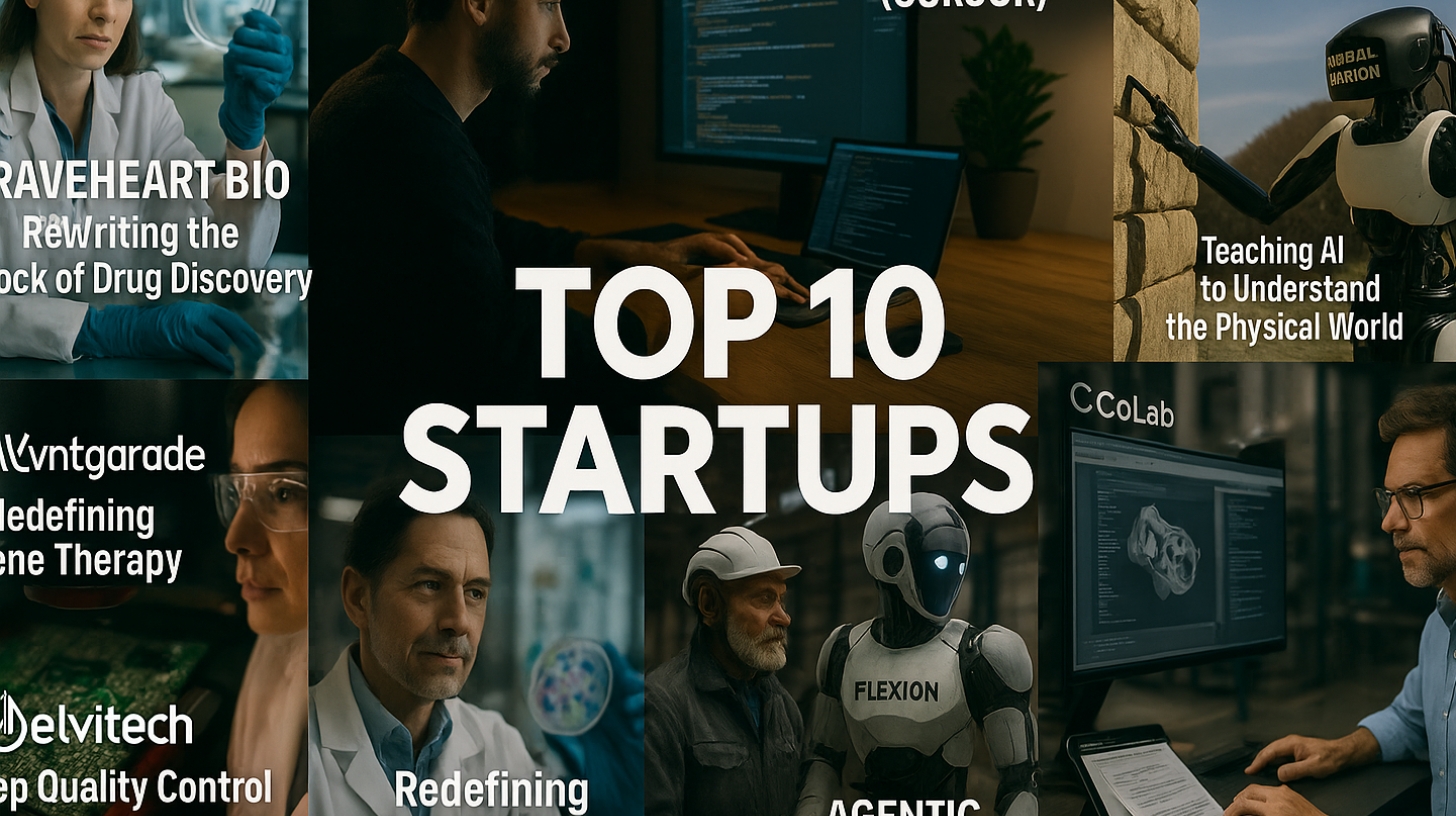
The ventures shaping what comes next.
November turned out hotter than anyone expected.
Not in headlines — in the work itself. Most of the real breakthroughs this month came from the U.S., almost one after another, as if everyone there had agreed to ship at the same time. Strong ideas, big rounds, and a sense that they’re pushing harder than usual.
Britain, oddly enough, had a quieter month. Nothing disastrous — just slower, as if the engine coughed once and needed a moment. It happens. Markets breathe. I wouldn’t write the UK off; it has a habit of coming back when no one is looking.
Still, November belonged to others.
And the ten teams below earned their place fair and square.
1. Braveheart Bio — Rewriting the Clock of Drug Discovery

Biotech / USA
Series A — $185 million
Some startups begin with a molecule.
Braveheart Bio began with a question: Why does developing a cardiac drug still take a decade?
On 5 November, they walked into the market with a $185 million Series A — one of the largest early-stage raises in biotech in recent memory — and a platform designed to collapse that timeline from years to months.
Their system doesn’t treat drug design as chemistry, but as computation.
AI models simulate molecular behaviour with clinical-grade fidelity, identifying cardiac compounds that would normally require years of trial-and-error.
The first candidates have already moved into early human studies — a pace that should make big pharma uncomfortable.
If November had a rhythm, Braveheart set the tempo: fast, focused, and unashamedly ambitious.
“The miracle isn’t the medicine. It’s the clock they’re trying to change.”
2. Hippocratic AI — Voices That Heal, Not Replace

Healthcare AI / USA
Series C — $126 million at a $3.5 billion valuation
Healthcare doesn’t break — it buckles. Quietly, slowly, under the weight of small tasks no one has time for.
Hippocratic AI isn’t trying to automate doctors; they’re trying to give them breath.
Their new wave of clinical agents, announced on 3 November, can triage symptoms, monitor patients, follow up after procedures and — crucially — speak in natural, reassuring language.
Hospitals in rural areas are already testing the platform, treating it not as a replacement but as a partner.
The funding round didn’t surprise anyone. The demand did.
Turns out patients still want a human doctor — but they don’t mind a machine that checks in at 3 a.m.
“In medicine, intelligence matters. But kindness still wins the room.”
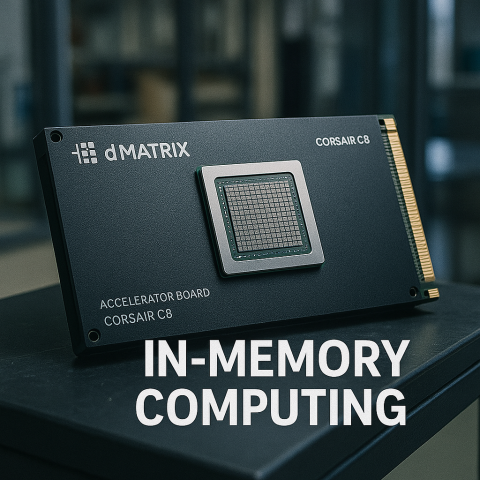
3. d-Matrix — Cutting the Power Bill of AI
AI Chips / USA
Series C — $275 million at a $2 billion valuation
Everyone keeps talking about bigger models, faster training runs, the next leap forward.
But there’s a quieter truth underneath all of it: AI eats power, endlessly, almost greedily.
Most companies pretend it’s just a line item on a spreadsheet.
d-Matrix doesn’t.
They treat it like an engineering fire alarm — the kind you stop ignoring once the smoke gets too obvious.
Their $275 million raise in mid-November wasn’t for chasing Nvidia.
They didn’t even step onto that track.
Instead, they went sideways, into the part of the industry no one brags about: keeping inference cheap enough that the lights stay on.
Their chips don’t try to be glamorous.
They’re built for places where latency stings and budgets matter — banks, telecom networks, robots that can’t afford a hiccup.
It’s practical silicon, the sort that feels almost old-fashioned until you realise how rare that attitude is now.
Engineers mention “ten times faster” almost as an aside.
What they really care about is the behaviour: stable loads, low heat, no panic when workloads spike.
Data centres like that.
Regulators like it even more.
There’s no theatre here.
No neon slides, no epic promises about the future.
Just the hard, unromantic truth that someone has to rebuild the electrical backbone if AI is going to survive its own appetite.
d-Matrix is doing that work — the unglamorous kind, the necessary kind.
“AI doesn’t scale on promises. It scales on watts.”
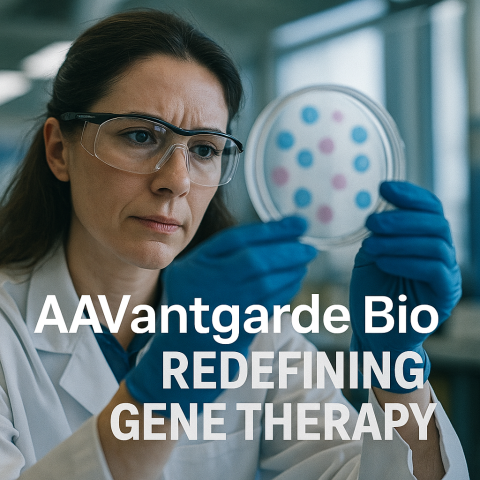
4. AAVantgarde Bio — Designer Viruses for Saving Sight
Gene Therapy / Italy–EU
Series A — $150 million
There’s something quietly poetic about healing blindness with a tool as small and deliberate as a redesigned virus.
On 3 November, AAVantgarde Bio secured $150 million to push that poetry into the clinic.
Their customised AAV vectors aren’t the usual broad-stroke gene deliveries.
They behave more like couriers with a sense of purpose, slipping the repaired code exactly where it’s needed — cells damaged by retinal dystrophy, or the deeper, darker losses tied to Usher syndrome. For years those conditions sat in the “nothing to be done” category. Suddenly, early data hints that may no longer be true.
What struck me reading through the clinical notes wasn’t the science — impressive as it is — but the tone of the physicians. Cautious, yes, but with that rare, unmistakable shift from optimism to expectation. The sense that something once theoretical is now brushing reality.
Europe doesn’t produce biotech giants often.
But this one feels like it’s already leaning in that direction — quietly, methodically, without theatrics.
“Sometimes the smallest intervention restores the largest world.”
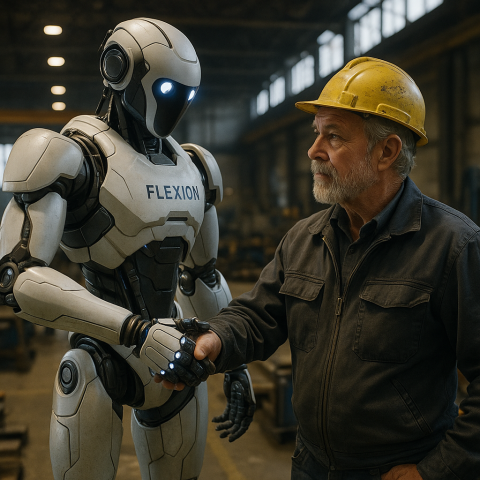
5. Flexion Robotics — The Humanoids That Actually Work
Robotics / USA
Series A — $50 million
Humanoid robots… honestly, everyone’s been pretending for years.
Nice videos, good lighting, a jump or a cartwheel — and then you put the same machine in a factory and it folds in ten minutes.
People stopped believing the demos a long time ago.
Flexion — small team, ex-Nvidia — sort of cracked that wall this month.
Not with a spectacle.
More like: “Here, try this, it won’t fall over.”
And strangely, it didn’t.
The $50 million raise on 20 November felt less like a win and more like a sign that actual manufacturers finally saw something they could use.
These are people who don’t clap. They send you spreadsheets and ask awkward questions.
If they show interest, it usually means the thing actually works.
Flexion’s robots aren’t charming. No dancing, no goofy grins, no PR stunts. They lift. They carry.
One of them got pushed during a test — accidental shove — stayed upright.
That impressed more than any polished routine I’ve seen in years. Real floors are messy.
Dust, noise, bad angles, humans rushing past with boxes. Most robots panic. These didn’t. That’s basically the whole story. It’s one of the few times in a long while robotics felt like equipment again, not theatre.
A tool. Not a promise.
“A robot doesn’t need charm. It needs balance — and a job.”
6. CoLab — Engineering, Without the Friction
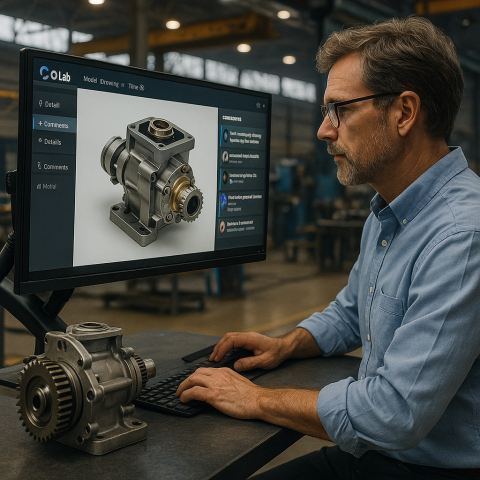
EngineeringOS / Canada–USA
Series C — $72 million
Every mechanical engineer knows the pain — the sort that arrives at 6 p.m., right when everyone wants to go home.
Version conflicts.
Models that refuse to load.
Somebody’s “final-final-v3.stp” sitting in the wrong folder.
That quiet sense of panic when you realise the assembly you’ve been working on all morning isn’t actually the latest one.
CoLab didn’t try to reinvent engineering; they just removed the parts that make engineers swear under their breath.
Their platform — something between an operating system and a very patient project manager — stitches teams together so they can simulate, annotate, argue, redesign, and test without tripping over each other’s work.
It doesn’t feel flashy. It feels… relieving.
Like finally walking into a workshop where the tools are where you left them.
The $72 million raise in November wasn’t about hype.
It was a signal from the industry that generative AI is creeping into places everyone assumed were too rigid, too slow, too “mechanical” for real change.
Ford uses it. Lockheed Martin does too. A few aerospace teams admitted, off the record, that they don’t know how they managed without it.
CoLab isn’t promising the future of engineering.
They’re doing something rarer — giving the present a little order.
“Innovation isn’t inspiration. It’s coordination done well.”
7. Anysphere (Cursor) — Coding Beyond Code

AI Development Tools / USA
Series D — $2.3 billion at a $29.3 billion valuation
Yes — the term “vibe-coding” isn’t new.
The industry has been circling the idea for years.
But what Cursor did in November wasn’t about the label. It was the leap.
The new version doesn’t just autocomplete functions.
It rewrites entire systems.
Migrates legacy codebases overnight.
Builds architectures from a sentence or two.
Understands the rhythm of an entire repository — not just the line you’re editing.
The result? ARR above $1 billion.
Half of the Fortune 500 now use Cursor.
And an eye-watering $2.3 billion Series D to push the platform into full autonomy.
The name is marketing.
The jump is real.
“The future of software isn’t written line by line. It’s shaped in intention.”
8. Delvitech — When Machines Learn to See What We Can’t

3D AOI Deep Tech / Switzerland
Series B — $40 million
Factories don’t fall apart because of big mistakes.
They fall apart because of tiny ones — microscopic solder flaws, misaligned chips, glue you didn’t see.
Delvitech sees all of it.
Their 3D optical-inspection systems raised $40 million in mid-November and are heading into automotive, telecom, aerospace and IoT manufacturing lines across the world.
A patented multi-camera head.
AI-native analysis.
No hand-programming.
Zero tolerance for error.
And a plan to scale production in India to hundreds of machines per month by 2030.
Quiet company. Deep tech. Enormous impact.
“Quality isn’t a slogan. It’s the defect you catch before the world notices.”
9. General Intuition — Teaching AI to Understand the
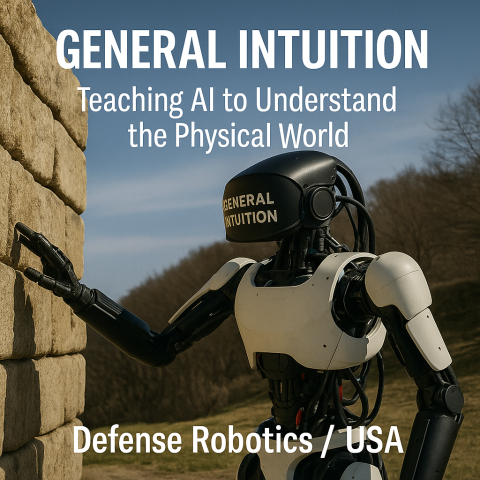
Physical World
Defense Robotics / USA
Seed — $133.7 million (yes, seed.)
You know a field has shifted when a seed round crosses $130 million.
That’s the sort of number you usually see after a couple of product cycles, not at the moment when the team is still ordering chairs for the office.
But that’s the thing about General Intuition — they’re not selling prototypes.
They’re selling a direction of travel.
Their focus is painfully simple: robots that don’t just execute commands but read a situation the way a trained operator would.
Not “move forward”, but move forward unless that shadow is a cable, in which case stop; and if it’s debris, reroute; and if it’s a person, speak.
Subtle judgement, embedded directly into the autonomy stack — the kind defence contractors have been trying to fake for years.
Khosla Ventures, General Catalyst and Raine didn’t write these cheques for a nice demo.
They wrote them because, in defence and logistics, hesitation is expensive.
And the teams on the ground don’t need more dashboards; they need machines that won’t misread a situation during the one second it matters.
This is the line where robotics stops living in research papers and starts affecting borders, supply chains and everything in between.
A small team, a monster seed round, and an uncomfortable truth: once AI starts touching the physical world, the stakes change.
“When AI touches the real world, every assumption becomes engineering.”
10. Genspark — The Rise of Agentic Work

Agentic AI / USA
Series B — $275 million at a $1.25 billion valuation
You can call it automation, augmentation, orchestration — doesn’t matter.
People are drowning in digital labour.
Inbox floods, endless tabs, the small administrative tasks that chip away at your focus until the actual work sits untouched at the bottom of the day.
Genspark didn’t try to romanticise any of this. They just built something to carry the load.
Their platform runs agentic AI that doesn’t politely “assist”. It takes over entire threads of work: research that would normally eat half a morning, summaries no one has the energy to write, the follow-ups everyone forgets until it’s too late.
It sits between departments, nudging, tracking, stitching things together — the kind of glue no manager ever gets credit for.
The November raise — $275 million — pushed the startup into unicorn territory almost by accident.
And what made investors comfortable wasn’t the tech jargon; it was the sense that the world finally admitted it can’t keep up with the pace it created.
Two rounds in one month usually mean noise.
This time, it meant the opposite: companies quietly adopting something they didn’t want to publicly brag about, because no one likes to admit how overwhelmed they are.
Genspark isn’t replacing knowledge workers.
It’s absorbing the parts of their jobs that never should’ve been there in the first place.
“AI won’t replace knowledge workers. It will replace the parts that exhaust them.”
Cast Your Vote
Which of these startups actually earned November’s spotlight?
We’re not asking about the biggest cheque or the loudest announcement.
Choose the team you’d trust to make a real dent in the world — the one you’d back if it were your own money on the line.
Vote here: https://www.facebook.com/prime.economist
Editor’s Pick
If I had to choose one team that really defined November, it would be Cursor.
Not because of the size of the round — though two billion is hard to ignore — and not because of the hype around “vibe-coding”.
It’s simpler than that.
Cursor quietly crossed a line most companies in this space only talk about.
The tool stopped behaving like a clever assistant and started acting like something closer to an extra engineer in the room — sometimes a better one.
It rewrites whole systems without panicking, moves across codebases like it’s been living in them for years, and reacts to vague instructions in a way that feels uncomfortably confident.
I’ve seen a lot of software tools come and go.
Most make promises, a few deliver features.
Cursor delivered momentum.
The kind you notice even if you weren’t planning to.
That’s why they take the month.
Not for the money, not for the label — but for the fact that the rest of the industry suddenly looked a little slower in comparison.
“Progress isn’t always loud. Sometimes it just overtakes you.”