Will Putin Strike Kyiv with Nuclear Weapons if Moscow’s Victory Day Parade Is Attacked?
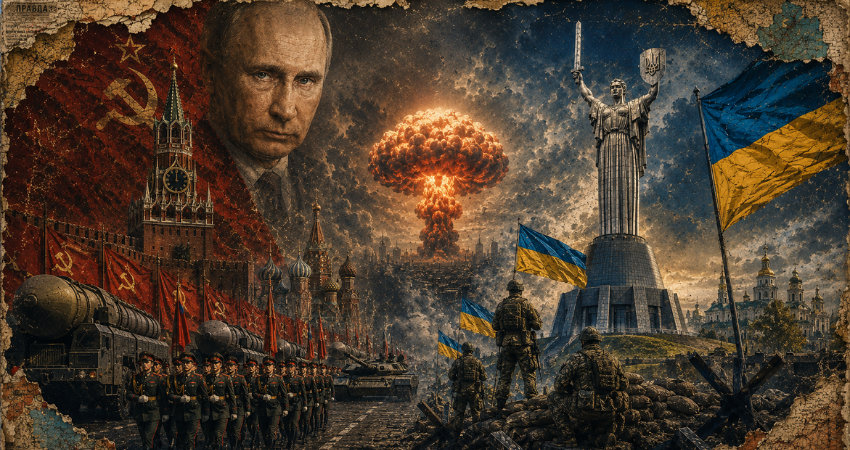
The Week That Shaped the World — 1-8 May 2026
Will Putin Strike Kyiv with Nuclear Weapons if Moscow’s Victory Day Parade Is Attacked? — and Other Major Stories of the Week
Some weeks arrive as news. Others arrive as a warning.
This one belongs to the second category. Moscow’s Victory Day parade has become more than a ceremony; it has become a psychological deadline, with Kyiv’s threats, Russian warnings and the nuclear question hanging over Europe like bad weather that refuses to move. There is no confirmed nuclear threat on the table. But there is a reason people are asking the question. When humiliation, symbolism and war meet in the same square, even an unlikely scenario starts to feel politically possible.
Elsewhere, the same logic of instability spread across the map. Hormuz returned as the world’s most dangerous bottleneck. Oil priced fear before disaster arrived. Britain’s voters punished Labour. Europe wondered whether speaking to Putin now looks like wisdom or surrender. Wall Street, meanwhile, kept dreaming of AI as if silicon could cancel geopolitics.
It cannot.
“The week’s real story is not that the world is falling apart. It is that it has learnt to function while expecting the crack.”
1. Will Putin Strike Kyiv with Nuclear Weapons if Moscow’s Victory Day Parade Is Attacked?
There are dates in war that stop being dates. They become traps.
For Russia, 9 May is not merely a public holiday. It is the sacred theatre of victory, sacrifice and national survival — the day on which the Kremlin tries to remind its people that history still marches under Moscow’s command. This year, however, the march looks different. The confrontation between Kyiv and Moscow has reached one of its most dangerous symbolic peaks since the war began.
Kyiv has made clear that it will not simply grant Vladimir Putin the luxury of a normal Victory Day parade while Russian missiles continue to fall on Ukraine. Moscow, in response, has taken the extraordinary decision to hold the 2026 parade without its usual display of tanks and heavy military hardware. Officially, this is a security measure. Politically, it is something more embarrassing: the Kremlin has decided not to risk turning its most sacred national ceremony into live evidence of vulnerability.
Then came the warning.
Russia has made it clear that if Kyiv attempts to strike or disrupt the parade, the response will be severe. The language has been deliberately heavy, almost ceremonial in its menace. Moscow knows exactly what 9 May means to Russians. It is not just a parade. It is memory, grief, pride and state mythology rolled into one military procession.
There is no confirmed evidence that Russia has issued a direct nuclear threat over the parade. But as an editorial judgement, we believe the warning carried a deeper message to Kyiv: if Ukraine chooses to attack Moscow on this particular day, Russia may answer with something beyond its ordinary pattern of strikes.
That is the terrible logic now hanging over the war. Conventional weapons are already used against Kyiv in large volumes. Missiles, drones, air raids — these are no longer exceptional instruments of pressure. They have become part of the daily machinery of the conflict. So when Moscow promises a response that is meant to sound different, more final, more dreadful, the question naturally follows: what kind of weapon is left to make the threat feel truly exceptional?
This is why the nuclear question has entered the public imagination. Not because it is confirmed. Not because it is inevitable. But because wars become most dangerous when leaders begin defending symbols rather than territory.
By tomorrow, we will see the outcome of this confrontation. One can only hope that reason prevails — and that nothing terrible happens.
“A parade is supposed to show power. This year, it may reveal something far more dangerous: the fear of humiliation inside a nuclear state.”
2. U.S.–Iran Crisis Turns Hormuz Into the World’s Most Dangerous Bottleneck
There are few places on earth where geography behaves like a loaded weapon. The Strait of Hormuz is one of them.
This week, as the U.S.–Iran crisis returned to the centre of global attention, the narrow waterway once again became more than a shipping route. It became a warning system. A strip of sea barely wide enough to look innocent on a map suddenly carried the familiar burden of oil, warships, diplomacy, insurance rates, frightened traders and nervous governments pretending not to panic too visibly.
Reports of renewed exchanges between the United States and Iran tested the already fragile ceasefire, while oil markets moved with the jumpy discipline of men watching smoke near a petrol station. Brent crude hovered around the psychologically important $100 mark, not because every barrel had vanished, but because markets were again being forced to price the possibility that one political miscalculation could turn a trade route into a global crisis. Oil prices rose after renewed U.S.–Iran fighting, even as contracts remained on course for a weekly fall — a useful reminder that markets are not calm, merely exhausted from being frightened in both directions.
The real danger in Hormuz is not only closure. That is the Hollywood version. The quieter danger is uncertainty: delayed shipping, military escorts, risk premiums, nervous insurers, and every energy importer quietly calculating what happens if the artery narrows but does not fully shut.
That is how modern crisis works. It does not always explode. Sometimes it simply raises the cost of everything.
For Washington, Hormuz is a test of deterrence. For Tehran, it is leverage. For the Gulf, it is a nightmare with shipping lanes. For Europe, it is another reminder that energy security can be rewritten overnight by men far from Brussels.
And for the rest of us? It is the old lesson again: the world economy rests on a few narrow passages, and history has an unpleasant habit of finding them.
“Hormuz does not need to close to frighten the world. It only needs to remind us that it can.”
3. Putin Says He Is Ready to Talk to Europe — But Will Not Make the First Move
Diplomacy, like theatre, often depends less on what is said than on who walks onto the stage first.
This week, the Kremlin said Vladimir Putin was ready to speak with Europe, but would not be the one to initiate contact. On paper, it sounds almost modest. In reality, it is a carefully arranged piece of political positioning: Moscow presents itself as available, patient, wounded by European hostility and yet mature enough to talk — provided Brussels is prepared to swallow the discomfort of making the first move.
Kremlin spokesman Dmitry Peskov said Putin was open to negotiations with all parties, including the European Union, while insisting that Moscow would not initiate the restart of contacts. The statement followed discussion in Europe about whether direct engagement with Putin might become necessary, especially amid dissatisfaction with U.S.-led efforts to end the Ukraine war.
This is where the diplomatic geometry becomes interesting. Europe has spent years describing Putin as a threat to continental security. Some European governments have warned that Russia could one day test NATO directly. Moscow, in turn, says the West has prolonged the war by supplying Ukraine with money, weapons and political cover.
And yet the question of talks keeps returning.
Not because Europe has suddenly forgiven Moscow. Not because Russia has changed its war aims. But because wars, even righteous ones, eventually collide with fatigue, budgets, elections, arms stockpiles and the quiet fear that America may not always carry the same burden in the same way.
Putin understands this. So does Europe. That is why neither side wants to appear desperate.
The Kremlin’s message is blunt beneath the politeness: if Europe wants to talk, it knows where Moscow is. The trap, of course, is that whoever knocks first may look like the weaker party.
That is diplomacy in its least romantic form — not peace, but choreography.
“When neither side wants to make the first move, diplomacy becomes less a bridge than a mirror.”
4. Britain’s Local Elections Punish Labour as Reform UK Breaks Through
Britain has a talent for delivering political warnings politely, through clipboards, village halls and bad coffee in leisure centres.
This week, the warning was not especially polite.
Keir Starmer’s Labour Party suffered heavy losses in local elections, while Nigel Farage’s Reform UK made a striking breakthrough across parts of England. Labour lost control in several traditional strongholds in northern and central England, while Reform gained hundreds of local seats and took control of Havering in London — a result Farage described as a “historic shift”.
The phrase “historic shift” is overused in politics, usually by people standing in front of balloons. But this time, it should not be dismissed too quickly. The important point is not that Reform is suddenly ready to govern Britain. The important point is that voters are using Reform as a blunt instrument against the old parties.
Labour’s problem is particularly cruel. Starmer won power promising competence after years of Conservative exhaustion. But competence, once in office, has a habit of looking suspiciously like managed disappointment. The public hears reform, waits for relief, sees bills, services and migration pressure still dominating daily life, then starts looking for something sharper.
The Conservatives are not in a much happier position. They are still paying for their own long season of decay. Reform, meanwhile, benefits from not yet having to prove very much. It can speak in cleaner sentences because it does not carry the dirt of government.
That is how insurgent politics grows: not always from love, often from disgust.
Britain is not simply drifting right or left. It is drifting away from patience. That is more dangerous for Labour than any single council result. Starmer can survive a bad election night. The larger question is whether he can survive the feeling that the country gave him a mandate and received administration.
“The British voter has not fallen in love with Reform. More dangerously for Labour, he has fallen out of patience with everyone else.”
5. Lebanon and Israel Remain Trapped in a Fragile Ceasefire
A ceasefire is not always peace. Sometimes it is merely war holding its breath.
That is the uncomfortable reality in Lebanon, where the fragile pause between Israel and Hezbollah continues to look less like a settlement than a temporary management system for violence. This week, Israel struck Beirut’s southern suburbs for the first time since the April ceasefire, saying it had targeted a commander from Hezbollah’s elite Radwan force. The strike hit Dahiyeh, a Hezbollah stronghold, while Israeli Prime Minister Benjamin Netanyahu later warned that militants would have “no immunity”.
The language matters. “No immunity” is not the language of reconciliation. It is the language of pursuit.
Lebanon, as usual, is left to absorb the consequences of other people’s strategic calculations. Washington says an Israel–Lebanon peace deal remains possible. Israel says Hezbollah remains the problem. Hezbollah remains armed, embedded and politically unavoidable. Lebanon remains fragile, exhausted, economically damaged and permanently expected to host other powers’ unfinished wars.
The ceasefire, then, is doing what fragile ceasefires often do: preventing total collapse while failing to create trust. It has reduced the temperature, perhaps. It has not changed the weather.
The wider regional context makes everything worse. The U.S.–Iran crisis, the fate of Hezbollah, Israeli security doctrine and Washington’s diplomatic timetable are all tangled together. Lebanon is not a side issue. It is one of the places where the region’s larger argument keeps finding a physical address.
The danger is not only another strike. The danger is that everyone involved begins treating the ceasefire as a technical inconvenience rather than a political opportunity.
Peace requires more than silence between explosions.
“In Lebanon, the ceasefire still exists. The problem is that nobody seems quite ready to behave as if it means peace.”
6. Oil Near $100 Shows How Markets Price War Before It Fully Arrives
Oil markets rarely wait for catastrophe. They prefer to invoice fear in advance.
This week, crude once again moved around the psychologically heavy $100 mark as traders tried to price the U.S.–Iran crisis, the risk around the Strait of Hormuz, and the uncomfortable possibility that one narrow maritime passage could become the most expensive strip of water on earth. The interesting part was not simply that oil rose. It was that the market did not behave like a crowd watching an explosion. It behaved like a crowd watching a fuse.
That is worse in some ways.
A fully closed Strait of Hormuz would be a global energy emergency. Everyone understands that. Governments would issue statements, shipping firms would recalculate routes, central banks would quietly curse into their coffee, and consumers would eventually feel the shock through fuel, logistics and inflation. But the more realistic danger is subtler: partial disruption, higher insurance costs, naval escorts, delayed cargoes, nervous buyers and a permanent risk premium attached to every barrel passing through the Gulf.
That is how energy inflation returns — not always with a dramatic shortage, but with uncertainty becoming expensive.
For central banks, this is particularly cruel. They have spent years trying to drag inflation back into something resembling discipline. Then along comes geopolitics, wearing boots, and reminds them that interest rates cannot reopen a shipping lane. Monetary policy can cool demand. It cannot persuade missiles to behave.
The oil market is therefore telling a larger story about 2026. Investors may still believe in artificial intelligence, earnings growth and the long American market rally. But beneath all that optimism lies an older economy — ships, chokepoints, fuel, war risk, ports, pipelines, insurance. The boring machinery of the real world.
And when that machinery trembles, everything else becomes more expensive.
“Oil does not need a war to move. Sometimes the rumour of one is enough to tax the world.”
7. RBC Raises S&P 500 Target to 7,900 as AI Keeps Wall Street Dreaming
Wall Street has always had a weakness for stories that make risk look intelligent.
This week, RBC lifted its year-end target for the S&P 500 to 7,900, placing another polished brick in the great 2026 temple of AI optimism. The logic is not difficult to understand. Corporate earnings remain stronger than many expected, technology spending is still powerful, and investors continue to treat artificial intelligence as the one sector capable of turning tomorrow’s promise into today’s valuation.
It may even be right.
That is the inconvenient thing about bubbles, booms and genuine revolutions: they often look similar in their early stages. AI is not a fantasy. It is already changing software, infrastructure, data centres, chip demand, productivity assumptions and corporate strategy. Companies are not merely talking about AI on earnings calls because it sounds fashionable. They are spending money on it, building around it and, in some cases, reorganising themselves to survive it.
Still, there is something almost theatrical about the market’s faith. Missiles may fly in the Middle East. Oil may hover near dangerous levels. Central banks may warn about inflation. British voters may punish incumbents. Europe may drift through strategic confusion. And yet, somewhere on Wall Street, someone looks at another AI infrastructure forecast and decides the future is still buyable.
That is not necessarily irrational. It is just very American.
The S&P 500 at 7,900 implies more than confidence in earnings. It implies confidence that technology can keep outrunning politics, that margins can absorb shocks, and that AI will not merely justify high valuations but expand them. Investors are not buying calm. They are buying acceleration.
The risk, of course, is that acceleration becomes dependency. When one theme carries too much of the market’s imagination, disappointment no longer needs to be large to become painful.
“AI has become Wall Street’s favourite answer to every difficult question. The danger is not that the answer is wrong, but that investors have stopped asking anything else.”
8. AI Chip Stocks Keep the Market Rally Alive Despite Geopolitical Anxiety
There is something almost absurd about watching chip stocks rally while the world worries about war.
But that is the market in 2026: one eye on missiles, the other on semiconductors.
AI-linked chip companies continued to support the broader market this week, reinforcing the idea that artificial intelligence is no longer just a technology theme. It has become a market engine, a capital spending cycle, a geopolitical asset and, for many investors, a form of emotional shelter. When everything else looks unstable, chips offer a cleaner story: demand, capacity, infrastructure, cloud expansion, data centres, power, memory, networking, servers. A whole physical universe beneath the supposedly weightless promise of intelligence.
That is why the chip trade matters. It is not only about one company or one earnings beat. It is about the belief that the next industrial system is being built now, and that those who supply its nervous system will be rewarded first.
The irony is hard to miss. AI is often described as invisible software magic, but the market’s enthusiasm rests on very visible hardware: factories, wafers, lithography, cooling systems, energy contracts, supply chains and export controls. The future may speak in algorithms, but it still needs silicon, electricity and politically safe shipping routes.
That last point is where the optimism becomes less tidy.
The more important AI chips become, the more exposed the sector becomes to geopolitics. Taiwan, export restrictions, U.S.–China rivalry, tariffs, industrial policy and access to advanced manufacturing are no longer background issues. They are part of the valuation. Investors may treat AI as a growth story, but governments increasingly treat it as a national security story.
So the rally continues, but it does not float above politics. It sits right inside it.
For now, the market prefers the upside. It sees demand, scarcity and strategic importance. It sees companies with pricing power and customers desperate not to fall behind. It sees a technological arms race that can be monetised.
That is a powerful combination. Also a dangerous one.
“The chip market is no longer selling components. It is selling access to the next hierarchy of power.”
9. The Dollar Weakens Even as U.S.–Iran Fighting Returns
There was a time when global fear almost automatically strengthened the dollar. Trouble arrived, investors ran to safety, and the greenback behaved like the last adult in the room.
This week, the script looked less obedient.
The dollar remained under pressure even as U.S.–Iran tensions returned to the headlines. That does not mean the dollar has lost its reserve status, despite the excited fantasies of people who have been predicting its funeral for twenty years. But it does suggest something more subtle: the market’s relationship with American safety is changing.
A weaker dollar during geopolitical stress tells us that investors are not looking at war risk in isolation. They are also watching interest-rate expectations, U.S. fiscal pressure, trade policy, political volatility and the possibility that American assets, while still dominant, no longer enjoy quite the same automatic innocence they once did.
The United States remains the centre of global finance. That is not seriously in dispute. Treasury markets still matter more than anything else. The dollar still lubricates the global system. Wall Street still attracts capital with an almost imperial gravitational force.
And yet confidence is not the same as worship.
If the dollar weakens while the Middle East trembles, it means markets are asking broader questions. What happens if energy shocks complicate inflation while growth slows? What happens if the Federal Reserve has less room to cut than investors want? What happens if U.S. foreign policy remains unpredictable? What happens if the same country offering safe assets also supplies much of the instability being priced?
These are not revolutionary questions. They are practical ones.
Currencies often move before language catches up. The dollar’s weakness is not a collapse. It is a raised eyebrow.
And in markets, a raised eyebrow can matter.
“The dollar is still the world’s safe room. But this week, investors seemed less certain about who was holding the key.”
10. Bank of England Holds Rates as War Risk Complicates the Inflation Picture
The Bank of England did what central banks often do when the room is full of smoke: it stayed still and looked serious.
Keeping rates unchanged may appear cautious, perhaps even dull. But there was nothing simple about the backdrop. Britain is already living with the political consequences of high prices, weak public confidence and exhausted households. Add a renewed Middle East crisis, oil near dangerous levels and the possibility of another energy shock, and the inflation picture becomes considerably less polite.
This is the old British problem in a new costume. The country wants lower borrowing costs, better growth, cheaper mortgages and some sign that the long squeeze on living standards is finally easing. But the Bank cannot cut simply because people are tired. Inflation does not become less real because voters are angry.
War risk makes the calculation uglier. If oil prices rise sharply because of the U.S.–Iran crisis or disruption around Hormuz, Britain imports part of that shock. Fuel costs rise. Transport costs rise. Business costs rise. Inflation expectations become nervous again. The Bank then faces the kind of choice no central banker enjoys: protect households from weak growth or protect the currency and price stability from another external shock.
There is no elegant answer.
The political timing is equally painful. Labour has just been punished in local elections, and the government needs economic relief to rebuild authority. But monetary policy does not run on Downing Street’s electoral calendar, however much politicians might privately wish otherwise.
So the Bank waits.
That waiting should not be mistaken for comfort. It is a sign that the path ahead remains narrow. Cut too soon, and inflation may return with a geopolitical accent. Hold too long, and households continue to feel trapped under the weight of debt, rent and stagnant confidence.
Britain wanted 2026 to be the year the economy began to breathe again. Instead, it may become the year foreign wars remind British voters that inflation has a passport.
“The Bank of England can pause rates. It cannot pause the world.”