US-Iran War: Two Victories, No Clear Winner
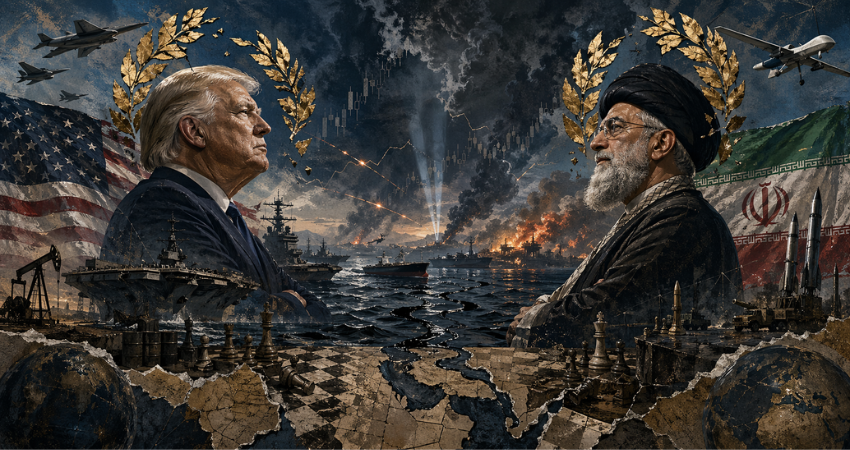
The Week That Shaped the World — 17–24 April 2026
Two Victories, No Outcome, and the Price of Strategic Ambiguity — and Other Major Stories of the Week
This was not a week of resolution. It was a week of competing endings.
In Washington, ceasefires were extended, proposals requested and pressure maintained with the sort of confident language that usually appears when nobody wants to admit how incomplete the outcome really is. In Tehran, the state remained upright, the rhetoric remained defiant, and the underlying message was equally familiar: we are still here. Around Hormuz, shipping did what modern shipping now does in wartime — it continued moving just enough to keep the world nervous and oil properly expensive.
Europe, meanwhile, tried to look purposeful. Brussels formally approved a major new loan for Ukraine and another sanctions package against Russia after Hungary dropped its objections, which is another way of saying that unity remains achievable in Europe, but only after the usual theatre, delay and bargaining. Elsewhere, markets absorbed the less romantic truth of the week: energy shocks still travel faster than diplomacy, and inflation remains only one geopolitical accident away from re-entering the room in muddy boots.
Then there was technology — that modern refuge for capital whenever politics becomes too theatrical. Fresh investment into AI infrastructure offered a reminder that while governments still perform sovereignty, the future is increasingly being poured in concrete, fibre and data-centre power agreements.
It is tempting to call all this instability. That is too soft. What we are watching is managed uncertainty: profitable, tradable and politically useful.
“The modern crisis no longer needs a winner. It only needs enough ambiguity to keep everyone paying attention.”
1.US-Iran War: Two Victories, No Clear Winner
Washington says pressure worked. Tehran says endurance worked. Somewhere between those two statements sits reality, looking unconvinced.
The United States spent the week extending its diplomatic timetable while preserving the language of strength. Iran, for its part, continued speaking in the familiar register of survival, resistance and strategic patience. Both sides, in different ways, presented the week as evidence that their approach had delivered results. Yet the underlying picture remained far less tidy than the rhetoric suggested.
Iran did not collapse into submission. Its state machinery, however strained, continued to function. The United States, meanwhile, did not secure the kind of clear political or strategic ending that maximalist language tends to imply. What emerged instead was something far more recognisable to the modern observer: an unfinished confrontation wrapped in the packaging of success.
That matters because financial markets are not especially interested in patriotic self-congratulation. They want clarity. This week they received extensions, mixed signals and the continuing shadow of disruption around Hormuz. Oil reacted accordingly. Not because traders had identified a winner, but because they had not.
This is the deeper problem with contemporary power politics. Victory is now often declared before outcomes are properly measured. Governments no longer need to conclude a conflict cleanly in order to claim success. They merely need to produce a usable narrative, maintain enough leverage to avoid visible humiliation, and leave the rest of the world to absorb the costs of ambiguity.
And ambiguity, as always, is expensive.
The lesson of the week was not that one side had prevailed. It was that both had found reasons to say so while the global economy quietly paid for the absence of proof.
“When two governments declare victory over the same unfinished war, the bill is usually sent to the rest of the world.”
2. Strait Still Open, But Not Safe — Hormuz as a Weapon of Uncertainty
The Strait of Hormuz did not have to close this week in order to remind the world what it is.
For markets, for shipping insurers, for energy traders and for governments still pretending that global trade runs on neutral rules rather than military tolerance, the lesson was painfully familiar. A chokepoint does not need to be fully shut to become economically violent. It merely needs to look unstable. And this week, instability was enough.
The passage remained formally open, yes. Tankers still moved. Routes still functioned. But the atmosphere around them changed. Reports of disruption, pressure and continuing vulnerability were sufficient to force the old calculation back into the system: how much risk can the global economy absorb before price becomes panic? That is the real power of Hormuz. It is not simply a piece of geography. It is a pricing mechanism for fear.
And fear, unlike oil, does not need a tanker.
This is where many official narratives become conveniently childish. Governments like to speak about maritime security in the language of order, deterrence and controlled operations. Markets hear something else. They hear that one of the world’s most sensitive arteries is once again vulnerable to military logic, political theatre and strategic signalling. In other words, not safe at all.
That distinction matters. Safety is not the same as access. A ship may pass through a strait and still carry a premium of anxiety large enough to ripple through freight costs, refinery planning, inflation forecasts and central-bank language three continents away. That is exactly why Hormuz continues to matter so disproportionately. It converts local tension into global cost with brutal efficiency.
The week’s deeper truth, then, is simple enough. The world economy is still built on narrow passages, soft assumptions and the hope that grown men with warships will remain rational under pressure.
That is not a system. It is a gamble.
“Hormuz does not need to close to wound the world economy. It only needs to remind it how fragile the route really is.”
3. Europe Pays, Hungary Moves — Unity Returns, but Only After the Usual Delay
Brussels likes to present unity as a principle. In practice, it often arrives as exhaustion.
This week, the European Union finally pushed through a major new financial package for Ukraine alongside another sanctions round against Russia after Hungary stepped aside and stopped blocking the process. Officially, this was proof that Europe remains capable of coherence under pressure. Technically, that is true. Emotionally, it is less impressive. A bloc of this size should not need ritual brinkmanship every time history asks it to behave like a power.
And yet here we are.
Hungary’s shift matters not because anyone in Brussels has suddenly rediscovered idealism, but because it removes, at least for now, one of the recurring internal obstacles to strategic alignment. Europe can once again claim that it is acting together. The price of that unity, as usual, is delay, bargaining, internal theatre and the silent admission that consensus inside the Union remains an engineered product, not a natural instinct.
Still, the significance should not be understated. Money matters in war. Sanctions matter in long campaigns of attrition. Administrative unity matters when the broader Western political atmosphere is increasingly unstable. Europe knows all this perfectly well. That is why even its delayed decisions carry weight. They signal that, whatever the noise inside the chamber, the bloc still intends to keep financing endurance and preserving pressure.
There is, of course, a more cynical reading. Europe is not merely supporting Ukraine. It is also buying time for itself — time to maintain strategic posture, time to survive American political volatility, time to postpone the larger question of whether the continent can truly act without Washington’s emotional supervision.
For now, that question remains unanswered. But this week’s decision makes one thing plain enough: Europe is still willing to pay for unity, even if it continues to arrive looking tired, negotiated and slightly embarrassed by the effort.
“The European Union can still act as one. It simply insists on first reminding everyone how difficult it finds the experience.”
4. Europe Wants Strategic Autonomy — But Still Negotiates Through Dependency
Europe spent another week talking like a power and behaving like a tenant.
The language has become familiar enough. Strategic autonomy. Defence sovereignty. Independent capacity. A stronger continental role in security. The phrases sound impressive in conference halls and look even better in policy papers. But once events begin moving quickly, the old dependency reappears almost on instinct. Europe still watches Washington for signals, still calibrates its tone against American pressure, still speaks of independence in a voice that suggests prior permission may be required.
That contradiction was everywhere this week. The continent wants to look less exposed to American political turbulence, less vulnerable to every shift in White House mood, less trapped inside an Atlantic script written elsewhere. But wanting and becoming are not the same exercise. Strategic autonomy is not a slogan. It is an invoice. It demands defence spending, industrial capacity, energy resilience, political courage and, perhaps most painfully, the willingness to absorb the cost of acting alone when the Americans become inconvenient.
That last part remains Europe’s weak point.
To be fair, the pressure is real. The war in Ukraine has forced the continent to think in harder terms. The instability around Iran has reminded European capitals how quickly energy and security become the same conversation. Even the renewed nuclear language around deterrence has brought back an older and less comfortable truth: geopolitical adulthood cannot be outsourced forever.
And yet the reflex survives. Europe still hesitates at the edge of seriousness. It wants a stronger hand, but not always the consequences that come with holding it.
So the week offered another familiar European performance: a continent increasingly aware that dependency is dangerous, but still uncertain whether independence is affordable.
The debate is real. The ambition is real. The capability gap is real too.
And reality, unlike rhetoric, does not care how elegantly a strategy is announced.
“Europe speaks more often now of standing alone. The difficulty is that history still keeps finding it glancing toward Washington before taking the first step.”
5. Diplomacy by Extension — Ceasefires Last Longer Than Confidence
Modern diplomacy has developed a peculiar talent. It can extend a pause without creating belief.
That, more or less, was the story this week. The ceasefire held long enough to preserve the vocabulary of diplomacy, but not long enough to produce any real sense of resolution. Timelines were adjusted. Channels remained open. Mediators continued their careful work. Public language stayed just constructive enough to prevent the situation from collapsing into open fatalism. Yet beneath all this, the central problem remained almost untouched: talks can continue without trust, and extensions can accumulate without meaning.
This is not nothing. In a region where miscalculation often travels faster than reason, even a managed pause matters. It reduces risk. It buys time. It lowers the immediate chance that one act of overconfidence will become a broader catastrophe by nightfall. That is worth saying plainly.
But one should not romanticise it.
What we are watching is not peace in any serious sense. It is controlled suspension. The guns do not vanish; they simply recede behind negotiation tables and military briefings. The pressure does not end; it becomes procedural. Diplomacy, in these conditions, often serves less as a route to settlement than as a mechanism for organising uncertainty into something markets can temporarily tolerate.
Temporarily being the important word.
The longer this pattern continues, the more obvious its limits become. Every extension without a breakthrough deepens the suspicion that talks are functioning as political cover rather than strategic progress. Governments can present this as responsible statecraft if they wish. Traders, insurers and ordinary consumers tend to call it something else: unresolved risk.
That is why the market no longer responds to the mere existence of negotiation with anything resembling relief. Negotiation itself is no longer the story. The quality of the outcome is.
And this week, once again, the outcome remained hidden somewhere beneath the ceremony.
“A ceasefire extended without trust is not peace arriving. It is uncertainty learning better table manners.”
6. Oil Without Direction — The Market Is Trading Uncertainty, Not Supply Alone
Oil rose again this week, but the more interesting question is not how far. It is why.
The easy answer, as always, is tension in the Gulf. That is true, up to a point. But markets are rarely moved by geography alone. They move because geography becomes unreadable. And that is what happened here. Traders were not merely reacting to physical risk. They were reacting to interpretive risk — the nagging sense that nobody could say with confidence whether the situation was calming, pausing or simply rearranging itself into a more expensive form of instability.
That distinction matters more than most official commentary admits. A market can cope with bad news if the bad news is clear. It struggles far more with partial signals, extended pauses, mixed diplomatic messaging and the constant possibility that a supposedly temporary strain might suddenly return in a sharper form. Oil, in that sense, did not rise because the world had been given a clean warning. It rose because the world had been denied a clean conclusion.
There is also a broader lesson here. Energy markets do not wait for historians. They price vulnerability in real time. A disrupted vessel, an uncertain route, a military statement, a delayed negotiation, an ambiguous ceasefire — these things enter the barrel faster than most policymakers enter a briefing room. By the time governments begin explaining the situation, traders have often moved on to pricing the next layer of fear.
That is what makes oil such a ruthless political instrument. It forces economic systems to react before political systems have finished pretending they are in control.
So yes, the price action mattered. But the real signal lay beneath it. The market was telling us, once again, that instability no longer needs to become total in order to become expensive.
It merely needs to remain unresolved.
“Oil is not only a commodity in times like these. It is the world’s most efficient translator of political doubt into economic pain.”
7. Inflation Returns Through Energy — The Old Enemy Finds a Familiar Door
Inflation has a habit of waiting just outside the room until governments start relaxing.
For a while, the mood in developed markets had become almost sentimental. The hard part, many assumed, was over. Price pressure was cooling. The central banks had done the unpleasant work. A slower, gentler path lay ahead. Then energy returned to the conversation, and with it came the rude reminder that inflation is rarely defeated in a straight line.
This week, the renewed pressure in oil and shipping fed directly back into that older fear. Not panic, not yet. Something more irritating than that. Recognition. The kind that spreads through markets when participants realise that the disinflation story was always more fragile than it looked. Energy is not a side issue in inflation. It is one of the great delivery systems through which disorder becomes domestic cost. Petrol stations are merely the visible part. The rest seeps quietly through transport, freight, food, manufacturing, aviation, logistics and household expectation.
That final word matters. Expectation.
Central bankers can tolerate ugly data for a while. What they fear is the return of inflation psychology — the moment when businesses, investors and households stop treating higher prices as an interruption and start treating them as normal weather. Once that shift begins, policy becomes harder, markets become moodier and politicians rediscover their talent for sounding surprised by processes they helped ignore.
Europe has reason to worry. So does the United States. Different energy structures, different political calendars, same essential vulnerability. A world still dependent on narrow routes and unstable regions should not speak too confidently about having tamed inflation. It has merely enjoyed a temporary interval in which the underlying machinery was less hostile.
This week suggested that hostility is back.
Not with a bang. With a bill.
“Inflation never truly disappears. It simply waits for energy, fear and political complacency to reopen the door.”
8. The Fed’s Dilemma — Calm Language, Harder Reality
The Federal Reserve would very much like the world to remain domesticated long enough for policy to look orderly again.
That wish is understandable. It may also be unrealistic.
This week brought a familiar complication back into view: the possibility that external shocks, especially through energy, will keep monetary policy tighter for longer than markets had hoped. The neat story of patient disinflation, softening conditions and eventual relief has started to look less like a forecast and more like a comforting genre. The difficulty for the Fed is not only economic. It is theatrical. Central banks depend on the appearance of control almost as much as on the mechanics of policy itself. And appearances become harder to manage when geopolitics starts rewriting the price environment from outside the building.
That is the real irritation of the current moment. The Fed cannot police shipping lanes. It cannot negotiate ceasefires. It cannot lower the temperature in the Gulf or talk oil traders into behaving like monks. Yet it will still be expected to answer for the downstream consequences as though they were merely another chapter in a domestic policy cycle.
Markets have noticed. So have economists. Rate optimism is no longer being expressed with the same easy confidence. The path ahead looks slower, rougher and more conditional than it did a few months ago. And once the market begins losing faith in a smooth central-bank ending, risk assets start behaving accordingly — not always with panic, but with less innocence.
There is, of course, no immediate drama in this. The Fed is not trapped. Not yet. But the tone has changed, and tone is often where the future first becomes audible.
What the central bank now confronts is not just inflation, but inflation complicated by strategy, fuel and a world increasingly unwilling to stay in one macroeconomic lane at a time.
That makes for an awkward mandate.
“The Fed’s problem is no longer only inflation. It is inflation with a passport, a tanker route and very little respect for policy timing.”
9. Markets Hold Their Breath — Earnings Still Matter, But War Costs More Than Confidence
The market did not collapse this week. That should not be confused with comfort.
Equities remained suspended between two familiar forces: corporate resilience on one side and geopolitical drag on the other. Earnings season, as it often does, provided moments of support. Solid numbers still count. Guidance still matters. Balance sheets still have the power to calm nerves for a trading session or two. But the larger atmosphere was harder to disguise. Investors were not looking at company results in a vacuum. They were reading them through the shadow of fuel costs, shipping risk, inflation pressure and the renewed suspicion that monetary relief may not arrive on the old optimistic schedule.
That combination changes the tone of everything.
A strong quarter looks less triumphant when investors suspect the next one will be built on more expensive inputs. A decent outlook sounds thinner when oil refuses to settle. Even healthy companies begin to appear more fragile once the market starts thinking in terms of external cost rather than internal execution. That is not irrational. It is simply what happens when macro risk stops being background scenery and reclaims its place on the stage.
This is why the old phrase “markets hate uncertainty” is both overused and slightly misleading. Markets do not hate uncertainty in general. They trade it all the time. What they dislike is uncertainty that cannot be neatly monetised on schedule. And that is the problem now. The world is no longer presenting investors with one clean narrative. It is presenting overlapping pressures — war risk, energy stress, inflation persistence, slower policy relief and political messaging that often sounds more complete than events actually are.
In such an environment, calm is rarely conviction. More often, it is hesitation dressed as discipline.
That was the feeling of the week. Not panic. Not faith. Something in between — liquid, watchful and increasingly aware that the cost of being wrong may be rising again.
“Markets can live with danger for a while. What unsettles them is the suspicion that no one is really measuring it honestly.”
10. AI Keeps Building — Even as the Physical World Sends the Invoice
While states argued about power in the old sense, capital kept investing in power of the newer kind.
That was one of the week’s quieter but more revealing contrasts. Even as war, energy and inflation reclaimed the headlines, the race to build AI infrastructure continued with remarkable seriousness. The money is still moving. The ambition is still there. Governments want compute capacity. Companies want scale. Investors still believe the next era of value creation will be measured not only in software, but in physical capacity — data centres, grid access, fibre, cooling, chips and the right to consume extraordinary amounts of electricity without attracting political rebellion.
That last detail is becoming harder to ignore.
For months, the AI build-out was sold in language that made it sound almost weightless — visionary, frictionless, digital. But the deeper reality is much less glamorous. AI infrastructure is not cloud in the poetic sense. It is land, power, permits, water, local politics and industrial coordination. In other words, the future has returned to the oldest constraints in economics: location, cost and consent.
That is why this week mattered. New investment signals were strong enough to confirm that the AI race is not slowing. But they also reinforced a growing divide in the global technology landscape. Some countries are building at scale. Others are still discussing ambition as though discussion itself were capacity. Europe, in particular, risks becoming eloquent about technological sovereignty while remaining materially behind in the infrastructure that sovereignty now requires.
That should worry policymakers more than it appears to.
Because this is no longer just a story about innovation. It is a story about hierarchy. The places that build compute will shape price, access, industrial leverage and, eventually, political influence. Everyone else will speak nobly about standards while renting the future from abroad.
And history is not usually kind to those who mistake commentary for construction.
“The AI race is no longer being won in presentations. It is being won in substations, planning approvals and whoever can keep the lights on long enough to train the model.”