Hormuz and the Politics of Deadlines: Why America’s Pressure on Iran Became the Week’s Defining Test
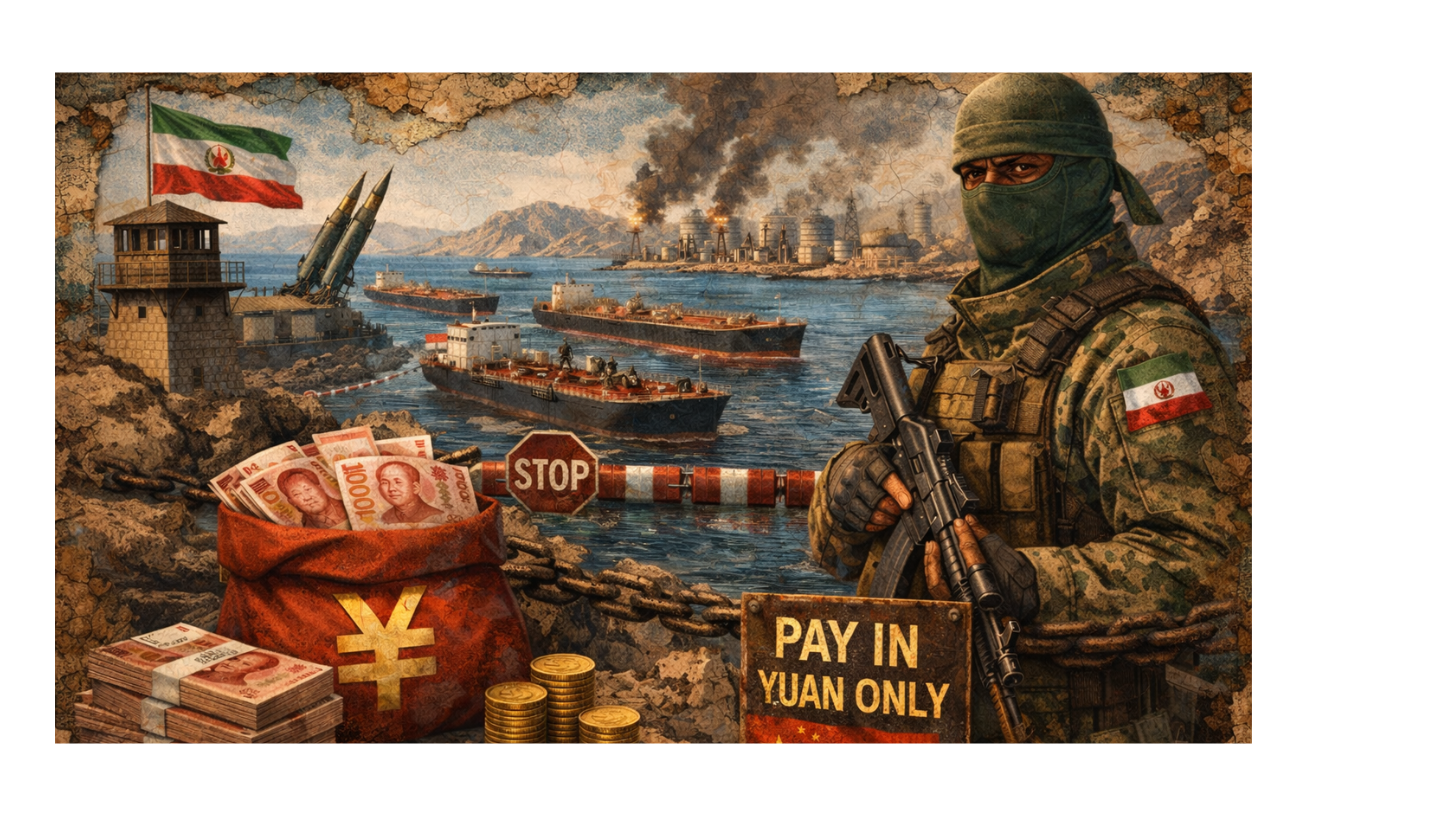
The Week That Shaped the World — 20–27 March 2026
Hormuz, Central Bank Paralysis, and the New Geography of Pressure — and Other Major Stories of the Week
There are weeks when world affairs still pretend to be governed by diplomacy, and there are weeks when the mask slips.
This was one of the latter.
By the end of March, the global map was no longer being redrawn by speeches or communiqués, but by chokepoints, airbases, rate decisions, shipping risk, and the increasingly brutal logic of infrastructure. The Strait of Hormuz returned to the centre of history. Washington and Tehran moved closer to open confrontation. Britain, with the familiar caution of a country that prefers to call things “defensive” while still opening the runway, edged deeper into the operational structure of the crisis. Europe, meanwhile, tried to steady itself with trade paperwork and central-bank restraint, as though bureaucracy might still function as a substitute for stability.
It rarely does for long.
And yet the week was not shaped by war alone. Beneath the smoke and tanker anxiety, the wider system revealed something equally important: the world economy is entering a phase in which energy insecurity, sticky inflation, strategic shipping and AI-led capital expenditure are no longer separate themes. They are beginning to behave like one story. That makes life rather awkward for governments still pretending they can manage geopolitics in one room and economic policy in another.
They cannot.
Not anymore.
“The modern crisis no longer arrives in neat categories. It comes as war, inflation, logistics, monetary caution and technological ambition — all insisting, at first, that they have nothing to do with one another.”
1. Hormuz and the Politics of Deadlines: Why America’s Pressure on Iran Became the Week’s Defining Test
The Strait of Hormuz has always had a gift for reminding the world that modern civilisation is more fragile than its political class likes to admit. It does not need to collapse completely to cause panic. It merely needs to look uncertain.
This week, uncertainty was more than enough.
Donald Trump spent the week escalating pressure on Tehran over threats to shipping through Hormuz, coupling familiar rhetoric about force with warnings aimed squarely at Iran’s energy system. Yet by 26 March, what had begun as the language of urgency had softened into a pause, with Trump signalling that talks were “going very well” and that attacks on Iranian energy targets would be held back for the moment. That does not amount to peace. It amounts to something more nervous: coercion slowed only because the cost of carrying it through became too obvious to ignore.
Iran, for its part, did what states under pressure usually do. It warned that any strike on its core infrastructure would trigger a broader regional response. The significance of that exchange is larger than the threat itself. Hormuz is not simply a shipping lane. It is one of the last remaining places on earth where a regional crisis can still frighten the global economy in real time. Oil, insurance, freight and strategic confidence all pass through it, and they do not wait politely for diplomats to finish speaking.
That is the deeper point. The week was not merely about whether Trump would strike or whether Iran would retaliate. It was about the political use of deadlines in a system where both sides know the market is watching more closely than the United Nations ever will. Washington wanted pressure. Tehran wanted to prove it could raise the price of that pressure. The result was a familiar choreography: threats, pauses, extensions and the steady rise of global unease.
The old assumption was that naval chokepoints mattered because of geography.
Now they matter because they reveal who still has the power to make the world blink.
“In the modern energy order, a deadline in Hormuz can do more damage to confidence than a speech in any capital on earth.”
2. Britain Opens the Door: How London Moved Closer to the Iran Crisis Without Quite Admitting It
Britain has an old strategic habit. It prefers to describe involvement in the most tasteful language available, ideally one or two degrees more restrained than the reality on the ground.
This week, that tradition remained in excellent health.
London approved the use of RAF Fairford and Diego Garcia for American operations aimed at Iranian missile sites linked to threats against commercial shipping. Officially, the language remained careful. British ministers emphasised defensive necessity and coordination with allies, while making clear that RAF Akrotiri in Cyprus would not be used for offensive missions. That is all very neat on paper. In practice, however, Britain moved closer to the operational core of the crisis.
And that matters because access is power. Wars are not only fought by the states that fire the missile. They are also enabled by the states that provide the runway, the logistics chain, the refuelling point and the political cover. Britain may not wish to present itself as a co-author of escalation, but once strategic assets are made available, the distinction between support and participation begins to feel more moral than practical. The runway, regrettably, tends not to care about semantics.
For Keir Starmer’s government, the calculation is understandable enough. Britain wants to remain Washington’s most reliable partner at a moment when alliance discipline is once again being tested. It also wants to project seriousness in the Gulf without appearing recklessly enthusiastic about another Middle Eastern conflict. The result is a balancing act familiar to every British government that has ever tried to stand close to American power while pretending to hover slightly beside it.
The more interesting issue is what this reveals about the UK’s place in the wider crisis. Britain is no longer merely offering diplomatic sympathy. It is helping shape the military geography through which American pressure can be exercised. That is not yet full-scale co-belligerence. But it is no longer theatre either.
Britain likes to think it chooses its moments carefully.
History usually records that it chose them just early enough to be implicated and just late enough to claim caution.
“London’s preferred method of entering a conflict is to deny that opening the gate counts as stepping through it.”
3. Trump’s Iran Problem at Home: Why Strategic Ambiguity Is Becoming Politically Expensive
Foreign policy crises have a habit of looking majestic from a distance and deeply irritating from inside the country paying for them.
The Iran confrontation is beginning to acquire that quality.
By late March, Trump was still talking in the language of pressure and force, while also hinting that negotiations remained possible. To strategists, that may look like flexibility. To everyone else, it begins to look suspiciously like uncertainty with better branding. Reuters reported that Trump urged Iran to make a deal while warning that the United States would otherwise “keep blowing them away” — a phrase that may satisfy television audiences for an evening, but does rather less to reassure markets, allies or nervous members of Congress.
This is where the domestic strain begins to matter. A President can sustain ambiguity for only so long before his own coalition starts asking what exactly the plan is. Is the goal deterrence? Regime pressure? A deal? A demonstration strike? A broader reordering of the region? The White House appears content to suggest that all options remain open. Politically, however, that creates a vacuum into which everyone pours their own fear. Supporters of hard power begin to ask why Tehran still stands. More cautious voices begin to ask whether Washington is drifting into another open-ended Middle Eastern confrontation dressed up as firmness.
Both questions are damaging.
The wariness is heightened by the larger context. Fuel prices remain sensitive. Shipping nerves remain elevated. Allies are not uniformly enthusiastic. And within the American system, there is growing recognition that coercion is easiest to sell at the start of a crisis, when outcomes are still theoretical. It becomes much harder when the world begins to understand that escalation may not produce a neat or short resolution.
Trump’s strength has always rested partly on projection — the ability to sound as though he controls more variables than he actually does. The Iran crisis is awkward because it exposes one of the oldest truths in statecraft: bluster works best against actors who still fear the script more than the substance. Tehran, whatever else one says about it, is no longer behaving like such an actor.
And that leaves Washington with a familiar dilemma.
The rhetoric remains maximal. The room for error is not.
“A superpower can survive a failed threat. What it struggles to survive is the public suspicion that it no longer knows which threat it truly intends to carry out.”
4. Europe Reaches for Paper Stability: Why the EU–US Trade Vote Matters More Than It Looks
Europe’s favourite strategic tool remains the document.
When disorder grows, Brussels drafts.
That instinct can appear comic in moments of open geopolitical stress, but it would be foolish to dismiss it entirely. This week, the European Parliament advanced a trade framework with the United States, attaching additional safeguards intended to protect European interests while preserving broader transatlantic commercial coordination. On the surface, that sounds like exactly the sort of sentence capable of putting three ministers and half the press gallery to sleep. Underneath it lies a more serious reality. Europe is trying to build predictability where power no longer offers much of it.
The timing matters. Energy anxiety has returned. Growth in the eurozone remains weak. Exporters are watching the global atmosphere darken again. In such a climate, the value of even partial trade certainty becomes larger than usual. The EU–US framework is not being treated as an act of romantic Atlantic unity. It is being treated as insurance — dull, technical, necessary insurance against the possibility that strategic fragmentation may soon start leaking more directly into investment, digital rules and industrial planning.
That is where the political meaning begins. Europe increasingly behaves like a power that knows it is no longer strong enough to dominate outcomes, but still organised enough to soften them. It cannot control Hormuz. It cannot control Washington’s temperament. It cannot control Iranian retaliation or the wider energy shock. What it can do is construct legal and commercial scaffolding sturdy enough to stop every external crisis from becoming a full internal panic.
It is not heroic. It is administrative. But then administration, for Europe, is often the closest thing available to strategy.
The weakness, of course, is that paperwork only works if the wider order still respects the logic of paperwork. If trade, tech and data governance become subordinate to rawer forms of geopolitical bargaining, then even the most elegant framework begins to look like a safety manual in a building already on fire.
For now, though, Europe is sticking to its comparative advantage: rules, process and layered restraint.
Which is, to be fair, still preferable to improvisation in a panic.
“When Europe senses the world slipping towards chaos, it reaches not for grandeur but for regulation — partly because it believes in rules, and partly because rules are what remain when power becomes unreliable.”
5. The Quiet Ocean Game: Why Washington Is Paying More Attention to Sri Lanka and the Maldives
When great powers say a visit is routine, it is usually worth asking what, precisely, would count as non-routine.
This week’s American diplomacy in the Indian Ocean deserves that question.
Sergio Gor, the US Special Envoy for South and Central Asia, travelled to Sri Lanka and the Maldives between 19 and 24 March for high-level meetings, according to the State Department. The official framing was unsurprising: engagement, coordination, partnership, regional dialogue — the usual diplomatic furniture. Yet such trips are never only about courtesy, particularly at a time when the Indian Ocean is becoming more strategically valuable by the month.
The geography explains why. Sri Lanka sits near some of the world’s most important shipping routes. The Maldives, small though it is, occupies maritime space that matters far beyond its size. In calmer decades, both could be discussed largely in the language of development, tourism and regional balancing. In 2026, that innocence has worn rather thin. Washington is looking at ports, access, influence and the slow strategic spread of Chinese presence across the Indian Ocean system. And it is doing so while the Middle East crisis makes sea lanes more politically charged than they already were.
That does not mean every handshake in Colombo or Malé conceals a naval plot. States are rarely so theatrical in the open. But the wider pattern is not difficult to see. The United States is building relationship density in the spaces between formal alliances. That approach is cheaper than permanent military overreach and often more effective in regions where influence depends on access long before it depends on bases.
Which, in truth, is how serious maritime strategy usually works.
The Indian Ocean is becoming one of those theatres where the most consequential moves may not arrive with dramatic summit language or aircraft-carrier spectacle. They may arrive in the slower form of memoranda, port understandings, quiet intelligence links and repeated diplomatic presence until the pattern becomes impossible to miss.
Empires, after all, do not always announce themselves with noise.
Sometimes they simply keep turning up on the islands.
“The quiet contest for the Indian Ocean is not about who shouts loudest. It is about who is still welcome when the shipping routes begin to matter most.”
6. The Great Pause: How Central Banks Became Prisoners of War Risk and Energy Prices
For much of the past year, markets had grown fond of a fantasy.
It involved lower rates, calming inflation and the gradual return of monetary normality, ideally without too much damage done along the way. The fantasy was convenient, elegantly priced and, as it turns out, rather fragile.
This week the world’s major central banks made that plain. The Federal Reserve had already paused. The Bank of England held its rate at 3.75 per cent on 26 March. The European Central Bank maintained its own cautious posture. The Bank of Japan, too, remained restrained. On paper, these decisions were not dramatic. In substance, however, they formed a striking pattern: the world’s most important monetary authorities have entered a synchronised mood of caution, because the old inflation problem has been recontaminated by war and energy instability.
This matters because rate cuts are politically easy to imagine in a stable disinflation story. They become much harder to justify when tanker routes, crude prices and imported energy costs can still disrupt the picture in a matter of days. Central banks no longer fear only domestic overheating. They fear looking complacent just before geopolitics reintroduces inflation through the side door.
That is a miserable position to inhabit.
It means they are forced to hold policy tighter than economies would prefer, not because growth is strong, but because the outside world remains too dangerous to reward optimism. In earlier decades, monetary policy often aspired to appear clinical and insulated from geopolitics. In 2026 that pose looks increasingly absurd. Oil shocks still matter. Shipping risk still matters. And wars far from the City of London still have a habit of turning up later in energy bills and inflation forecasts.
So yes, the week looked at first like a series of passive rate decisions.
It was really something else: a collective admission that the global economy has become too strategically volatile for central banks to behave like technicians alone.
The age of neat macroeconomic management has not ended entirely.
But it is beginning to cough rather badly.
“The modern central banker must now price not only inflation and growth, but the possibility that somewhere, at any moment, a strait, a missile or a tanker will rewrite the forecast.”
7. Threadneedle Street’s Warning: Why the Bank of England Is Sounding Harder Than Borrowers Hoped
The Bank of England did what markets expected and said what many of them did not particularly want to hear.
That combination tends to produce the most revealing weeks.
On 26 March, the Bank held rates at 3.75 per cent in a unanimous vote. The unanimity mattered. So did the tone. Policymakers made clear that the inflation outlook had become more troubling again, with energy prices playing an obvious role. Reuters reported expectations of inflation reaching around 3.5 per cent in the third quarter of 2026, a sharp reminder that Britain is still some distance from the sort of price environment in which easy relief becomes politically or institutionally comfortable.
For households and businesses, the implication is straightforward and unpleasant. The longed-for period of rapidly cheaper borrowing is not around the corner. Mortgage pressure remains real. Business financing stays expensive. Investment decisions remain constrained. And the wider economy is forced to live in the awkward zone where rates are still restrictive, but growth is not strong enough to make that feel like a sign of success.
That is the British predicament in miniature: the country wants monetary relief, but the world keeps supplying imported reasons not to give it.
What makes this more significant is the shift in mood. A hold can sound dovish when it feels like a pause before easing. It sounds hawkish when it feels like a pause before possibly doing more. The Bank of England has not promised further tightening. It has done something subtler and, in some ways, more effective. It has reminded the market that tightening remains conceivable if energy-led inflation proves sticky enough.
That sentence alone is capable of souring a good many business breakfasts.
The UK economy has spent years hoping for a clean disinflationary descent. What it keeps receiving instead are interruptions — supply stress, energy disruption, geopolitical risk and the persistent inability of the wider world to behave in a way that is convenient for British monetary policy. One is tempted to call it bad luck. But once bad luck becomes structural, it deserves a more serious name.
Perhaps reality.
“Britain keeps waiting for cheaper money as though it were an overdue train. The Bank of England is quietly suggesting the line may still be blocked.”
8. Frankfurt’s Uneasy Balancing Act: Why the ECB Looks More Vulnerable Than Comfortable
The European Central Bank still speaks in the careful tones of institutional composure. That is part of its job.
The problem is that the numbers are beginning to sound less composed.
The ECB kept its base rate near 2.0 per cent and, more importantly, revised its broader outlook in the wrong direction. Inflation projections for 2026 were nudged higher, with Reuters reporting a move towards roughly 2.6 per cent, while growth expectations for the euro area were trimmed towards about 0.9 per cent. This is not catastrophe. It is something trickier: the increasingly familiar European condition in which inflation is no longer calm enough and growth is no longer strong enough.
That combination is poisonous to easy policy making. A central bank can fight inflation from a position of economic resilience. It can support weak growth when price pressures are convincingly fading. What it struggles to do gracefully is both at once, especially when energy instability risks reintroducing inflation through channels beyond its control. The ECB is thus being pushed into the least glamorous of all strategic roles: the monetary institution that must remain credible while the underlying economy refuses to become easier to govern.
Europe’s wider problem sharpens the dilemma. Industrial weakness persists in parts of the bloc. Germany is hardly bursting with vigour. Political patience is thin. And yet Frankfurt cannot pretend that a looser posture would be costless if external shocks keep threatening the inflation path. This is where the romance of central banking gives way to its administrative reality. The ECB is not choosing between good and bad outcomes. It is choosing between awkward and worse ones.
The phrase “higher for longer” may not dominate headlines with the same theatrical flair it once did. But the logic remains. Europe is not yet in a position where it can assume the hard part is done.
That should worry policymakers more than the market currently seems willing to admit.
“The most uncomfortable moment for any central bank is not when inflation is high or growth is weak, but when both begin to look stubborn enough to outlast the institution’s preferred story.”
9. China Chooses Restraint: Why Beijing Is Still Treating This Economy Like a Patient, Not a Sprinter
China’s economic managers continue to behave like men examining a cracked bridge and deciding that this is probably not the moment for dancing.
That instinct has merit.
The People’s Bank of China has kept its key lending rates steady rather than reaching for dramatic easing, reflecting the delicate balance Beijing is trying to maintain. Domestic demand remains softer than the authorities would like. The property sector still casts a long shadow. Export conditions are less comfortable than they were. And the external environment — particularly around energy and shipping — is becoming less predictable again. Reuters also reported that Chinese banks were looking to reprice nearly 8 trillion yuan in deposits to support profitability, which gives a useful sense of how tightly the financial plumbing is being managed.
This is not the posture of a system preparing for exuberant acceleration. It is the posture of a state trying to preserve macroeconomic control while avoiding side effects it no longer trusts itself to manage cleanly. Aggressive loosening could help sentiment in the short term, but it also risks currency pressure, capital anxiety and the usual downstream distortions in a system already carrying substantial structural baggage. Beijing has spent long enough living with the consequences of over-engineered growth to be wary of every easy remedy.
And so the world is left with a more subdued Chinese role than many exporters and commodity producers would prefer. China is not collapsing. Nor is it offering the sort of muscular rebound that once functioned as a convenient engine for everyone else’s demand. It is moving cautiously, trying to prevent weakness from deepening while refusing to pretend that a large enough policy shove can restore the old model.
That makes China important in a different way. It has become less the locomotive of exuberant expansion and more the stabilisation problem everyone else must keep watching.
Which is not quite the same thing as leadership.
“Beijing no longer governs the economy as though growth were a race to win. It governs as though instability were a disease to contain.”
10. The Machines Keep Spending: Why AI Infrastructure Remains One of the Few Bright Spots in a Nervous World
The global economy has become unusually good at producing reasons for pessimism.
War helps. Energy shocks help. Stubborn inflation helps. Weak investment sentiment helps as well, if one is trying to build a truly comprehensive mood.
And yet one sector keeps refusing to join the funeral procession.
Investment in artificial intelligence infrastructure — chips, cloud capacity, data centres and the industrial scaffolding beneath the software spectacle — remains one of the clearest positive forces in the 2026 outlook. The OECD’s interim economic outlook for March suggested global growth would remain in the broad region of the high twos, despite geopolitical strain and energy pressure. At the same time, Reuters reported Morgan Stanley’s estimate that Big Tech capital expenditure on AI chips and data-centre build-out could reach around $630 billion in 2026. Those are not decorative numbers. They are signs of a world still willing to spend aggressively on the machinery of future productivity, even while much else looks brittle.
This matters for two reasons. First, such investment directly supports current activity. Data centres do not build themselves out of optimism alone. They require steel, power systems, land, networking equipment, construction services and long supply chains of hardware. That means AI spending is not merely a future story. It is already a present-day growth channel.
Second, it suggests that the private sector still sees enough long-term return in computational capacity to spend through uncertainty rather than wait for calm. That is not trivial. Capital is often cowardly in theory and surprisingly brave when it believes the infrastructure it is funding may become indispensable.
Of course, this is not a universal cure. AI capex cannot magically neutralise a shipping crisis or abolish inflation risk. It can, however, provide the global economy with something it currently lacks in many other areas: direction.
And direction, in an age like this, begins to look rather valuable.
“The world economy may be short of confidence, but it is not short of server racks. And at the moment, that is proving more economically useful than many governments.”