The Epstein Files and the End of an Untouchable Era
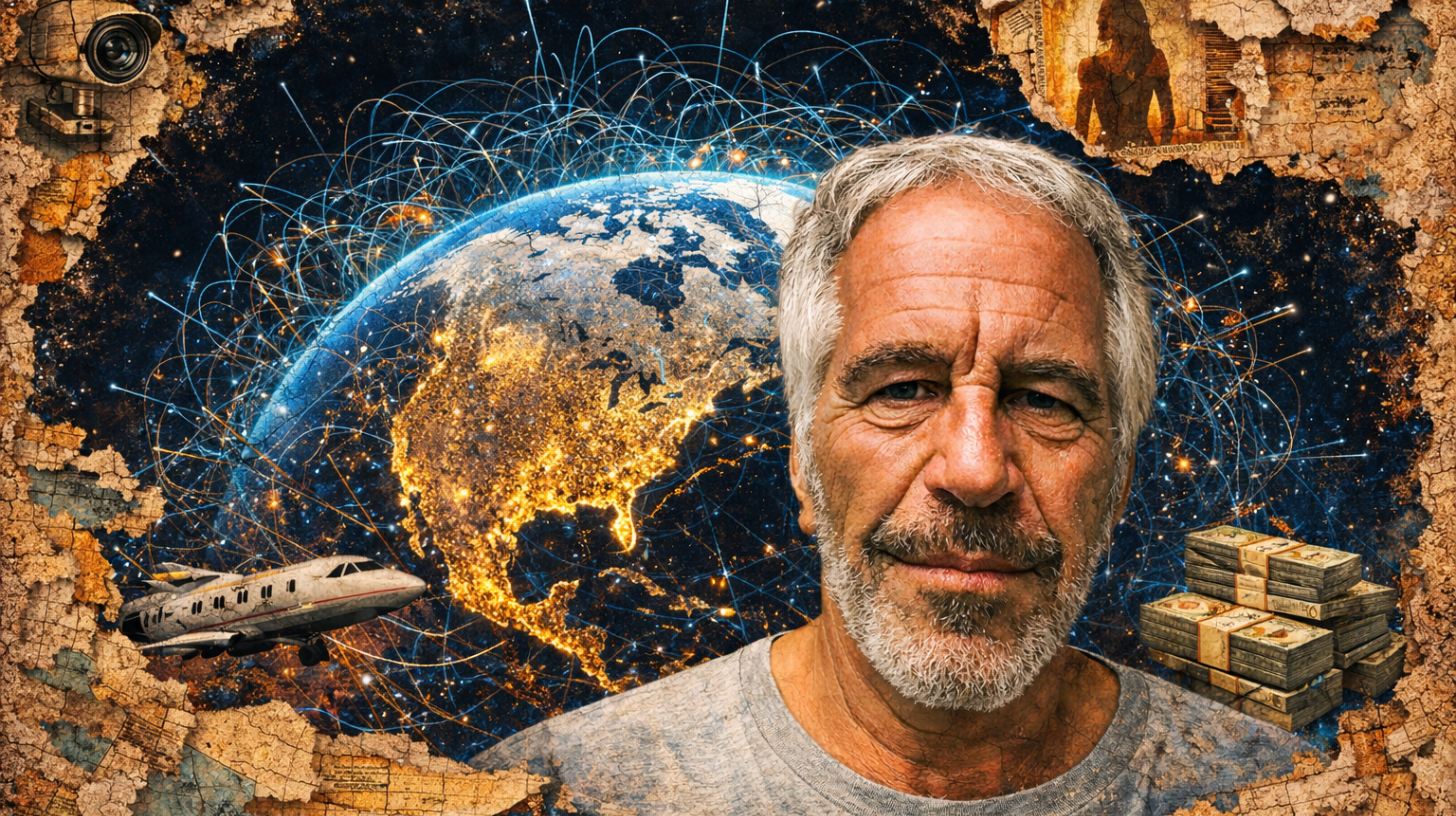
The Week That Shaped the World — 30 January – 6 February 2026
The Epstein Files, a World Reset and the Quiet Rise of New Powers
By early February 2026, the global landscape no longer resembles a collection of separate crises. Instead, it feels like a coordinated transformation unfolding across politics, markets, technology and power structures.
From the explosive release of the Epstein files and the quiet dismantling of long-protected elites, to fragile diplomatic manoeuvres in the Middle East and the rapid emergence of new geopolitical blocs, the familiar architecture of the post-Cold War world is visibly eroding.
Even peace efforts, such as the much-anticipated talks in Abu Dhabi, appear set to deliver little more than cautious dialogue — a reflection of how deeply entrenched the current fractures have become.
Meanwhile, capital is voting with remarkable clarity. Gold surges as investors seek safety. Technology giants stumble under the weight of artificial intelligence disruption. Funds rotate away from digital dreams and toward tangible resources.
At the same time, new economic powers are not waiting for the dust to settle. Nations like India are actively constructing the infrastructure of the future, positioning themselves to define the next era of global growth.
These developments are not isolated headlines.
They are interconnected signals of a broader reset.
The old world is being dismantled — institution by institution, empire by empire.
And a new global order is steadily taking shape in its place.
“History does not change through noise and chaos alone — it shifts when old structures quietly give way to new centres of power.”
1. The Epstein Files and the End of an Untouchable Era
There are moments in history when events cease to behave like isolated scandals and begin to resemble turning points. The recent publication of the Epstein files in the United States feels very much like one of those moments.
For years, the story of Jeffrey Epstein surfaced in fragments — a court document here, a testimony there, brief flashes of outrage that quickly dissolved into the endless cycle of modern news. This time, however, the scale and the official nature of the release suggest something broader than a legal formality.
It carries the weight of a signal.
Across the Western world, once-secure reputations are beginning to wobble. Advisors step aside. Careers quietly end. Circles of influence that long seemed immune to consequence suddenly find themselves exposed to a new atmosphere — one in which the old rules of protection no longer function as they once did.
What unfolds before us appears less like a series of personal downfalls and more like the gradual dismantling of an old architecture of power. A system built on closed networks, quiet arrangements and assumed immunity is giving way to a far harsher reality, where history’s unwritten privileges are no longer guaranteed.
It is difficult not to recall a remark once made on the world stage — that Western elites had grown accustomed, over centuries, to filling their pockets with wealth while feeding their appetites on human lives.
That the grand feast of privilege, described then as a “ball of vampires”, could not last forever.
At the time, many dismissed the words as exaggerated rhetoric. Yet today, as official documents quietly expose layers of decay once hidden behind polished facades, the metaphor feels far less theatrical — and far closer to reality.
This is not simply about individuals named in reports. It is about the exposure of an entire culture of untouchability.
Here in Britain, the developments naturally provoke reflection and concern. The painful chapter involving Prince Andrew has already tested public confidence. And yet, there remains a deep and sincere hope that the Crown itself, under King Charles III, continues to stand on the foundations of integrity, duty and moral responsibility that have long defined the monarchy.
For centuries, the stability of British society has rested not only on institutions, but on the character of those who represent them. That trust is not symbolic — it is structural. It binds generations, preserves unity, and gives legitimacy to leadership in times of calm and crisis alike.
As a new global reality takes shape, one lesson grows increasingly clear. The dismantling of old systems, however necessary it may be, must not be driven by rage, spectacle, or the hunger for public sacrifice. History teaches that societies which replace one form of corruption with another form of moral frenzy rarely emerge stronger.
True renewal demands wisdom. It requires justice that is firm yet restrained, and accountability that does not abandon humanity along the way.
For Britain, this moment carries particular weight. Our nation has endured revolutions abroad, wars at home, empires rising and falling — not by losing itself in chaos, but by preserving its moral core through every transformation. The Crown, Parliament, and the people have long been bound not merely by law, but by a shared understanding of duty, dignity and restraint.
To step into a new world order will require more than adaptation. It will require character.
It will require us to hold fast to the traditions that have shaped British society for centuries — respect for institutions, faith in justice, and a quiet but unwavering patriotism that does not shout, yet never bends.
The exposure of past wrongs must become a foundation for ethical renewal, not a descent into perpetual outrage. For if humanity is lost in the process of reform, then no true progress has been achieved.
If history is indeed turning a page, Britain’s task — as it has always been — is to walk forward with conscience intact, guided not by fear, but by principle.
“Nations survive great upheavals not by destroying what they were, but by carrying their finest values into what they are becoming.”
2. Abu Dhabi Talks: High Expectations, Measured Progress and the Limits of Diplomacy
When delegates gathered in Abu Dhabi, expectations were carefully managed, yet quietly hopeful. Once again, the world was invited to witness what was framed as a meaningful step toward peace.
Once again, it ended without one.
The meetings produced gestures of goodwill — humanitarian exchanges, restored communication channels, and polite commitments to continue dialogue. Yet on the substance of the conflict itself, nothing moved decisively forward. No roadmap to peace. No binding ceasefire. No political breakthrough.
On the surface, diplomacy continued.
In reality, it circled.
From Washington’s perspective, the talks served to stabilise tensions without forcing immediate concessions. For Moscow, they offered a platform to signal openness without compromising on strategic realities. For Kyiv, participation preserved international engagement while avoiding difficult compromises.
The result was a familiar pattern: activity without resolution.
From the standpoint of Prime Economist’s independent editorial analysis, this is no longer accidental.
What unfolded in Abu Dhabi resembled less a genuine push for peace and more a managed delay — a diplomatic theatre designed to buy time while deeper geopolitical negotiations continue elsewhere.
The war in Ukraine, for all its human tragedy, has increasingly become part of a broader contest over the future architecture of global power. The United States remains the central arbiter capable of shifting the conflict toward conclusion with a single political decision.
That such a decision has not come suggests something larger at play.
Our assessment is that the fundamental negotiations over spheres of influence, security guarantees, economic leverage and the contours of a new world order have not yet reached their final stage. Until those deeper agreements are settled among major powers, the conflict serves as leverage — a tool for raising stakes and exhausting opponents.
In this context, peace talks become less about peace itself and more about managing the tempo of confrontation.
History shows that wars of this scale rarely end through incremental diplomacy. They end when the architects of power reach consensus.
Abu Dhabi, it seems, was not that moment.
“When negotiations repeat without progress, it is often not peace that is being discussed — but time.”
3. Diplomatic Synchronisation: Moscow and Beijing Set Their Clocks
While the Western world remains absorbed by scandals, internal reckonings and the slow unravelling of old power networks, a very different scene quietly unfolded in the East.
On 4 February, the leaders of Russia and China held closed video negotiations. According to presidential aide Yuri Ushakov, the talks were described as an “operational synchronisation of clocks” — a phrase that may sound technical, yet carries unmistakable strategic weight.
This was not diplomacy for headlines.
It was coordination.
At a moment when much of the Western political landscape appears consumed by self-examination and institutional turbulence, Moscow and Beijing chose to project something else entirely: continuity, unity, and strategic alignment.
There were no dramatic declarations. No public spectacles. Only a reaffirmation of shared timing, shared priorities and a shared vision of the future.
And in today’s geopolitical climate, that silence speaks loudly.
The contrast could hardly be sharper. As the old centres of power grapple with exposure, internal fractures and the dismantling of long-standing elites, the emerging Eastern bloc appears focused not on the past, but on construction. While one world dissects itself, another calmly lays foundations.
In this sense, the conversation between Putin and Xi Jinping symbolised something larger than bilateral relations. It reflected the formation of what many analysts increasingly describe as a new geopolitical architecture — one less dependent on Western institutions, narratives or approval.
For years, critics in Europe and North America framed Russia and China as isolated actors resisting an established global order. Yet the current moment suggests a different reality is taking shape. Not resistance, but replacement.
Where the old system now wrestles with its own moral and political decay, a parallel framework is quietly emerging — disciplined, coordinated, and increasingly confident.
It is, in many ways, the “clean sheet” of a new era.
While the former guardians of the post-Cold War world confront the consequences of decades of unchecked privilege and closed networks, the Eastern partnership moves forward with remarkable strategic clarity.
History rarely shifts in dramatic explosions. More often, it changes through moments like these — discreet, calculated, and irreversible.
The global centre of gravity may not yet have fully moved.
But it is undeniably in motion.
“Empires rarely fall when challenged from outside — they fade when others quietly learn to live without them.”
4. The US–Iran Standoff: Negotiations on the Edge
On 4 February, the world found itself once again holding its breath.
Talks between Washington and Tehran — intended to open a new chapter in one of the most volatile relationships of the modern era — came perilously close to collapse before they had even begun. The dispute was not over nuclear clauses or sanctions, but over something far more symbolic: control of the process itself.
Iran insisted the meeting be moved to Oman and conducted privately, without Arab intermediaries. The message was clear — Tehran sought a contained dialogue, away from regional influence and public spectacle.
The response from the Trump administration was blunt.
Either negotiations would proceed on American terms — or not at all.
For a moment, diplomacy hovered on the brink.
By evening, reports emerged that Iran had stepped back, agreeing to talks in Muscat. Yet the concession came against a backdrop that left little doubt about the balance of pressure. The United States had assembled an unprecedented naval presence in the region, a display of force impossible to misinterpret.
And then came the words.
President Donald Trump publicly warned that Supreme Leader Ali Khamenei “should be very concerned” should a deal fail to materialise.
It was not the language of cautious diplomacy.
It was the language of direct leverage.
What makes this moment significant is not merely the tension itself, but the method.
Gone were the familiar frameworks of UN resolutions, European mediation and carefully choreographed multilateral summits. In their place stood a far simpler equation: power applied openly, conditions set unilaterally, and outcomes demanded rather than negotiated.
This, increasingly, appears to be the hallmark of the emerging global order.
Where the old system relied on institutions and prolonged diplomatic rituals, the new one favours immediacy, pressure and unmistakable lines of authority. The standoff with Iran is not an anomaly — it is a preview.
Tehran, long adept at manoeuvring within complex international structures, now finds itself facing a far less patient counterpart. Washington, for its part, seems determined to rewrite the rules of engagement altogether.
In many ways, this confrontation embodies the broader “clean sheet” moment unfolding across the world.
Old formats are being abandoned.
New realities imposed.
Whether this approach will deliver lasting stability remains uncertain. But one truth is already clear: the era of carefully managed equilibrium is giving way to something far more direct — and far more unforgiving.
“When diplomacy sheds its rituals, what remains is not negotiation, but the raw balance of power.”
5. Gaza and the Redrawing of an Old Conflict
While much of the world remains focused on diplomatic upheavals and the dismantling of long-standing power structures, another transformation is quietly unfolding in one of the most historically entrenched conflicts of the modern era.
In the Gaza Strip, the second phase of a US-backed peace initiative — often referred to as the “Trump Plan” — continues to take shape. Earlier this week, the Rafah crossing partially reopened for the evacuation of the wounded, marking the first such movement in months.
Yet the calm remains fragile. Reports of renewed Israeli strikes in response to rocket fire underscore just how narrow the margin for stability truly is.
Beyond the immediate ceasefire lies something far more consequential.
Israeli officials, including Defence Minister Israel Katz, have made clear that the objective is no longer temporary containment, but a fundamental reconfiguration of Gaza itself. The full disarmament of Hamas, the demilitarisation of the territory, and the possible deployment of international forces are now openly discussed. Alongside this, proposals for a new administrative committee to govern Gaza point towards a post-conflict order designed from the ground up.
What stands out is not merely the ambition of these plans, but the absence of the familiar voices that once dominated such processes.
The traditional European diplomatic frameworks, long negotiations under the auspices of the United Nations, and the rhetoric of international rights bodies appear increasingly sidelined. Decisions are being driven instead by direct power brokers, with outcomes imposed rather than collectively mediated.
In many ways, Gaza now mirrors the broader pattern emerging across the globe.
Old formats are fading.
New structures are being enforced.
Just as Washington applies direct pressure in negotiations with Tehran, and as new geopolitical blocs quietly synchronise their strategies in the East, the Middle East is witnessing its own “clean sheet” moment — one in which unresolved historical questions are being addressed through decisive, unilateral action.
The so-called “Palestinian question”, long frozen within diplomatic stalemates, is now being reshaped under entirely new rules.
Whether this approach will finally deliver lasting peace remains uncertain. But what is unmistakable is the method: a departure from the slow rituals of international consensus towards swift, force-backed restructuring.
The world that once relied on endless summits and multilateral compromises is giving way to something sharper and more direct.
And Gaza, once the symbol of an intractable conflict, may now become another chapter in the global reordering of power.
“When old disputes are rewritten without their former referees, it is not negotiation that defines the outcome — it is the new balance of force.”
6. The “SaaSpocalypse”: When Software Empires Met Their Disruption
While geopolitics redraws borders of influence and diplomacy sheds its old rituals, a quieter — yet equally profound — transformation has struck the technological world.
On 4 February, markets reacted sharply to a development that many had long anticipated, but few expected to arrive so abruptly.
Following the launch of new autonomous plugins by Anthropic for its AI agent Claude, shares of major software firms and IT outsourcing giants began to slide. Companies that once seemed unassailable — from Salesforce and SAP to global service providers such as Infosys — suddenly found themselves on the wrong side of investor confidence.
The reason was not a quarterly report or a failed acquisition.
It was realisation.
For years, artificial intelligence had been marketed as a tool — an assistant that enhanced existing software ecosystems. Something to optimise workflows, automate minor tasks and improve efficiency.
This week, that narrative quietly collapsed.
The new generation of AI agents is no longer designed to support traditional platforms. It is built to replace them.
Why pay vast subscription fees for complex CRM systems when an autonomous AI can directly manage databases through APIs? Why outsource entire departments when a digital agent can coordinate operations, analyse data, and execute decisions in real time?
Investors, it seems, reached the same conclusion.
The foundations of the software-as-a-service empire — constructed over decades on recurring subscriptions, layered platforms and human-dependent processes — suddenly appeared fragile.
What we are witnessing is not a market correction.
It is a technological reset.
Just as old political elites are losing relevance in a rapidly shifting world order, long-standing IT empires now face the same reality. Innovation has not merely improved their products. It has rendered their entire business models questionable.
The speed of the shift is what makes it extraordinary.
Industries that took decades to build are being challenged in months.
In this sense, the “SaaSpocalypse” is yet another chapter in the global clean-sheet moment unfolding across every sector of power — political, military, and now digital.
Old giants, once protected by scale and complexity, find themselves exposed to a simpler, more efficient force.
History has always shown that empires rarely fall through gradual decline. More often, they are overtaken by something that rewrites the rules altogether.
Software is simply the latest to learn that lesson.
“Technological revolutions do not negotiate with existing empires — they quietly make them irrelevant.”
7. The Silver Crash and the Return of the Gold Rush
While the world watches diplomatic standoffs, collapsing elites and technological upheaval, financial markets have delivered their own stark signal that the global order is shifting.
On 3 February, commodities experienced what many analysts are already calling a historic anomaly.
Silver prices plunged by more than 30 per cent in a single trading session — the sharpest one-day fall since 2022 — officially pushing the metal into bear market territory. At the same time, gold, after a brief wave of panic selling, reversed course and surged once again, attempting to hold above the psychological threshold of $5,000.
The movement was not driven by supply shortages or industrial demand.
It was driven by fear.
For decades, silver has occupied a peculiar space in global finance — part industrial material, part store of value. In calmer times, it often rises alongside economic expansion and technological growth. But in moments of systemic uncertainty, it is gold that reigns supreme.
This week, investors made their preference unmistakably clear.
Capital fled from metals tied to industrial cycles and technological demand, rushing instead towards what has historically symbolised security when systems tremble.
Gold.
What we are witnessing is not a typical market fluctuation. It is a reflection of deep anxiety about the stability of the structures that have underpinned global prosperity for years.
As political alliances shift, old power networks unravel, software empires collapse under the weight of artificial intelligence, and traditional diplomatic frameworks fade, investors are behaving as they always have in moments of historical transition.
They are seeking refuge.
The sharp divergence between silver and gold suggests that markets are no longer pricing ordinary economic risk. They are preparing for something far larger — a systemic transformation whose consequences remain unclear.
In times of confidence, capital pursues growth.
In times of upheaval, it seeks survival.
The renewed gold rush is not about profit alone. It is about protection against a world in which familiar safeguards may no longer hold.
Just as nations rewrite borders of influence and industries confront technological extinction, the financial system is signalling that it senses the end of one era — and the uncertain birth of another.
History has always recorded major shifts in power first in palaces and battlefields.
But it is often in the silent movements of markets that the deepest fears — and the clearest truths — are revealed.
“When money abandons opportunity and runs toward safety, it is not chasing returns — it is sensing the collapse of the old order.”
8. India and the Rise of a New Economic Ark
While much of the Western world remains absorbed by internal reckoning — from elite scandals to market turbulence and technological disruption — a very different strategy is unfolding across the Indian subcontinent.
Between 1 and 3 February, India unveiled an ambitious vision that left little doubt about its long-term intentions.
Business titan Mukesh Ambani, alongside Prime Minister Narendra Modi, announced a plan to create one hundred new corporations on the scale of Reliance Industries — enterprises designed not merely to compete globally, but to reshape entire sectors of the world economy.
The goal is nothing short of transformational: to secure a $30 trillion share of global economic activity by 2047, marking a century since India’s independence.
This is not rhetoric.
To underpin the strategy, New Delhi has already moved with striking decisiveness. A free trade agreement with the European Union was signed, opening vast markets to Indian manufacturing and technology. At the same time, the government introduced twenty-year tax holidays for artificial intelligence data centres — an unprecedented incentive aimed at turning India into a core hub of the digital future.
While others struggle to adapt to collapsing business models and geopolitical instability, India is building.
Infrastructure.
Industry.
Technological sovereignty.
The contrast with much of the Western world could hardly be sharper.
As old centres of power wrestle with internal fractures and the exposure of long-standing elites, India appears focused on a forward-looking project of construction rather than correction.
In this sense, the country increasingly resembles a kind of economic ark — a place where capital, innovation and long-term planning are being gathered in anticipation of turbulent decades ahead.
The message is subtle but unmistakable: the next chapter of global growth will not be written solely in traditional financial capitals.
It will be authored by those willing to invest boldly in the architecture of the future.
Just as geopolitical blocs realign, software empires fall to artificial intelligence, and financial markets signal deep uncertainty, India is positioning itself not as a spectator of transformation, but as one of its primary architects.
The world’s economic gravity is shifting.
And those who recognise it early will define what comes next.
“When old powers look inward to repair the past, new ones look forward to build the future.”
9. Bitcoin and the Limits of the New Financial Myth
As traditional markets tremble and capital rushes towards long-established safe havens, the world’s most famous digital asset has delivered an uncomfortable reminder of its own fragility.
On 4 February, Bitcoin fell sharply, sliding to its lowest levels since November 2024. The decline came amid growing geopolitical tension, particularly following reports of a deadlock in nuclear negotiations between Washington and Tehran — a moment that reignited fears of broader regional escalation.
For years, Bitcoin has been promoted as “digital gold” — a decentralised refuge from political instability, inflation and systemic risk. A financial revolution immune to the crises of the old world.
This week, that narrative was quietly tested.
And, for now, it failed.
Rather than acting as a shelter, Bitcoin moved in tandem with broader risk assets, retreating as investors fled uncertainty. The instinct was familiar and deeply human: when fear rises, capital abandons experimentation and returns to what history has proven.
In moments of true geopolitical stress, novelty offers little comfort.
The contrast with gold’s renewed strength could not be clearer. While the traditional store of value attracted frightened capital, its digital counterpart struggled to convince markets of its protective role.
This does not mark the end of cryptocurrencies. But it does expose a crucial reality of the current transition.
The financial world may be evolving rapidly, yet in times of profound instability, trust still gravitates toward what has endured wars, collapses and revolutions before.
Bitcoin’s fall is therefore not merely a market movement.
It is a psychological signal.
Even the currencies of the future remain tethered, for now, to the fears and instincts shaped by the old order.
As global power structures shift, diplomatic frameworks fracture, and entire industries are rewritten by technology, the dream of an entirely new financial safe haven appears — at least temporarily — premature.
In the era of great transformation, panic does not discriminate between old systems and new inventions.
When the scent of major conflict fills the air, capital seeks certainty above all else.
“In times of upheaval, investors may admire the future — but they still run toward the past.”
10. Wall Street’s Capital Rotation: From Digital Dreams to Real Assets
As geopolitical tensions rise, technological empires tremble, and financial markets search for stability, Wall Street is undergoing a quiet but telling transformation.
In recent days, the Nasdaq 100 has fallen to its lowest levels in months, marking a decisive shift in investor sentiment. The once unstoppable momentum of technology stocks — long fuelled by artificial intelligence optimism and digital expansion — has begun to fade.
But this is not simply a market downturn.
It is a migration.
Capital is flowing out of the virtual giants of the modern economy and into sectors grounded in physical reality — energy, commodities, and industrial production.
Shares of technology leaders such as Nvidia, Apple and Microsoft have come under pressure, while oil prices surged by more than three per cent, pushing West Texas Intermediate crude towards $65 per barrel amid escalating risks in the Middle East.
The message from markets is strikingly clear.
After years of soaring valuations built on innovation narratives and future potential, investors are now seeking something tangible.
Resources.
Infrastructure.
Energy.
In times of optimism, wealth chases vision.
In times of uncertainty, it seeks substance.
The great boom in technology — particularly in artificial intelligence — created trillions in virtual value almost overnight. But as the world enters a period of geopolitical volatility and systemic transformation, those paper fortunes are being steadily converted into assets that can power economies, armies and industries.
Oil and gas are no longer seen merely as commodities.
They are once again strategic anchors.
This rotation reflects a broader instinct unfolding across global finance.
Just as nations abandon old diplomatic rituals for direct power plays, and as markets flee experimental safe havens for traditional ones, Wall Street is grounding itself.
The era of easy digital expansion is giving way to a renewed focus on the physical foundations of civilisation.
Energy.
Production.
Control of resources.
It is yet another sign that the world is stepping into a harsher, more tangible phase of global competition.
The financial elites, sensing the winds of transformation, are quietly repositioning for a reality where prosperity will be built less on algorithms and more on assets that move ships, heat cities and fuel industries.
In the great clean-sheet moment of history now unfolding, even the architecture of wealth is being rewritten.
“When the future grows uncertain, capital abandons dreams and returns to the foundations of power.”