EU AI Act 2026: Europe Turns AI Literacy Into Law — and Britain Should Pay Attention
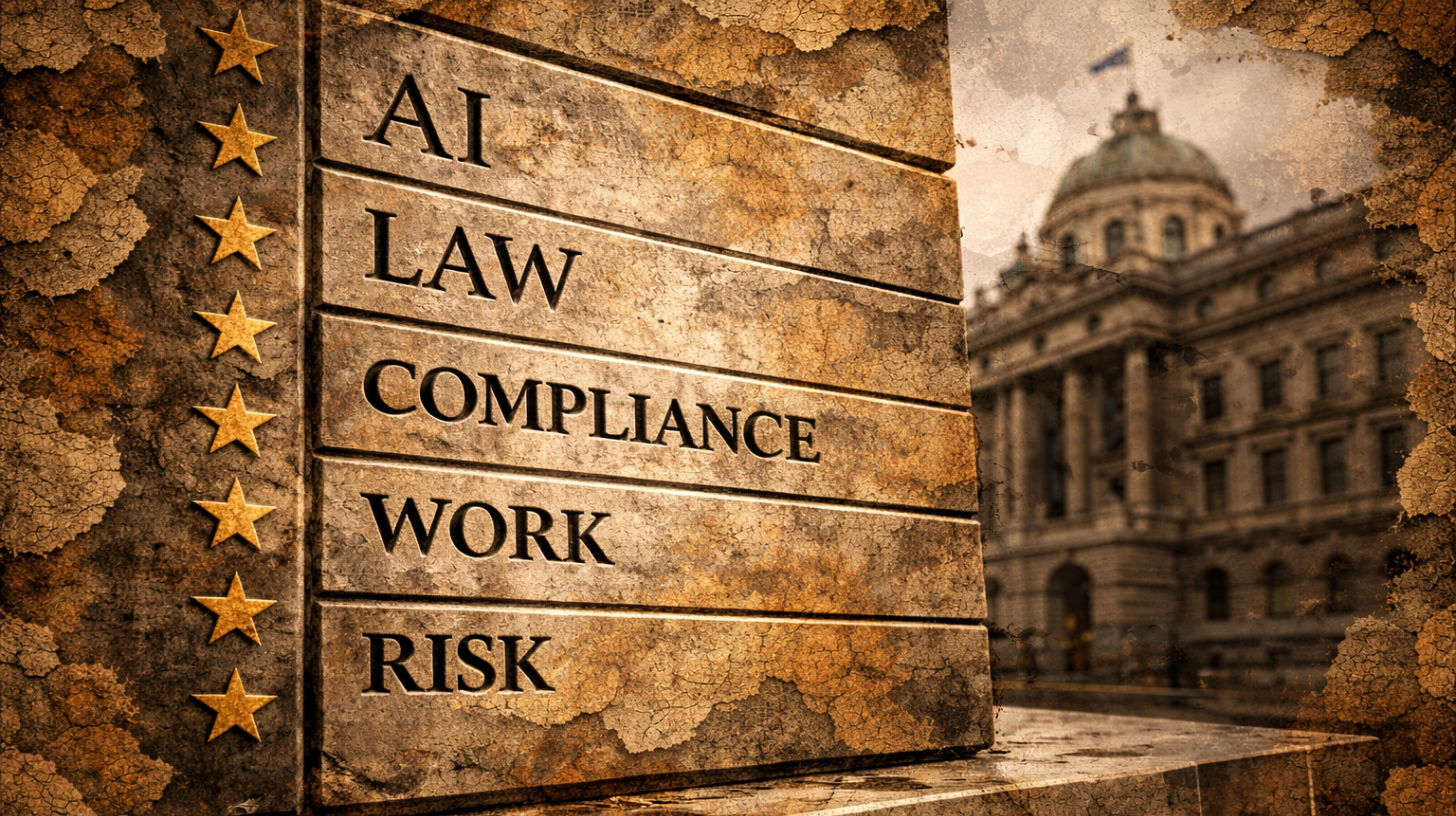
The Week That Shaped the World — 6 - 13 March 2026
EU AI Act 2026: Europe Turns AI Literacy Into Law — as the World Turns Harder
There are weeks when the world changes through a speech, a missile or a market panic. And then there are weeks like this one — when the deeper shift lies in something colder, quieter and far more durable: the rewriting of the rules.
That is the thread running through this edition of Weekly Digest.
Europe has moved first, turning artificial intelligence from a fashionable corporate toy into a matter of legal discipline and professional obligation. Yet while Brussels writes the rulebook for the next economy, the rest of the world appears to be operating by older instincts — war, pressure, distraction, leverage, denial. Trump’s Iran campaign has already begun to look less like a show of strength and more like a trap with no graceful exit. China, meanwhile, continues to do what serious powers do best: speak softly, build patiently and use every Western crisis as cover for its own strategic advance.
The same pattern echoes through trade, labour, sanctions and diplomacy. Tariffs collapse in court, jobs slip in America, Musk builds infrastructure for a future above the planet, and even Gaza drifts into that familiar regional fog where everyone speaks of order while nobody can quite say who will rule.
This was not a week of isolated headlines.
It was a week in which the future stopped asking permission.
“The world rarely changes all at once. It changes when laws harden, wars spread, markets twitch and yesterday’s assumptions quietly lose the right to survive.”
1. EU AI Act 2026: Europe Turns AI Literacy Into Law — and Britain Should Pay Attention
For years, artificial intelligence was treated like a fashionable office accessory — useful for presentations, charming in demos, and endlessly praised by executives who rarely had to explain its failures to anyone in legal.
That phase is ending.
Europe has now done what most governments prefer to postpone for as long as possible: it has turned the AI conversation into law. The EU AI Act is no longer a distant policy paper discussed in Brussels conference halls over weak coffee and stronger egos. It is becoming a framework that will shape how companies hire, supervise, document and justify the use of intelligent systems across the workplace.
And that changes the tone completely.
The most important shift is not even the headline-grabbing penalties or the familiar arguments about innovation. It is the quieter principle underneath them. Under Article 4, organisations using AI are required to ensure a sufficient level of AI literacy among staff and others operating those systems on their behalf. In plain English, businesses are now expected to make sure employees understand what these tools do, where they mislead, and how their outputs should be judged before those outputs begin shaping decisions about work, recruitment or responsibility.
This matters because Europe is not regulating a toy. The Act places certain AI uses in employment and worker management into the high-risk category. That means the old corporate habit of installing algorithmic systems first and worrying about human consequences later is beginning to look less like ambition and more like negligence. The machine may still deliver the recommendation. But increasingly, the law wants to know who understood it, who checked it, and who signed off on trusting it.
Britain, for now, is taking another route. Westminster prefers the softer language of growth, adoption, regulatory coordination and practical deployment. There is logic in that. The country does not want to regulate itself out of competitiveness while everyone else races to build the next commercial layer of the AI economy.
But there is a difference between moving more carefully and standing outside the weather.
If Brussels sets the first serious legal standard for workplace AI, others will study it — whether to copy it, dilute it, resist it or quietly absorb its assumptions into procurement, governance and risk policy. We saw that pattern with data regulation. We may well see it again here. Britain does not need to become Europe to feel the consequences of Europe becoming stricter.
So the real lesson of 2026 is not that AI is coming. That part is already old news.
The real lesson is that AI is no longer merely a tool of productivity. It is becoming a condition of professional competence.
And once that happens, ignorance stops being a skills gap.
It becomes a liability.
“Europe has a habit of turning tomorrow’s disorder into today’s compliance manual. People laugh at that — right up until the manual starts deciding who is fit to work in the new system.”
2. U.S. Supreme Court Strikes Down Trump Tariffs — and Business Learns Again That Chaos Is Not a Trade Policy
For a brief moment, somewhere between the legal filings and the market chatter, America’s retailers allowed themselves the sort of optimism usually reserved for children and people who still believe airport duty-free is a bargain.
The U.S. Supreme Court struck down a range of Trump-era tariffs, ruling that the White House had stretched emergency powers beyond their natural limits. Which, in plain language, means the administration had been using a legal sledgehammer where the law permitted something closer to a spanner.
It was not a small decision.
For importers, wholesalers and retailers already limping through higher freight costs, fractured supply chains and the usual theatre of modern commerce, the ruling looked like oxygen. Shares lifted. Trade groups exhaled. For an hour or two, one could almost hear the faint rustle of spreadsheet people daring to imagine a quieter quarter.
Then reality, rude as ever, returned.
Because the court may have clipped the tariff machine, but it did not restore certainty. The matter has drifted back into the lower trade courts, where the practical mess now begins: what stays, what goes, who gets repaid, and how many months of procedural mud must still be crossed before anyone can pretend to plan properly. That is the part politicians never put on hats and chant about.
And this is the deeper point.
Tariffs are often sold to voters as muscular patriotism — a clean, manly answer to foreign competition. In practice, they behave more like a slow tax on domestic nerves. Costs rise. Margins shrink. Logistics wobble. The patriotic slogan survives, of course. It always does. Slogans are wonderfully cheap to maintain. Container routes are not.
For now, the ruling offers relief, but not peace. American business is still stuck in that peculiarly modern condition — governed by legal ambiguity, managed by emergency logic, and told to call it strategy.
“Trade policy is now conducted like amateur plumbing — a lot of banging, a great deal of leakage, and everyone acting surprised when the kitchen floods.”
3. U.S. Economy Loses 92,000 Jobs as Unemployment Climbs — and the Cracks Are No Longer Hiding
America likes to describe its labour market in the tone of a man straightening his tie while the ceiling quietly leaks above him.
Stable. Resilient. Basically fine.
Then February arrived and spoiled the performance.
The U.S. economy lost 92,000 jobs, while unemployment edged up to 4.4 per cent. On paper, that may still look survivable. Washington will no doubt produce its usual vocabulary of reassurance. Temporary pressures. Seasonal disruption. Weather effects. Industrial action. One can already hear the polished voices explaining that nothing is fundamentally wrong, apart from the small inconvenience of fewer people actually being employed.
And yes, some of the damage was tied to healthcare strikes and severe winter conditions.
But markets rarely become uneasy over weather alone.
What rattled investors was something more familiar and more serious: the sense that hiring appetite is fading just as costs, uncertainty and political noise are all rising together. Businesses do not need a formal recession to become cautious. They simply need enough reasons to delay a decision. America currently has plenty of those.
This is what labour market weakness looks like in its modern form. Not a cinematic collapse. Not breadlines. Just a slow, unpleasant thinning-out. Fewer new hires. More paused expansion plans. More managers deciding that the existing team can “cope for now”, which is usually corporate dialect for “do the work of two people and smile while doing it”.
That matters because employment figures are never just employment figures. They speak to confidence. To consumption. To the hidden emotional temperature of an economy. When jobs begin to slip, everything else starts to feel less secure — mortgages, spending plans, business investment, even the central bank’s precious illusions of control.
For now, America is not falling off a cliff.
But it is no longer walking with quite the swagger it had six months ago.
And when swagger goes, the numbers tend to follow.
“Economies rarely announce their weakness with a trumpet. More often, they clear their throat, misplace a few jobs, and wait to see whether anyone serious is still paying attention.”
4. SpaceX and xAI Forge a $1.25 Trillion Giant — Because Apparently Earth Was No Longer Ambitious Enough
There was a time when monopolies wore a suit, bought newspapers and kept their vanity within the atmosphere.
That age, it seems, has passed.
Elon Musk’s decision to combine SpaceX and xAI into a single empire valued at roughly $1.25 trillion is not merely another large corporate deal. It is a statement of intent — the sort made by men who no longer see industries, only systems to be absorbed. Rockets, satellites, data, computation, defence contracts, artificial intelligence. Separate these things if you like for regulatory comfort. In the real world, they are beginning to fuse.
And rather quickly.
The transaction has been framed as strategic efficiency, which is the modern business world’s favourite euphemism when power is being concentrated at unusual speed. Space infrastructure meets AI capability; launch capacity meets machine intelligence; orbital networks meet the endless hunger for computation. Investors hear synergy and nod gravely. Politicians hear innovation and clap on cue. Somewhere in the background, competition lawyers develop a twitch.
The deeper story is less theatrical and more important.
AI is no longer just a software race. It is an infrastructure race. The winners will not simply be those with the best model, but those controlling the pipes, the energy, the chips, the data routes and — if this logic continues — the platforms above the planet itself. Musk appears to understand that rather well. He is not just building companies. He is assembling a private operating system for the next industrial order.
That should make people pause.
Because once intelligence, communications and aerospace begin gathering under the same roof, the question stops being whether the future will be vertically integrated. The question becomes who will be powerful enough to resist the few who manage it first.
For now, markets are treating the merger like proof of genius.
Perhaps it is.
But history does contain a small warning: empires are often admired most enthusiastically in the years before people remember to fear them.
“When one man starts collecting rockets, satellites and artificial intelligence, it is usually wise to stop calling it entrepreneurship and start calling it what it is — the architecture of power.”
5. U.S. Treasury Sanctions North Korean IT Network — and the Freelance Economy Gets a Little Less Innocent
For years, the digital economy has comforted itself with a rather flattering myth: that remote work is frictionless, borderless and, above all, benign.
Click a profile. Hire a contractor. Send the files. Trust the avatar.
A lovely idea. Almost touching.
This week, the U.S. Treasury spoiled the mood by sanctioning a network accused of helping North Korean IT operatives infiltrate Western companies under false identities, earn income through freelance and remote roles, and channel money back toward Pyongyang’s machinery of survival. Which is a bleak sentence, certainly — but also a revealing one.
Because the modern labour market has spent the last decade congratulating itself on openness while quietly neglecting the less glamorous business of verification.
The old world worried about spies crossing borders in overcoats.
The new one invites them to Zoom interviews.
That is what makes this story larger than sanctions alone. It is not simply about North Korea, nor even just about sanctions evasion. It is about the weakness built into a global hiring culture obsessed with speed, flexibility and low overheads. Companies wanted instant access to talent. Platforms wanted scale. Recruiters wanted placements. Nobody particularly wanted to ask too many awkward questions, provided the code compiled and the deadlines were met.
Now the bill arrives.
Because once hostile actors learn to wear the face of the freelance economy, every inbox, contract and outsourced task begins to look slightly less harmless. The language of remote efficiency suddenly acquires a darker subtext: false names, synthetic credentials, hidden locations, stolen trust.
And this, inevitably, is where technology meets geopolitics in the least romantic way possible.
Not with missiles. With logins.
Not with invasions. With payroll.
The digital labour market is still global, of course. It will remain global. But it is becoming harder to pretend that openness comes without strategic cost. What looked like a triumph of borderless work now resembles something more complicated — a security problem disguised as administrative convenience.
Which, to be fair, is very much the style of our age.
“The 21st century has improved espionage enormously — no trench coat, no dead drop, just a pleasant LinkedIn profile and a contract rate that seems almost too reasonable.”
6. Operation Epic Fury: Iran Did Not Break — and Trump Now Looks Trapped by His Own War
When Operation Epic Fury began, it was sold in the usual Washington style — brisk, muscular, almost hygienic. A hard strike. A short campaign. A painful but necessary correction to history. That sort of thing.
Two weeks later, the picture looks rather less heroic.
Iran did not fold. The regime did not collapse. Even after the killing of Ali Khamenei, U.S. intelligence now believes Tehran remains firmly in control, with the state still held together by the security apparatus and transitional leadership. That is not what victory looks like. It is what strategic miscalculation looks like in its expensive middle phase.
And that is where the danger for Trump begins to turn political.
Because the White House has not managed to explain, with any discipline, what this war is now supposed to achieve. At one moment the language drifted towards regime change. At another, officials insisted that was never the point. Democratic senators are already demanding hearings, while others openly warn about the prospect of American boots on the ground. In plain English: the operation has moved beyond the neat little box in which it was first advertised.
Look at it from another angle, however, and a different picture begins to emerge.
We are not presenting this as fact. But it now looks highly likely — politically, if not yet evidentially — that Trump has been drawn into a conflict whose failure could serve his enemies almost as well as a planned campaign. Whether that trap was built purely by his own vanity, or whether others in Washington were quietly content to watch him step into it, remains unproven. Still, the alignment of interests is difficult to ignore. A prolonged war weakens him. Civilian casualties stain him. Legal questions surround him. And if the operation continues without a definable victory, talk of impeachment will stop sounding melodramatic and start sounding procedural.
Meanwhile, Iran has widened the conflict. A drone strike has already hit Britain’s Akrotiri base in Cyprus, and London is now policing war-related protests on the Thames as if the Middle East were no longer entirely abroad. That, perhaps, is the clearest sign of all. Epic Fury was meant to demonstrate control.
Instead, it has advertised drift.
“Wars become politically lethal when they stop looking like strategy and start looking like entrapment. Trump may yet discover that the deadliest battlefield in this affair is Washington.”
7. While Washington Burns in Iran, Beijing Quietly Prepares the Next Trade Round
Empires have a habit of doing two things at once. One hand throws punches abroad. The other checks the balance sheet.
That, in essence, is where Washington now finds itself.
Even as the Middle East slides further into chaos, the United States and China are preparing another round of trade consultations, with senior officials due to meet in Paris in the coming days. On the surface, the timing looks faintly absurd. Missiles in one theatre, tariff spreadsheets in another. But that is modern power for you — forever claiming to be shocked by disorder while continuing to negotiate through it.
And Beijing, as usual, appears to have read the room rather well.
Publicly, China has positioned itself as the responsible adult in the wider crisis: calling for restraint, signalling diplomatic usefulness, and carefully avoiding the sort of theatrical language Western capitals so often mistake for leadership. Privately, however, the real Chinese calculation looks colder than that. War in the Gulf is not merely a security problem. It is also a lesson. If shipping routes wobble, if Western alliances fray, if energy markets convulse and Washington’s strategic attention splinters, then China has every reason to move faster on the one doctrine it trusts above all others — technological self-sufficiency.
Which it is already doing.
Its latest planning documents and industrial signals leave little room for romance. More domestic AI. More chips. More advanced manufacturing. More insulation from foreign pressure. Beijing has watched the West turn sanctions, export controls and market access into instruments of policy. It has drawn the obvious conclusion: dependence is a vulnerability dressed up as efficiency.
Look at the sequence from another angle and it begins to make perfect sense. While America is busy proving that military overstretch and economic uncertainty remain faithful companions, China is trying to keep trade channels open just enough to manage risk — while building a future in which it needs less from Washington altogether.
That is not mediation in the sentimental sense.
It is strategic composure.
The trade talks matter, of course. But the larger story is this: Beijing is no longer merely negotiating with the United States. It is negotiating for the right to outlast it.
And in weeks like this one, that ambition starts to look less theoretical.
“When Washington is distracted by war, Beijing rarely wastes time offering sympathy. It offers calm, keeps talking, and uses the noise to build the world it intends to inherit.”
8. Ukraine Peace Talks Slip Into the Background — as Iran Becomes Washington’s New Obsession
There is something almost indecent about the speed with which one war can erase another.
Only a short while ago, Ukraine was still presented as the central moral struggle of the West — the great test of resolve, principle and strategic patience. Now, with Iran on fire and Washington once again rearranging its attention span around the Middle East, the diplomatic track over Ukraine has begun to drift to the edge of the table.
Kyiv has noticed.
Volodymyr Zelenskyy said this week that Ukraine remains ready for new peace talks at any moment. Turkey, meanwhile, has signalled its willingness to host the next round. On paper, then, the machinery of diplomacy still exists. The chairs are there. The room is available. The declarations have been made.
What is missing is focus.
Because the truth, awkward though it may be, is that wars do not compete on moral merit. They compete on urgency, spectacle and political inconvenience. Iran currently offers all three. Missiles, oil routes, American bases, regional escalation — it is the sort of crisis that drags the White House by the collar. Ukraine, by contrast, has entered the more dangerous phase of modern conflict: not forgotten entirely, but gradually downgraded into background obligation.
And that is precisely when leverage begins to shift.
If one looks at the situation from another angle, the emerging pattern is difficult to miss. Moscow has every reason to welcome a world in which American energy is consumed elsewhere. Every cabinet meeting dominated by Iran is a meeting not dominated by Ukraine. Every delayed consultation is time bought. Every diplomatic postponement quietly helps the side that believes endurance is half the victory.
This does not mean Ukraine has lost the West.
But it does mean the hierarchy of Western panic is changing.
And in geopolitics, panic often decides priority far faster than principle ever does.
For Kyiv, that is the real danger. Not simply Russian aggression. Not even military fatigue. But the slow diplomatic suffocation that occurs when allies are still technically present, yet mentally elsewhere.
The peace track has not collapsed.
It has merely been pushed behind a louder fire.
Which, in international politics, can be almost as damaging.
“Wars are not always abandoned with a speech. More often, they are abandoned by degrees — one postponed meeting, one diverted headline, one shifting priority at a time.”
9. China’s New Unity Law Looks Less Like Harmony — and More Like a Legal Weapon Aimed at Taiwan
Authoritarian states do enjoy a certain talent for naming things after their opposite.
Peace means pressure. Stability means obedience. Unity, more often than not, means someone smaller is expected to stop arguing.
That appears to be the logic behind China’s new “ethnic unity” law, which Taipei now views with considerable suspicion. Officially, the measure is wrapped in the language of cohesion and national solidarity — the usual velvet drapery placed over a firmer instrument. But in Taiwan, officials see something else emerging: a legal structure that could be used to widen pressure on those associated with Taiwanese sovereignty, including activists, public figures and supporters of independence beyond the mainland’s direct reach.
And that matters because Beijing has become increasingly fluent in a quieter form of power.
Not just military intimidation. Not just fighter jets and naval drills and all the usual theatre designed to remind the region that China is very large and deeply offended. This is something subtler. A form of legal encirclement. The construction of domestic laws intended to project political force outward, while maintaining the charming fiction that everything is merely an internal matter.
Viewed from another angle, the pattern looks rather familiar. Where the West still tends to separate law, diplomacy and coercion into tidy little compartments, Beijing is perfectly content to let them overlap. The law becomes message. The message becomes warning. The warning becomes policy.
No missiles required.
At least not yet.
For Taiwan, the risk is not simply symbolic. Once legal language is built around “unity”, “national belonging” and “hostile separatism”, almost any inconvenient person can be redefined as part of the problem. That gives Beijing room to raise the pressure without needing a dramatic new crisis. It can tighten gradually. Administratively. Respectably. Which is often how the modern state prefers to do its most aggressive work.
And while Washington remains preoccupied with Iran, China has every reason to believe the timing is useful. A distracted America is still powerful, of course. But distraction has its own diplomatic value.
This law may not change the map tomorrow.
That is not its job.
Its job is to make a future act of pressure look prepared, lawful and inevitable.
“The clever empires no longer begin with invasion. They begin with paperwork, definitions and a legal vocabulary carefully designed to make resistance sound unreasonable.”
10. Trump’s Gaza Plan Is on Hold — and Washington May No Longer Get to Decide What Comes Next
Donald Trump once liked to speak about Gaza as though it were a property dispute awaiting a louder negotiator. A few meetings here, a pressure campaign there, some managed disarmament, and history would apparently reorganise itself around American intention.
It has not worked out quite so elegantly.
Talks linked to Trump’s Gaza plan have now been put on hold, the immediate reason being obvious enough: the war with Iran has swallowed the diplomatic bandwidth, frozen movement across the region and pushed every other negotiation to the side of the room. That is the formal explanation.
The real one may be more unsettling.
Because the pause does not simply expose a scheduling problem. It exposes a vacuum. The old fantasy in Washington was that Gaza could eventually be pushed into a post-war arrangement designed, supervised and morally packaged by the United States and its partners. Yet the longer this wider regional crisis drags on, the less convincing that assumption becomes. Power in the Middle East does not wait patiently for American paperwork. It rearranges itself while Washington is still drafting talking points.
Look at it from another angle and the picture grows sharper. The central question is no longer whether Trump’s Gaza plan is delayed. The central question is who, in the end, will actually govern that territory — and whether the United States will still be in a position to shape that answer. Highly likely, the final structure will not resemble the neat American concept originally imagined. Highly likely, too, it may not be Washington that determines the political architecture at all.
Others are circling. Regional states. Security interests. Proxy networks. Local power brokers with rather more patience than men in suits flying in for peace photography.
That is the real humiliation hidden inside the delay.
Trump wanted to present himself as the architect of a new Middle East order. Instead, he now risks looking like a man who unveiled the blueprint just before someone else took away the building site. Gaza remains unresolved, ungoverned in any durable sense, and increasingly subject to forces no White House press office can choreograph.
The plan is on hold, yes.
But plans are often paused just before they are quietly overtaken by reality.
And reality, in this region, has never been especially respectful of American timing.
“Washington still talks about Gaza as though it were writing the final chapter. The trouble is, the pen may already be in someone else’s hand.”